How to Open a Bank Account in America as a New Immigrant 2026? A Complete Guide to Best Banks for Arabs and Full Steps
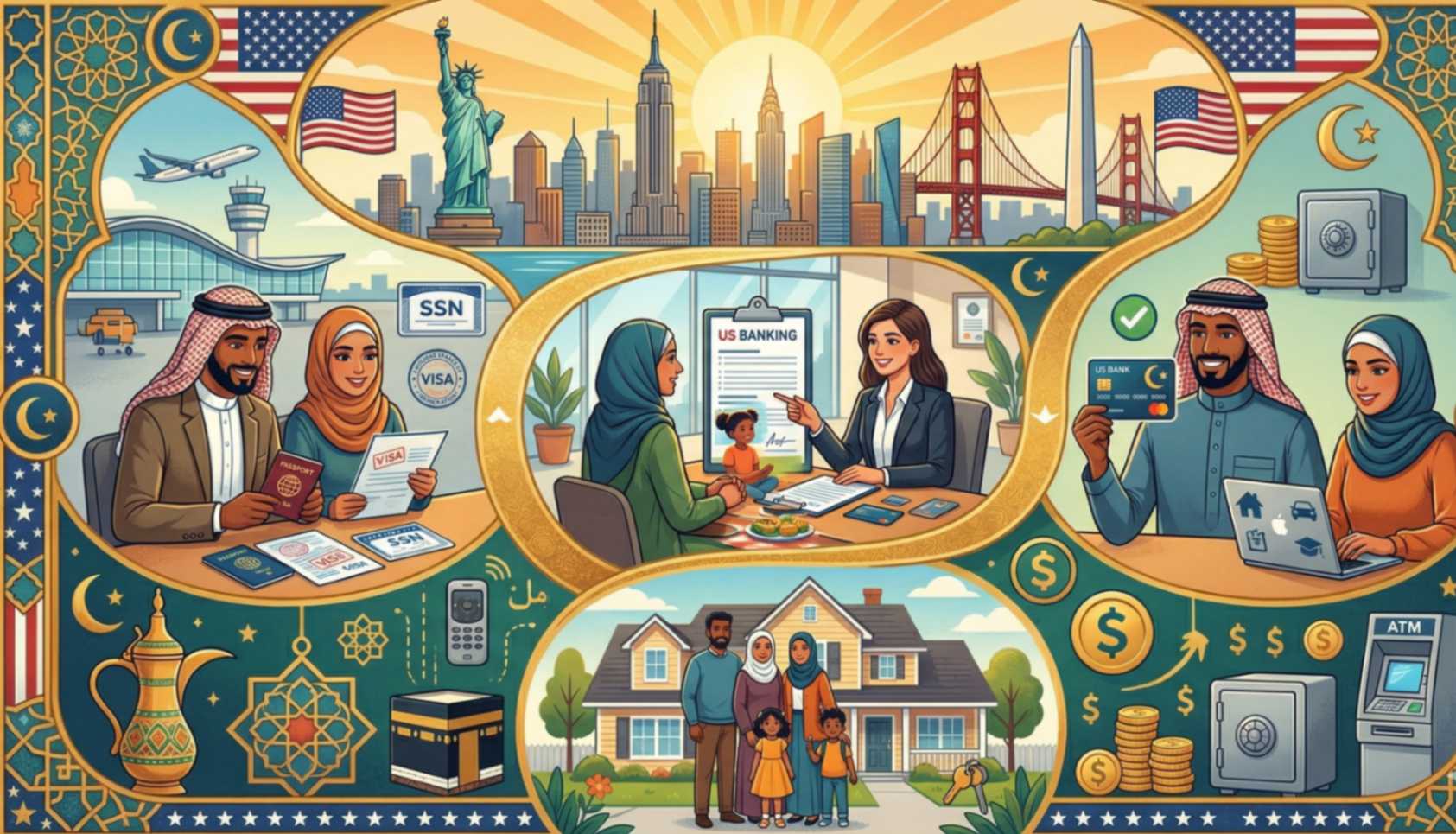
Have You Ever Felt That Opening a Bank Account Is the First Real Gateway to Stability in America?
The journey to America has culminated in arrival. The initial shock of the first few days has subsided, and perhaps a Social Security Number (SSN) has already been secured. The time has now arrived for the next foundational financial step: opening a bank account. However, a mere glance around the neighborhood or a cursory online search is sufficient to induce profound bewilderment. Where does one even begin? Which financial institution is willing to accept a newly arrived immigrant who possesses absolutely no domestic financial history? And what precise constellation of documents must be assembled to avoid the sting of outright rejection?
The American banking system operates according to principles that differ markedly and fundamentally from those familiar in the Arab world. In this context, the selection of an appropriate bank transcends the simple need for a secure repository for funds. It constitutes a strategic decision with the potential to save hundreds of dollars annually in otherwise opaque fees, to facilitate the systematic construction of a robust credit profile, to provide services specifically tailored to the unique circumstances of a newcomer, and, in certain fortunate geographic pockets, to offer customer support in the Arabic language itself.
Within this comprehensive 2026 guide, the reader is methodically guided through the process of answering the pivotal question: How does a new immigrant open a bank account in America? An objective comparison of the most suitable banking institutions for Arabs is presented. The requisite documentation is enumerated with precision. The labyrinthine structure of fees is illuminated. Strategies for circumventing the most common pitfalls of the American banking apparatus are delineated, thereby empowering the reader to select the institution most congruent with personal and familial requirements.
Should the acquisition of an SSN remain pending, the foundational step must necessarily be the consultation of this guide: How to Get Your SSN in America in 2026? A Complete Guide to Steps, Requirements & Documents. Only upon completion of that process should the reader return to this article to commence the bank account phase. Furthermore, consultation of the guides on Work in America for New Immigrants (to comprehend payroll mechanics) and How to Get a Credit Card in America Without Credit History (for the subsequent phase) is strongly advised.
Chapter One: Why a Bank Account in America Constitutes an Absolute Necessity, Not a Mere Convenience
A question may initially surface in the mind of the newcomer: Is it feasible to navigate life in the United States relying exclusively on physical currency (cash)? The succinct and pragmatic answer is a definitive no. By 2026, the United States has evolved into a predominantly cashless society to a remarkable degree. The critical importance of a bank account is underscored by the following essential functions:
- Receipt of Wages (Direct Deposit): Employers are generally neither equipped nor inclined to disburse wages in the form of physical cash. The issuance of paper payroll checks has become increasingly archaic. The overwhelming majority of employers, as detailed in the guide on Work in America for New Immigrants, mandate the existence of a valid bank account to facilitate the electronic Direct Deposit of salary payments on a bi-weekly or monthly basis. This constitutes the single most compelling reason.
- Settlement of Essential Obligations: Monthly rent, utility invoices (electricity, water, gas), internet service charges, and mobile phone plan payments are all processed electronically, typically via automated deductions from a designated bank account. Attempting to remit cash payment for these fundamental services is not merely impractical; it is often met with bewilderment and outright refusal.
- Construction of a Credit Score: A bank account serves as the indispensable cornerstone upon which a comprehensive financial history is erected. Absent a bank account, the procurement of a Credit Card becomes a virtual impossibility. And without a credit card, the all-important Credit Score cannot be established. This three-digit metric is the linchpin for financing an automobile purchase, securing a desirable apartment lease without exorbitant upfront deposits, and ultimately qualifying for a mortgage. The relationship between the bank account and future creditworthiness is both direct and causal.
- Personal Security: Transporting substantial sums of physical currency or hoarding cash within a private residence is neither a secure nor a practical modality for daily commerce in the United States. Funds deposited in FDIC-insured American banks are protected by the full faith and credit of the federal government up to a statutory limit of $250,000 per depositor, per insured bank.
- Domestic and International Funds Transfers: A bank account is indispensable for both transmitting and receiving funds to and from one's country of origin—whether for the purpose of supporting family members or reconciling outstanding financial affairs. Moreover, popular domestic peer-to-peer payment platforms, such as Zelle and Venmo, require linkage to a U.S. bank account to function.
Purported Alternatives to a Traditional Bank Account (Merely Temporary, Incomplete Solutions):
- Prepaid Debit Cards: These instruments can be purchased and loaded with funds at major retailers such as Walmart or CVS. However, they impose a fee for virtually every transaction—including withdrawals and reloads—and they contribute absolutely nothing to the establishment of a credit history. They also lack many of the robust consumer protections afforded by traditional banking institutions.
- Payment Applications (Cash App, Venmo, PayPal): These platforms are exceptionally useful for facilitating small, informal transfers among acquaintances or for conducting online purchases. They do not, however, constitute a viable, full-fledged substitute for a bank. Depositing large settlement checks or reliably receiving formal payroll disbursements is not their core competency. Furthermore, balances held within these applications are not uniformly protected by FDIC insurance.
Chapter Two: A Taxonomy of Essential Bank Account Types in the United States
Upon entering a physical branch, a bank representative will invariably inquire as to the specific type of account the customer wishes to establish. To preclude confusion, the following represent the primary account categories of relevance to the newly arrived immigrant:
- Checking Account: This is the quintessential, non-negotiable account required by virtually every adult. It is architected for high-frequency, recurring daily transactions. It serves as the primary vehicle for paying bills, withdrawing currency from Automated Teller Machines (ATMs), and executing point-of-sale purchases using an associated Debit Card. The account typically includes a Debit Card and, upon request, a book of paper Checks. The interest yield on these accounts is either nominal or non-existent, reflecting their design purpose as a transactional conduit rather than a long-term savings vehicle.
- Savings Account: This account is purpose-built for the sequestration of funds not immediately required for day-to-day expenditures, such as an emergency reserve or a targeted future goal. It offers a modestly higher interest rate than a Checking Account. Federal regulations and individual bank policies strictly govern the permissible frequency of withdrawals from these accounts (historically limited to six per monthly statement cycle). Exceeding this limit incurs a financial penalty.
- Joint Account: This designation refers to an account (either Checking or Savings) that is legally opened in the names of two individuals concurrently, most commonly spouses or other adult members of a household. It streamlines the management of shared household expenses and confers full access and control, including individual Debit Cards, to both named parties.
- Student Account: This account variant is specifically tailored for enrolled students, both domestic and international, typically within an age bracket of 17 to 24 years. Its principal advantages include the complete absence of monthly maintenance fees, or their reduction to a nominal sum, and the frequent waiver of minimum balance requirements. Proof of active enrollment in a qualified educational institution is a standard prerequisite.
- Business Account: This account category is reserved for individuals operating a formally registered commercial enterprise or working as an independent contractor with a legally established business entity. It necessitates separate tax documentation, such as an Employer Identification Number (EIN), and is generally inadvisable for the vast majority of newly arrived immigrants during their initial settlement phase.
Chapter Three: The Requisite Documentation for Immigrants to Open a Bank Account
The most formidable hurdle in the process of opening a bank account for a new immigrant lies in the assembly of precise and verifiable documentation. American financial institutions operate under the stringent mandates of federal legislation—including the Patriot Act and anti-money laundering statutes—designed to combat illicit finance. Consequently, the verification of a customer's identity is both rigorous and uncompromising.
Core Documentation (Typically Mandated by Major Banks):
- Social Security Number (SSN): This is the primary, and often indispensable, requirement for account opening at the majority of large, national banks. (If an SSN has not yet been obtained, the reader must first consult: How to Get Your SSN in America in 2026?).
- Primary Government-Issued Photo Identification (Primary ID): A current, unexpired foreign passport. If the passport contains a valid U.S. entry visa, that page should also be presented. This is the single most critical document.
- Secondary Form of Identification (Secondary ID): A credit card issued by another financial institution, a U.S. state-issued Driver's License, or an official company identification badge can serve to corroborate the primary ID.
- Verification of Physical Residential Address (Proof of Address): This requirement frequently presents the greatest logistical challenge for newcomers, who often reside temporarily with relatives or in extended-stay lodging.
- Banks generally accept the following as valid proof of address:
- A recent (within 30-60 days) utility bill (electricity, water, gas) bearing the applicant's name and the precise service address.
- A fully executed, legally binding Lease Agreement signed by both landlord and tenant.
- An official letter printed on the institution's letterhead from an employer, a college, or a university, explicitly stating the applicant's complete mailing address.
- Banks generally accept the following as valid proof of address:
- Verification of Lawful Immigration Status: This may take the form of a Permanent Resident Card (Green Card), an Employment Authorization Document (EAD Card), or a valid, unexpired visa (e.g., F-1 for students, H-1B for specialty workers) accompanied by the corresponding entry stamp.
- Minimum Opening Deposit: A modest sum of physical currency (Cash) is required to activate the account, typically falling within a range of $25 to $100, contingent upon the specific bank's policy.
The Scenario Where an SSN Is Lacking: Opening an account without an SSN is not an impossibility, but the universe of available options contracts significantly.
- Certain banks accept an Individual Taxpayer Identification Number (ITIN) , obtainable from the Internal Revenue Service (IRS), as a permanent substitute.
- A smaller subset of banks may be willing to open an account using only a foreign passport, provided exceptionally robust proof of address and a secondary ID are furnished.
- A List of Banks Known to Accommodate New Immigrants Without an SSN in 2026:
- Bank of America: Exhibits the highest degree of documented flexibility (accepts ITIN or, in specific cases, passport with visa and strong address verification).
- Wells Fargo: Accepts ITIN and demonstrates institutional leniency toward refugees and asylees.
- TD Bank: Known for a more accommodating posture, particularly in East Coast branches, regarding the acceptance of passports for identity verification.
- Chase Bank: Despite its stature as the nation's largest bank, its policy is notoriously inconsistent. Approval may hinge entirely on the discretion of the local branch manager. A personal introduction from an existing Chase customer can sometimes prove beneficial.
- Local and Regional Banks (Community Banks) and Credit Unions: These smaller, community-focused institutions are frequently more understanding of the unique circumstances of new immigrants and possess greater latitude to accept alternative documentation than their national, algorithm-driven counterparts.
Chapter Four: An Objective Comparative Analysis of the Best U.S. Banks for Arabs (2026)
The American financial landscape comprises thousands of depository institutions. To identify the optimal bank for new immigrants of Arab heritage, a rigorous set of criteria was applied: the density of the physical branch and ATM network within states harboring significant Arab populations; the relative ease and flexibility of the account opening procedures; the transparency and competitiveness of the fee structure; and the overall quality and accessibility of digital banking platforms.
1. Bank of America (BofA)
This institution consistently ranks as the preferred initial choice for a commanding majority of new immigrants and international students.
- Why It Aligns with Arab Immigrant Needs:
- It possesses one of the most extensive and pervasive branch and ATM networks, with a particularly dense footprint in states with major Arab population centers: California, Texas, New York, Florida, and Michigan.
- It has cultivated a well-earned reputation for being immigrant-friendly. The bank demonstrates considerable flexibility in accepting ITINs or, as a documented exception, foreign passports for students and recent arrivals.
- Its mobile banking application is consistently ranked among the best in the industry. While the user interface does not natively support Arabic text, the telephone customer service line provides on-demand access to professional interpreters for the Arabic language.
- Fee Structure:
- Advantage SafeBalance Checking: A monthly maintenance fee of $4.95 applies. This fee is generally non-waivable but the account provides built-in protection against overdraft charges.
- Advantage Plus Checking: A monthly maintenance fee of $12 applies. This fee is automatically waived provided the account receives a qualifying Direct Deposit of at least $250 per statement cycle, OR maintains a minimum daily balance of $1,500.
- Advantages: An unparalleled ATM network, robust mobile check deposit functionality, and seamless native integration with the Zelle person-to-person payment network.
- Disadvantages: The monthly maintenance fees, if not waived, represent a significant recurring cost for individuals with fluctuating or inconsistent income.
2. Chase Bank (JPMorgan Chase)
Chase is synonymous with premium banking services and is the issuer of some of the most coveted and powerful credit card products in the American market.
- Why It Aligns with Arab Immigrant Needs:
- It stands as the largest bank in the United States by virtually every metric—assets, deposits, and physical branch count.
- Its geographic footprint is comprehensive, with a commanding presence in every state preferred by Arab immigrants.
- It is renowned for offering exceptionally generous cash Welcome Bonuses to new customers. A typical promotion awards $200 to $300 in cash upon establishing a new checking account and setting up a qualifying recurring Direct Deposit.
- Fee Structure:
- Chase Total Checking: A monthly service fee of $12 applies. This fee is waived provided the account receives Direct Deposits totaling $500 or more per statement cycle, OR maintains a minimum daily balance of $1,500 across qualifying linked accounts.
- Chase Secure Banking: A fixed monthly fee of $4.95 applies. This account features no minimum balance requirement and does not permit overdrafts, thereby eliminating the risk of overdraft fees.
- Advantages: A best-in-class mobile application, an unparalleled ecosystem of future credit card opportunities, and tangible, lucrative financial incentives for new customers.
- Disadvantages: The institution is notoriously bureaucratic and rigid. In 2026, establishing an account without a valid, federally verifiable SSN is exceedingly difficult.
3. Wells Fargo
A venerable institution with a long and storied history of financing the quotidian aspects of American life.
- Why It Aligns with Arab Immigrant Needs:
- In numerous documented cases, Wells Fargo exhibits a comparatively lenient and flexible posture toward applicants with non-traditional documentation.
- It accepts ITINs across many of its branch locations and actively participates in collaborative programs with refugee resettlement agencies (such as the Wells Fargo Refugee Program) to streamline account opening for individuals lacking fully assembled documentation.
- Fee Structure:
- Everyday Checking: A monthly service fee of $10 applies. This fee is readily waived by either completing 10 or more qualifying Debit Card purchase transactions per statement cycle OR maintaining a modest minimum daily balance of $500.
4. Citibank (Citi)
An institution with a pronounced global orientation, favored by those with international financial needs.
- Why It Aligns with Arab Immigrant Needs:
- It maintains a robust branch network concentrated in major global gateway cities: New York, California, and Florida.
- It offers specialized, highly competitive programs for international students and expatriate executives.
- It arguably facilitates the linkage of international accounts and the execution of cross-border wire transfers to the Arab world with greater seamlessness than its domestic peers.
- Fee Structure:
- Access Checking: A monthly service fee of $10 applies. This fee is waived provided the account receives just one qualifying Direct Deposit of $250 or more per statement cycle.
- Advantages: Premium, white-glove international service and an attractive suite of benefits for clients maintaining higher deposit balances.
- Disadvantages: Its physical branch and ATM footprint is demonstrably sparser than that of Chase or Bank of America, particularly in mid-sized and smaller metropolitan areas.
5. PNC Bank
A formidable regional banking powerhouse with a rapidly ascending national profile.
- Why It Aligns with Arab Immigrant Needs:
- It possesses a dense and extensive branch network across the Eastern and Midwestern United States (New York, New Jersey, Pennsylvania, Illinois)—regions with substantial Arab communities.
- It is celebrated for its innovative Virtual Wallet platform, which provides a sophisticated visual interface for partitioning funds into discrete categories—"Spend," "Reserve," and "Growth"—a feature of immense practical utility for a new immigrant striving to establish and adhere to a disciplined household budget.
- Fee Structure:
- Virtual Wallet (Spend): Monthly fees range from $7 to $12. Waiver conditions are generally straightforward and accessible, often involving modest minimum balance requirements or transaction activity.
6. Regional and Local Banks Favorable to Arabs
Should the national banking behemoths prove unsuitable, the following alternatives merit serious consideration:
- TD Bank: Often marketed as "America's Most Convenient Bank" in its service areas. Its branches in New York, New Jersey, and Florida are ubiquitous and feature extended operating hours, including weekends. It is widely recognized for its accommodating stance toward accepting foreign passports as primary identification for immigrants.
- Capital One: Positioned as a premier hybrid institution—a digital-first bank with a limited, café-style branch network. Its 360 Checking account famously charges zero monthly maintenance fees. However, online account opening almost invariably requires a valid SSN. Physical branches exist only in select states.
- Union Bank (MUFG): A significant and respected presence, particularly concentrated in California. It offers flexible account options tailored to the needs of newly arrived immigrants.
7. Islamic Banking and Sharia-Compliant Financial Solutions in the United States
A substantial number of Arab immigrants actively seek Islamic banking institutions in America to ensure strict compliance with Sharia principles, specifically the prohibition against Riba (usury or interest). The objective reality in 2026 is that a comprehensive, full-service Islamic retail bank—akin to those prevalent in the Gulf Cooperation Council states—does not currently exist within the U.S. market. However, viable institutional alternatives and practical workarounds are available.
- University Islamic Financial (UIF): This institution stands as a leading provider of Sharia-compliant financial products, primarily focusing on Home Financing (Murabaha-based mortgages) and Automobile Financing. It does not, however, function as a conventional, deposit-taking retail bank offering day-to-day checking account services.
- A Practical Strategy for Muslims to Avoid Interest in Conventional Banks:
- The straightforward and widely adopted solution employed by millions of observant Muslims involves establishing only a Checking Account. In the vast majority of conventional banks, standard non-interest-bearing Checking Accounts generate precisely zero interest (0.00% APY). By utilizing such an account, any potential Sharia concern pertaining to the receipt of Riba is effectively nullified. Conversely, standard Savings Accounts should be actively avoided, as they typically generate interest automatically.
Chapter Five: A Comprehensive Comparison Matrix of Top Banks for New Immigrants (2026)
To facilitate an informed and expeditious decision, the following table synthesizes the most salient evaluative criteria:
| Bank (Bank Name) | Approx. Monthly Fee | Fee Waiver Mechanism | Accepts ITIN / Passport? | Arabic Language Support | Geographic Strength in Arab Communities |
|---|---|---|---|---|---|
| Bank of America | $12 | Direct Deposit ($250+) or $1,500 Balance | Yes | Telephone Interpreter Available | Excellent (Ubiquitous) |
| Chase Bank | $12 | Direct Deposit ($500+) or $1,500 Balance | Difficult Without SSN | Telephone Interpreter Available | Excellent (Largest Network) |
| Wells Fargo | $10 | 10 Debit Purchases or $500 Balance | Yes | Telephone Interpreter Available | Excellent (Especially California) |
| Citibank | $10 | Direct Deposit ($250+) | Yes | Telephone Interpreter Available | Good (Major Metros) |
| Capital One | $0 | No Fee (on select accounts) | Policy Varies | Not Formally Offered | Digital-First / Select Regions |
| TD Bank | $15 | $100 Minimum Daily Balance | Yes (Often) | Telephone Interpreter Available | U.S. East Coast |
Chapter Six: A Step-by-Step Operational Guide to Opening the Account
Following the selection of a target institution, the phase of practical execution begins. Meticulous adherence to the following sequence ensures a streamlined and frictionless experience.
Step 1: Determine the Optimal Application Modality (Online vs. In-Branch)
- For New Immigrants: The in-person visit to a physical branch (In-Branch) is not merely the preferred option; it is frequently the only viable option. The automated online account opening platforms of major banks are architected to require a valid SSN and to perform an instantaneous query of consumer reporting agencies like ChexSystems. Since a new immigrant possesses no such history, the automated algorithm will almost invariably issue a summary rejection. Engaging with a human banker permits the applicant to contextualize their unique circumstances and present alternative, mitigating documentation.
- For Established Residents with SSN and History: An account can typically be opened digitally via the bank's mobile application in under five minutes.
Step 2: Assemble Documentation and Schedule an Appointment
- All original documents must be physically assembled: (SSN card or Passport, immigration status document, printed Proof of Address, and the requisite minimum opening deposit in cash, approximately $50 to $100).
- In 2026, it is considered a best practice to schedule a specific appointment time via the bank's official website. This measure significantly reduces on-site wait times and ensures dedicated, uninterrupted time with a Personal Banker.
Step 3: The Interview with the Bank Representative
- Upon meeting the banker, the applicant should state their purpose with clarity and directness: "I am a new immigrant / international student, and I would like to open a personal checking account."
- The banker will proceed to capture digital images of all provided documentation and input the applicant's data into the bank's core system.
- Routine onboarding questions will be posed, such as: "What is the expected source and amount of your initial deposits? Do you anticipate receiving or sending large international wire transfers?"
- The applicant will be required to execute electronic signatures on the account's Terms and Conditions and fee schedule disclosures.
Step 4: Receipt of Temporary and Permanent Payment Instruments
- Certain institutions, such as Chase, possess the capability to print and issue a functional, temporary Debit Card on the spot, during the same appointment.
- Other banks will inform the applicant that the personalized, permanent Debit Card will be dispatched via regular United States Postal Service (USPS) mail and should arrive within 5 to 10 business days.
Step 5: Activation and Enrollment in Digital Banking Services
- Immediately upon receipt of the permanent card in the mail, it must be activated. This is accomplished either by calling the toll-free activation number affixed to the card or by inserting the card into a bank-branded ATM and establishing a 4-digit Personal Identification Number (PIN).
- Concurrently, the bank's official mobile application must be downloaded to the applicant's smartphone, and online banking access must be enabled and configured.
Chapter Seven: Strategic Imperatives for New Immigrants Navigating the Banking System
To forestall the insidious erosion of funds through the American banking system's labyrinthine fee structures, the following precepts warrant scrupulous adherence:
- Initiate with a Singular, Simple Checking Account: The temptation to open multiple accounts—a Checking account, a Savings account, and several credit cards—on the very first day must be firmly resisted. Focus must remain concentrated on the successful management of a single, primary transactional account.
- Assiduously Pursue Welcome Bonus Offers: Banks are locked in fierce competition for new customer relationships. Prior to visiting a branch, a brief online search should be conducted for current promotions (e.g., "Chase Total Checking Bonus" or "Bank of America Checking Bonus"). Frequently, a printable coupon or promotional code can be located, promising a cash reward of $200 to $300 contingent upon opening the account and successfully establishing a qualifying Direct Deposit within a defined timeframe. This printed offer should be presented to the banker during the appointment.
- Minimize the Carrying and Use of Physical Currency: Every conceivable transaction, from the purchase of a morning coffee to the payment of monthly rent, should be executed using the Debit Card. This practice enhances personal security, mitigates the risk of loss or theft, and generates a comprehensive, searchable electronic record of all expenditures.
- Maintain Vigilance Against the Perils of Overdraft Fees: This mechanism represents a multi-billion dollar annual revenue stream for the banking industry. If an account holds a balance of $10 and the card is used for a $15 purchase, the bank may, as a matter of policy, elect to honor the transaction but will immediately assess a punitive Overdraft Fee of approximately $35. The applicant should proactively instruct the bank representative to configure the account setting to "Decline all transactions if sufficient funds are not available." This ensures the card is simply declined at the point of sale, rather than incurring a crippling penalty.
- Achieve Fluency in the Bank's Mobile Application: The mobile app is the primary interface for modern banking. Its features, particularly mobile check deposit (capturing an image of a paper check for electronic deposit), should be mastered.
- Safeguard All Bank-Generated Documentation: Monthly account statements (Bank Statements) must be diligently archived. They serve as a universally accepted and powerful form of Proof of Address, indispensable for myriad bureaucratic processes, including immigration filings, driver's license applications, and interactions with government agencies.
Chapter Eight: Leveraging the Bank Account as a Platform for Credit Score Construction
The Credit Score functions as an individual's quantified "financial reputation" within the United States. It is a three-digit numerical value, typically ranging from 300 to 850, which encapsulates an individual's demonstrated propensity to meet their financial obligations.
- Why Is This Metric of Paramount Importance? In the absence of a robust Credit Score:
- Property management companies may categorically reject rental applications for desirable apartments or may demand prohibitively large upfront security deposits.
- Financing an automobile purchase will subject the borrower to substantially higher interest rates (APR), adding thousands of dollars to the total cost of the vehicle.
- Certain employers, particularly within the financial services, government, and security sectors, conduct credit checks as a component of their pre-employment background screening process, viewing a positive credit history as an indicator of responsibility and stability.
- The Methodology for Building Credit from a Baseline of Zero:
- The foundational first step is the maintenance of a Checking Account in impeccable standing—active, positive, and with a consistent history of Direct Deposits—for a period of several months.
- After a tenure of approximately 3 to 6 months, a conversation should be initiated with a bank representative regarding the procurement of a Secured Credit Card.
- The mechanics of this instrument are as follows: The applicant deposits a sum of money (e.g., $300) into a pledged savings account to serve as collateral. In return, the bank issues a Credit Card with a spending limit typically equal to the amount of the deposit.
- This card should be utilized exclusively for small, recurring, and easily manageable purchases—such as a tank of fuel or a single coffee—and the entire statement balance must be paid in full, on or before the payment due date, each and every month.
- Within approximately six months of demonstrating this pattern of disciplined, responsible credit utilization, the major credit bureaus will have accumulated sufficient data to generate an official Credit Score. This positive history may subsequently qualify the individual for an unsecured credit card. (For a more exhaustive treatment, consult: How to Build Credit Score in America from Zero 2026?).
Chapter Nine: Prevalent Obstacles Encountered During Account Opening and Their Corresponding Resolutions
- Obstacle 1: Application Rejection Solely on the Basis of a Missing SSN.
- Resolution: Engaging in a debate with the branch employee is counterproductive. The employee should be thanked for their time. The applicant should then proceed to an alternative institution—or even a different branch of the same institution—with a documented reputation for greater flexibility, such as Bank of America, TD Bank, or Wells Fargo.
- Obstacle 2: The Bank Requires Proof of Address, but the Applicant's Name Is Not on Any Lease or Utility Bill.
- Resolution: The relative with whom the applicant is residing should be asked to contact the utility provider and add the applicant's name to the account as an authorized user or "Co-payer." Alternatively, the official Form I-797C, Notice of Action, received from U.S. Citizenship and Immigration Services (USCIS) can serve as powerful proof of address, as it is an official government document bearing the applicant's name and mailing address. A letter of attestation from a local mosque or community college, printed on official letterhead, may also suffice in certain circumstances.
- Obstacle 3: The Bank Representative States That a Report from ChexSystems (or Early Warning Services) Is Preventing Account Opening.
- Resolution: ChexSystems is a specialized consumer reporting agency that financial institutions utilize to share information about individuals who have previously mishandled bank accounts (e.g., leaving accounts overdrawn and then abandoned). As a new immigrant, the applicant's ChexSystems file will be devoid of any data. Some banks' automated underwriting systems are programmed to reject applications that return a "No Hit" or "Thin File." The applicant should calmly explain their status as a newly arrived immigrant with no prior U.S. banking history and politely request a Manual Review of the application by a supervisor or branch manager.
Chapter Ten: Digital-Only Banks and Supplementary Financial Applications of Utility to Immigrants
In addition to a traditional brick-and-mortar bank account, the following digital banking platforms and financial technology applications can significantly streamline daily life in 2026:
- Chime: A prominent and widely adopted digital bank. It operates no physical branches but offers a fee-free Checking Account (no monthly maintenance fees, no minimum balance requirements) and a unique feature allowing access to payroll Direct Deposits up to two days earlier than the official pay date. It serves as an excellent secondary account.
- Varo: A digital bank analogous to Chime, similarly well-suited for individuals with a nascent or nonexistent credit history seeking a straightforward, low-friction banking experience.
- Wise (formerly TransferWise): This application is an indispensable, non-negotiable tool for any immigrant. It is universally regarded as the most cost-effective, transparent, and secure mechanism for executing international money transfers. It applies the true, mid-market exchange rate with clearly disclosed, minimal fees, thereby avoiding the substantial hidden markups imposed by traditional banks. (Consult: Best Money Transfer Apps from the USA 2026?).
- PayPal, Venmo, and Zelle: These platforms constitute the primary infrastructure for person-to-person payments within the United States. They are utilized for splitting restaurant bills among friends, paying independent service providers (e.g., a barber or house cleaner), or purchasing secondhand goods from online marketplaces.
❓ People Also Ask
Q: Is it genuinely possible to open a U.S. bank account without a Social Security Number (SSN)? A: Yes, several major banks, including Bank of America, Wells Fargo, and TD Bank, permit account opening using a valid foreign passport and an ITIN. In specific cases, students and new immigrants may be accommodated with a passport and robust proof of address.
Q: Which U.S. bank is considered the optimal choice for Arab immigrants and newcomers? A: Bank of America is widely regarded as the premier choice due to its exceptional flexibility in accepting alternative documentation and its ubiquitous branch and ATM network. Chase Bank offers lucrative Welcome Bonuses but is markedly more stringent in its SSN requirements.
Q: What precise documentation is required to open a bank account in the United States? A: The core requirements are: 1) A valid, unexpired foreign passport. 2) SSN or ITIN. 3) Verifiable Proof of Physical Address (e.g., utility bill or lease). 4) Documentation of lawful immigration status (visa, Green Card, EAD). 5) A nominal cash deposit (typically $25-$100).
Q: What are the associated costs and recurring fees for maintaining a U.S. bank account? A: The act of opening the account is free. However, most Checking Accounts assess a monthly Maintenance Fee (typically $10-$15). This fee is readily waived by fulfilling straightforward conditions, such as maintaining a specified minimum daily balance or receiving recurring Direct Deposits of a certain amount.
Q: What is the functional distinction between a Checking Account and a Savings Account? A: A Checking Account is optimized for high-frequency, daily transactions (purchases, bill payments) and is accessed via a Debit Card and paper checks. A Savings Account is designed for accumulating and preserving funds over time, offers a nominal interest rate, but restricts the permissible number of monthly withdrawals.
Q: What are a Routing Number and an Account Number? A: The Routing Number is a 9-digit code that uniquely identifies the specific financial institution. The Account Number is a unique sequence of digits that identifies the individual customer's specific account within that institution. Both numbers are essential for establishing Direct Deposit and receiving wire transfers.
Q: Can a U.S. bank account be opened while the applicant is still physically located outside the United States? A: Yes, certain global banks, such as HSBC and Citibank, offer international banking services that may permit account opening prior to arrival. Additionally, digital platforms like Wise and Revolut provide U.S. account details (Routing and Account numbers) to residents of many countries.
Q: What precisely are Overdraft Fees, and how can they be categorically avoided? A: An Overdraft Fee is a substantial penalty (approximately $35 per occurrence) levied when a transaction is authorized for an amount that exceeds the available account balance. This can be avoided entirely by instructing the bank to disable "Overdraft Coverage" or by enabling a setting that mandates the automatic decline of any transaction for which sufficient funds are not available.
Q: What is ChexSystems, and why might it impede the opening of an account? A: ChexSystems is a consumer reporting agency that tracks individuals who have mismanaged prior bank accounts. For a new immigrant, the ChexSystems file is typically empty. Some automated systems reject applications that yield a "No Hit." The solution is to request a manual review by a bank employee.
Q: Do Sharia-compliant Islamic banks operate within the United States? A: Full-service Islamic retail banks, in the traditional sense, do not exist. However, institutions like University Islamic Financial (UIF) provide Sharia-compliant home and auto financing. Muslims can avoid interest-bearing accounts by simply utilizing a standard, non-interest-bearing Checking Account.
Q: How can a bank account be utilized as a tool to commence building a Credit Score? A: After 3-6 months of maintaining a Checking Account in good standing, an application for a Secured Credit Card should be submitted. Responsible, disciplined use of this card (keeping utilization low and paying the balance in full and on time each month) constitutes the most expeditious method for generating a positive credit history from a baseline of zero.
Q: What are the most useful payment and money transfer applications within the United States? A: Zelle is the fastest and most deeply integrated with major banks. Venmo is ubiquitous among younger demographics for splitting bills. PayPal is the standard for secure online purchases. Wise is the unequivocal leader for low-cost, transparent international transfers.
Q: What constitutes a "Welcome Bonus" in the context of opening a bank account? A: It is a cash incentive (frequently $200-$300) offered by major banks such as Chase and Bank of America to new customers who open an eligible Checking Account and successfully establish a qualifying recurring Direct Deposit within a specified promotional period.
Q: Is it permissible to open a Joint Bank Account with a spouse? A: Yes, the vast majority of banks offer Joint Accounts. Both named parties must be present and furnish their respective identification and immigration documentation. A Joint Account is an efficient mechanism for managing shared household finances.
Q: What distinguishes a traditional, for-profit bank from a Credit Union? A: Banks are for-profit corporations owned by shareholders. Credit Unions are not-for-profit financial cooperatives owned by their members. Credit Unions typically offer lower fees, more personalized customer service, and more favorable interest rates on loans, though their physical branch and ATM networks may be more geographically constrained.
❓ Frequently Asked Questions About Opening a Bank Account for Immigrants (FAQ)
Q: Is it possible to open a U.S. bank account without a Social Security Number (SSN)?
A: Affirmative. This is demonstrably possible at several major financial institutions. Bank of America, Wells Fargo, and TD Bank are known to accept applications for account opening using a valid foreign passport in conjunction with an ITIN. In certain delineated circumstances, particularly for enrolled students and newly arrived immigrants, an account may be opened with a passport and exceptionally strong proof of address, even in the absence of an ITIN. An in-person visit to a physical branch is invariably required for this accommodation.
Q: Which U.S. bank is universally regarded as the most advantageous for Arabs and newly arrived immigrants?
A: No single institution can be definitively declared "best" for all individuals. However, Bank of America consistently ranks at the apex of recommendations due to its institutionalized flexibility in accommodating newcomers who lack both credit history and an SSN, coupled with its unparalleled geographic ubiquity in states with significant Arab populations. Chase Bank distinguishes itself through its generous Welcome Bonus promotions and the robustness of its digital platforms, yet it maintains a demonstrably more rigorous stance regarding SSN requirements.
Q: What specific documents constitute the mandatory suite for opening a bank account?
A: The essential documentary package comprises: 1) A valid, unexpired foreign passport. 2) An SSN or ITIN (or evidence that an application for such has been filed). 3) Verifiable Proof of Physical Residential Address (a recent utility bill, an executed Lease Agreement, or official correspondence from a government or educational institution). 4) Documentation attesting to lawful immigration status (a valid visa, Green Card, or EAD). 5) A nominal cash sum for the minimum opening deposit (generally ranging from $25 to $100).
Q: What is the financial outlay required to open an account, and what are the ongoing monthly maintenance fees?
A: The act of opening the account itself incurs no direct fee, though a minimum opening deposit is required. Subsequently, the vast majority of national banks impose a monthly Maintenance Fee on their standard Checking Accounts, typically ranging from $10 to $15. Crucially, however, these fees are almost universally waivable in their entirety. The waiver is typically effectuated by satisfying one of two straightforward conditions: either maintaining a specified Minimum Daily Balance (e.g., $1,500) within the account, or receiving a recurring Direct Deposit (e.g., a payroll deposit) of a stipulated minimum amount each statement cycle.
Q: What is the substantive, functional difference between a Checking and a Savings account?
A: The Checking Account functions as the individual's day-to-day "transactional wallet." It is architected for a high volume of deposits and withdrawals, the payment of recurring bills, and point-of-sale purchases. It is accessed via a Debit Card and, optionally, paper checks. The Savings Account functions as a "depository" for accumulating funds over a longer time horizon. It typically earns a modest rate of interest but is subject to federal regulations limiting the permissible frequency of certain types of withdrawals.
Q: What precisely are a Routing Number and an Account Number?
A: These two numerical sequences constitute the unique digital address of the account. The Routing Number is a nine-digit code that identifies the specific banking institution. The Account Number is a unique numerical sequence that identifies the individual customer's specific account within that institution. These two numbers are jointly required to establish Direct Deposit of payroll and to receive both domestic and international wire transfers.
Q: What are Overdraft Fees, and what is the definitive method for their avoidance?
A: Overdraft Fees are punitive financial penalties (often $35 per transaction) levied by a bank when it elects to honor a debit card purchase or an Automated Clearing House (ACH) payment despite the fact that the account holds insufficient available funds to cover the transaction. The most effective prophylactic measure is to proactively instruct a bank representative—or to manually adjust the settings within the online banking portal—to configure the account to "Decline transactions when funds are insufficient" (often termed "Opting Out" of Overdraft Coverage).
Q: What is the nature and function of ChexSystems, and why might it present a barrier to account opening?
A: ChexSystems is a specialized consumer reporting agency utilized by banks and credit unions to share information concerning individuals who have previously demonstrated a pattern of account mismanagement (e.g., abandoning an account with a negative balance). As a newly arrived immigrant, the applicant's ChexSystems file will be completely devoid of any history. Certain financial institutions' automated onboarding systems are programmed to reject applications that yield a "No Hit" or "Thin File" from ChexSystems. The appropriate remedy is to calmly explain one's status as a newcomer and to formally request a Manual Review of the application by a branch manager or supervisor.
Q: Are there Islamic banks or Sharia-compliant banking products available in the United States?
A: Comprehensive, full-service Islamic retail banks operating on a national scale do not currently exist in the U.S. market. However, specialized financial institutions, such as University Islamic Financial (UIF) , offer Sharia-compliant financing solutions, predominantly in the areas of residential real estate and automobile purchases. For routine, day-to-day banking needs, the practical and widely accepted solution is to simply utilize a standard Checking Account. Because these accounts are typically non-interest-bearing, they do not generate Riba, thereby eliminating any potential religious or ethical concern.
Q: How can a newly established bank account be leveraged to initiate the process of building a Credit Score?
A: Following a period of approximately three to six months of maintaining the Checking Account in good standing—characterized by consistent deposits and responsible transaction management—the account holder should apply for a Secured Credit Card. This instrument functions by requiring the applicant to place a refundable security deposit (e.g., $300) with the issuing bank. The card should then be utilized exclusively for minor, recurring expenses and the entire statement balance must be paid in full and on time each month. This disciplined pattern of behavior is the most rapid and reliable mechanism for generating a positive credit history de novo.
Chapter Eleven: Verifiable Success Narratives from the Immigrant Community
Narrative 1: Opening an Account in the Absence of an SSN (Layla from Syria) "Layla" arrived in Dearborn, Michigan, having been granted refugee status. Her Social Security Number had not yet been issued, but she faced an immediate and pressing need for a bank account to receive essential resettlement funds. She presented herself at a branch of Bank of America carrying only her Syrian passport and an official letter from her resettlement agency verifying her temporary address. Layla recounts: "I was terrified of being rejected. But the banker was extraordinarily kind. She was able to open an account for me using just my passport, and she handed me a temporary debit card on the spot. That single account enabled me to pay my initial rent and purchase basic necessities during my first two critical months."
Narrative 2: Circumventing the Peril of Overdraft Fees (Omar from Egypt) "Omar," an Egyptian engineer residing in Houston, Texas, opened his first U.S. account with Chase Bank. During his inaugural week, he utilized his new debit card for several small transactions. In one instance, he inadvertently exceeded his available balance by a mere $20. He was subsequently shocked to discover a $35 Overdraft Fee deducted from his account. Omar states: "I was furious. Thirty-five dollars for a twenty-dollar shortfall! The very next day, I went directly to the branch and insisted they disable overdraft coverage entirely. Now, if my balance is insufficient, the transaction is simply declined at the register. That single, proactive step has saved me from substantial, unnecessary losses."
Narrative 3: Capitalizing on a Strategic Welcome Bonus (Fatima from Morocco) "Fatima," a Moroccan PhD candidate in Chicago, Illinois, was evaluating her options for her first U.S. bank account. She identified a promotional offer from Chase Bank promising a $300 cash bonus for new customers who opened a Total Checking account and established a qualifying Direct Deposit. She meticulously adhered to the terms of the promotion, ensuring her graduate research stipend was routed to the new account. Fatima reports: "Approximately three months later, I received an electronic notification that the $300 bonus had been credited to my account. That sum represented a substantial and welcome windfall, which I applied directly toward the purchase of a much-needed new laptop for my studies. I cannot recommend strongly enough that every new immigrant actively seek out these promotional offers."
Conclusion
In summation, gaining entry to the American financial system through the portal of a reputable banking institution stands as one of the most significant and consequential achievements realized during the initial weeks of settlement. The possession of a robust and reliable bank account unlocks the pathway to creditworthiness, facilitates the seamless receipt of earned wages, and confers a foundational sense of security essential for long-term stability.
The journey of opening a bank account in America as a new immigrant may initially appear daunting and fraught with bureaucratic frustration, given the sheer multiplicity of choices and the opacity of certain requirements. Yet, armed with precise knowledge of the appropriate destination, the requisite documentation, and the correct procedural sequence, the process becomes entirely clear and eminently manageable.
An Invitation for Community Discourse and Shared Experience: Is a visit to the bank imminent? Or has an account been recently opened, resulting in an unexpected triumph or a perplexing obstacle? Which institution from the preceding comparison resonates most favorably based on personal experience? Contributions of individual narratives are warmly encouraged in the comments section below. A single, seemingly minor piece of shared intelligence may prove to be the decisive factor in the success of another Arab immigrant embarking on this very journey today.
For further authoritative information concerning consumer financial rights and protections, the official website of the Consumer Financial Protection Bureau (CFPB) may be consulted: www.consumerfinance.gov.

Author: حسين عبد الله
Hussein Abdullah is a web developer and specialized content writer with more than eight years of experience enriching Arabic digital content. He combines an analytical programming mindset with a deep passion for writing to deliver accurate, reference-quality guides. On Arabian in USA (عرب في أمريكا), he focuses on simplifying complex steps for new immigrants and sharing reliable information on housing, work, and financial setup—so every newcomer has a trustworthy path toward stable life in the United States.


Continue reading
- Open a Bank Account in Illinois 2026: The Complete Guide for New Immigrants Without an SSN
- How to Rent an Apartment Without a Credit Score in Texas? Comprehensive Guide for Immigrants 2026
- How to Rent an Apartment Without a Credit Score in California? Comprehensive Guide for Immigrants 2026
- Money Transfer from Illinois 2026: The Ultimate Guide for New Immigrants and Best Apps
- Best Banks for New Immigrants in USA 2026: No SSN Required Options & Complete Comparison
- Top 10 Best States for Muslims in America: Ultimate Guide (Updated 2026)