Boston Marathon 2026: Complete Guide for Arab Runners, Spectators, and First-Time Visitors
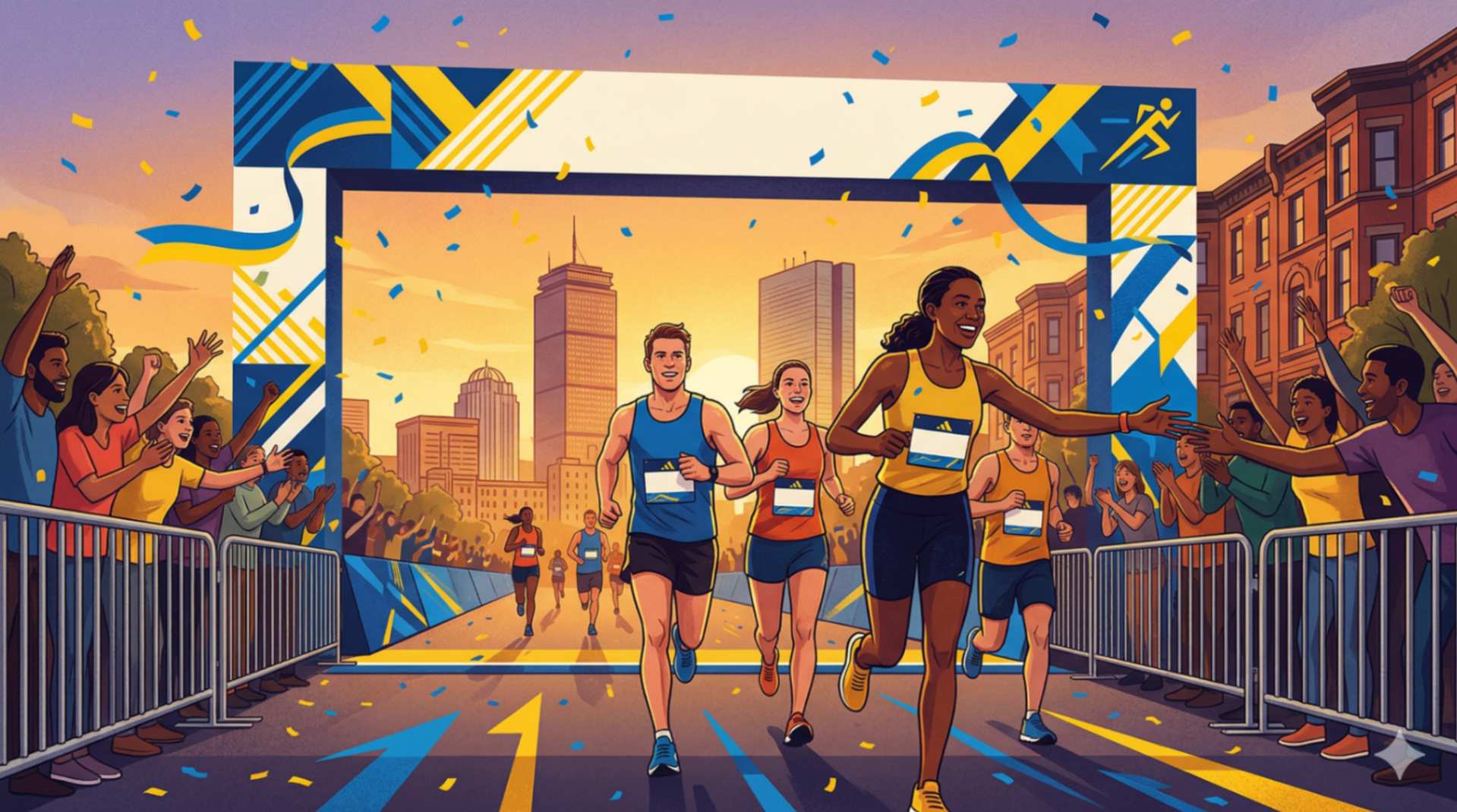
🔍 What You'll Find in This Guide (And Why Boston Is Different)
Let me tell you something about the Boston Marathon that the official website won't say.
This is not just another marathon. It's not a flat, fast city loop like Chicago. It's not a giant party like New York. Boston is the oldest annual marathon in the world—run every year since 1897—and it demands respect. The course is punishing. The qualifying standards are unforgiving. And the weather in April can swing from freezing rain to unexpected heat in the space of three hours.
But for those who earn their place on that starting line in Hopkinton—or those who stand on the sidelines cheering—Boston delivers something no other race can. It delivers history. It delivers meaning. It delivers the roar of the Wellesley scream tunnel, the gut-check of Heartbreak Hill, and the emotional release of turning onto Boylston Street for the final stretch.
I'm Hussein Abdullah, founder of "Arabs in America." I've stood at the finish line on Boylston. I've watched Arab runners—from elite qualifiers to charity runners—push through the Newton hills with "Yalla!" signs pushing them forward. This guide is built for the Arab running community: runners who dream of qualifying, supporters who want to cheer smart, and visitors who want to experience the greatest marathon on earth.
Here's exactly what you'll get:
- Why Boston Matters: The history and legacy that make this race unique.
- The Course, Deconstructed: Why Boston is deceptively hard—mile by mile, hill by hill.
- How to Get In: Qualifying times (BQ), charity entries, and what "cutoff" really means.
- Training Strategy for Arab Runners: Specific advice for the Boston course profile.
- Best Spectator Zones: Where to stand, what to bring, and how to maximize your support.
- Arab Participation and Visibility: The growing presence of Arab runners—including hijabi women—at Boston.
- Race-Day Logistics: Road closures, MBTA strategy, and practical tips.
- Real Stories from Arab Runners: Those who've run Boston and what they learned.
- Hussein's Honest Take: What Boston really demands of you.
Whether you're chasing a BQ, running for charity, or holding a "Yalla!" sign on Heartbreak Hill, this guide is your companion.
Chapter One: Race History and Legacy—Why Boston Is Sacred Ground
The Boston Marathon is not just the oldest annual marathon in the world. It is one of the six World Marathon Majors, standing alongside London, Berlin, Chicago, Tokyo, and New York. But Boston is different.
- First race: 1897. The same year, Notre Dame won its first football game. Boston has been running continuously ever since.
- Oldest continuously running annual marathon: Through two World Wars, the Great Depression, and a global pandemic, Boston has endured.
- A World Marathon Major: The prestige of Boston comes not from its size but from its exclusivity. You don't just sign up. You qualify.
- Post-2013 "Boston Strong": The 2013 marathon bombing and the city's response transformed the race from a sporting event into a global symbol of resilience. Running Boston today is an act of defiance against fear.
Hussein's Take: I was in Boston in the years after 2013. The energy changed. It became something deeper. When you run Boston now, you're not just running 26.2 miles. You're running through a city that decided—collectively, defiantly—that it would not be broken. That energy is palpable on race day. You feel it.
Chapter Two: Course Profile—Why Boston Is Deceptively Hard
Unlike many flat-loop marathons, Boston is a point-to-point course with deceptive early downhill sections and demanding late hills. Newcomers often underestimate it. Veterans respect it.
- Start: Hopkinton, a small town west of Boston.
- Finish: Boylston Street, Copley Square, in the heart of Boston.
- Total distance: 26.2 miles (42.195 km).
- Net elevation loss: Yes, Boston drops overall from start to finish. But that loss is concentrated in the early miles—and it destroys unprepared quads.
Key Sections of the Course
| Mile Marker | Section | What Happens | Strategy |
|---|---|---|---|
| Miles 1-5 | Hopkinton to Ashland | Steady downhill. Feels easy. | Hold back. This is where people ruin their race. |
| Mile ~16 | Wellesley College | The "Scream Tunnel"—thousands of students creating deafening noise. | Feed off the energy, but don't surge. |
| Miles 17-21 | Newton Hills | A series of four hills when fatigue is setting in. | Settle into a rhythm. Conserve. |
| Mile ~21 | Heartbreak Hill | Not the steepest hill in isolation, but brutally timed—after 20 miles of pounding and three prior hills. | Shorten your stride. Stay calm. Everyone hurts here. |
| Mile 25 | Kenmore Square | The city returns. The crowds are massive. | Emotional lift. Use it. |
| Mile 26.2 | Boylston Street | The final stretch. The finish line is visible but feels eternally far. | Leave nothing in the tank. |
Hussein's Take: I've watched runners cruise through the half-marathon mark in Wellesley looking fresh, only to be walking by Heartbreak Hill. The Boston course punishes arrogance. It rewards patience. Train for the hills. Train for the downhills. Your quads will thank you.
Chapter Three: Registration and Qualification Paths
Boston is highly selective. You don't just enter. You earn your way in.
A) Qualifying-Time Entry (BQ — "Boston Qualifier")
- You must run a certified qualifying marathon within the official qualification window (usually September of the previous year through the registration period).
- Meeting the published standard does not guarantee acceptance. In oversubscribed years, faster times are prioritized through a "cutoff" system. For example, if the cutoff is "BQ minus 2:30", you needed to beat your qualifying time by at least 2 minutes and 30 seconds to get in.
B) Charity Entry
- A limited number of bibs are available through approved charity partners.
- Runners commit to raising a significant amount of money (typically $5,000 to $10,000+) for their designated charity.
- This is a meaningful path for runners who haven't met the BQ standard or were edged out by the cutoff.
Boston Qualifying Standards (Core Age Groups)
| Age Group | Men | Women |
|---|---|---|
| 18-34 | 3:00:00 | 3:30:00 |
| 35-39 | 3:05:00 | 3:35:00 |
| 40-44 | 3:10:00 | 3:40:00 |
| 45-49 | 3:20:00 | 3:50:00 |
| 50-54 | 3:25:00 | 3:55:00 |
| 55-59 | 3:35:00 | 4:05:00 |
| 60-64 | 3:50:00 | 4:20:00 |
Chapter Four: Five Essential Tips for Arab Runners
- Train specifically for hills and downhills. Quad durability matters as much as aerobic fitness. Incorporate downhill running into your long runs. Do hill repeats. Your legs need to be prepared for the eccentric loading of Boston's early descents.
- Control your early pace obsessively. The opening downhill from Hopkinton can ruin your final 10K. If you feel like you're holding back too much in the first 5 miles, you're probably running the right pace.
- Prepare for variable April weather. Boston in April can be 35°F and raining, or 65°F and sunny—sometimes in the same race. Pack layers you're willing to discard. Train in uncomfortable conditions so you're ready for anything.
- Test your race nutrition in training. Never try a new gel, drink, or fueling strategy on race day. Your stomach needs to be trained just like your legs. Know what works for you during long runs.
- Respect Heartbreak Hill. It's not the steepest hill you've ever run. But it arrives at mile 21, after three prior hills, when your glycogen stores are depleted. Shorten your stride. Pump your arms. Keep moving forward. Everyone is suffering here—the race is won by those who don't stop.
Chapter Five: Best Spectator Spots (Arab Supporter Guide)
If you're coming to Boston to support a runner—or just to experience the atmosphere—here's where to go.
| Location | Mile Marker | Why It's Great | Tips |
|---|---|---|---|
| Wellesley College | ~16 | The "Scream Tunnel"—deafening energy from thousands of students. Your runner will hear you if you're loud enough. | Arrive early. It gets crowded. |
| Newton / Heartbreak Hill | ~20-21 | The most critical emotional support point. Runners are deep in the pain cave here. Seeing a familiar face or an Arabic sign can pull them through. | Bring a sign. "Yalla!" works. |
| Kenmore Square | ~25 | Pre-finish drama. Massive crowd intensity. Your runner is almost there. | Great for a final boost. |
| Boylston Street Finish | 26.2 | Iconic but extremely crowded. Arrive very early if you want a spot near the finish line. | Be prepared for large crowds and security. |
Pro Tip for Arab Spectators: Arabic signs—"Yalla champion!", "Enta qadeha!" (You've got this!), or simply waving an Arab flag—can give an Arab runner an enormous emotional lift, especially in the late-race fatigue of miles 20-25. Trust me, I've seen it.
Chapter Six: Arab Participation and Visibility
Arab runner participation at Boston has grown steadily through running clubs, student communities, and independent qualifiers from multiple Arab countries and diaspora groups.
- Gulf countries: Runners from the UAE, Saudi Arabia, Qatar, and Bahrain have increasingly targeted Boston as a bucket-list race, often funding their trips through corporate sponsorships or personal ambition.
- Diaspora runners: Arab-Americans and Arab expatriates living in the U.S. and Europe form a significant portion of the Arab contingent.
Hussein's Take: Every year, I see more Arab names on the Boston results list. More flags in the crowd. More "Yalla!" signs on the course. This is not just about running. It's about representation. When an Arab runner crosses that finish line on Boylston, they're not just finishing a marathon. They're showing the world—and their own community—what's possible.
Chapter Seven: City Logistics on Marathon Day
- Large road closures across the full 26.2-mile course. Driving in Boston on Patriots' Day is a nightmare. Don't do it.
- Downtown traffic can be heavily disrupted from early morning through late afternoon.
- MBTA (The "T") is the most reliable movement option for spectators and residents. Use the Green Line to access the finish area (Copley, Arlington, Hynes Convention Center stations). Use commuter rail or ride-shares to access suburban viewing points.
- Plan your day around the runner you're supporting. Use the official BAA Marathon app to track their progress in real time and time your movements between spectator zones.
Chapter Eight: Real Stories from Arab Runners
📖 Ahmed's Story (Jordan)
Ahmed, a Jordanian engineer living in Chicago, qualified for Boston at the Chicago Marathon in 2024 with a 2:58. "I trained for Boston specifically for six months. Everyone warned me about Heartbreak Hill. But what nobody warned me about was the downhill start. By mile 10, my quads were already burning. By mile 22, I was in survival mode. But when I turned onto Boylston and heard the roar—and saw my wife waving a Jordanian flag—I forgot the pain. I crossed the line in 3:12. Slower than my BQ, but the proudest I've ever been."
📖 Fatima's Story (Morocco)
Fatima, a Moroccan PhD student at MIT, ran Boston in 2025 as a charity runner for a local youth program. "I didn't qualify by time. I got in through a charity bib. I raised $7,500 with the help of my mosque community in Cambridge. Running in hijab, I was nervous about how I'd be received. But the crowd was incredible. A woman in Wellesley held up a sign that said 'Run, Sister, Run!' I cried at mile 16. I cried at the finish. Boston changed my life."
Frequently Asked Questions (FAQ)
Q1: Do I need to be an elite runner to run Boston? A: No. But the qualifying standards are highly competitive. Most runners need years of dedicated training to achieve a BQ time. Charity entry provides an alternative path.
Q2: Does hitting the BQ time guarantee me entry? A: Not always. In oversubscribed years, a cutoff is applied—faster runners get priority. Beating your BQ by several minutes significantly improves your chances.
Q3: How can I track a runner on race day? A: Use the official BAA Marathon app or website. Enter the runner's bib number or name for real-time splits and location tracking.
Q4: Is the finish area safe for families? A: Yes. The Boston Marathon has strict, multi-layered security systems. The finish area is secure but crowded—plan a meeting point with your runner in advance, away from the immediate finish chute.
Q5: When is the 2026 Boston Marathon? A: Monday, April 20, 2026 (Patriots' Day in Massachusetts).
Q6: What is the best way to get around on race day? A: The MBTA (The "T") . Avoid driving at all costs. Trains are your best option for moving between spectator zones.
Q7: Are there halal food options near the course? A: Yes, particularly in Allston/Brighton, Downtown, and Quincy. See our guides on halal food in Boston and Boston hotels for Arabs.
Q8: Can I run Boston as a hijabi woman? A: Absolutely. The Boston Athletic Association welcomes runners of all backgrounds. Hijabi women have completed Boston in recent years and have been celebrated by the crowd and the running community.
Conclusion: 26.2 Miles of Meaning
The Boston Marathon 2026 is more than a race. It is a test of discipline, resilience, and collective spirit. With proper preparation—physical, logistical, and strategic—Arab runners and spectators can turn it into one of the most powerful experiences in global road racing.
A final word from Hussein Abdullah: Boston is not a race you conquer. It's a race you survive—and in surviving, you discover something about yourself. For Arab runners, there's an added dimension: you're representing. You're showing the world that Arabs belong on the biggest stages of global sport. Whether you're running for a BQ, running for charity, or standing on Heartbreak Hill with a sign, you're part of something larger. Train hard. Plan smart. And when you hit that wall at mile 21, remember: everyone hurts here. The ones who finish are the ones who don't stop.
🔗 Related Resources:
- Arabs in Boston 2026: Complete Community Guide
- Boston Hotels for Arabs 2026
- Halal Food in Boston Guide
Share your Boston story: Have you run Boston? Qualified? Spectated? Share your experience in the comments below—your story could inspire the next Arab runner to chase their BQ.
Author: حسين عبد الله
Hussein Abdullah is a web developer and specialized content writer with more than eight years of experience enriching Arabic digital content. He combines an analytical programming mindset with a deep passion for writing to deliver accurate, reference-quality guides. On Arabian in USA (عرب في أمريكا), he focuses on simplifying complex steps for new immigrants and sharing reliable information on housing, work, and financial setup—so every newcomer has a trustworthy path toward stable life in the United States.


Continue reading
- Muslim Population in America 2026: Complete State-by-State Guide, Statistics & Interactive Map
- Top 10 Best States for Muslims in America: Ultimate Guide (Updated 2026)
- Top 7 Best States for Arabs in America: Ultimate Guide (Updated 2026)
- Work in America for New Immigrants 2026: The Complete Guide from Day One to Your Dream Career [Step-by-Step Plan]
- Boston Weather 2026: Complete Guide to Four Seasons, Snow, and Smart Preparation
- Halal Restaurants in Boston 2026: Complete Guide to Best Arab, Turkish, and Indian Halal Food