Boston Weather 2026: Complete Guide to Four Seasons, Snow, and Smart Preparation
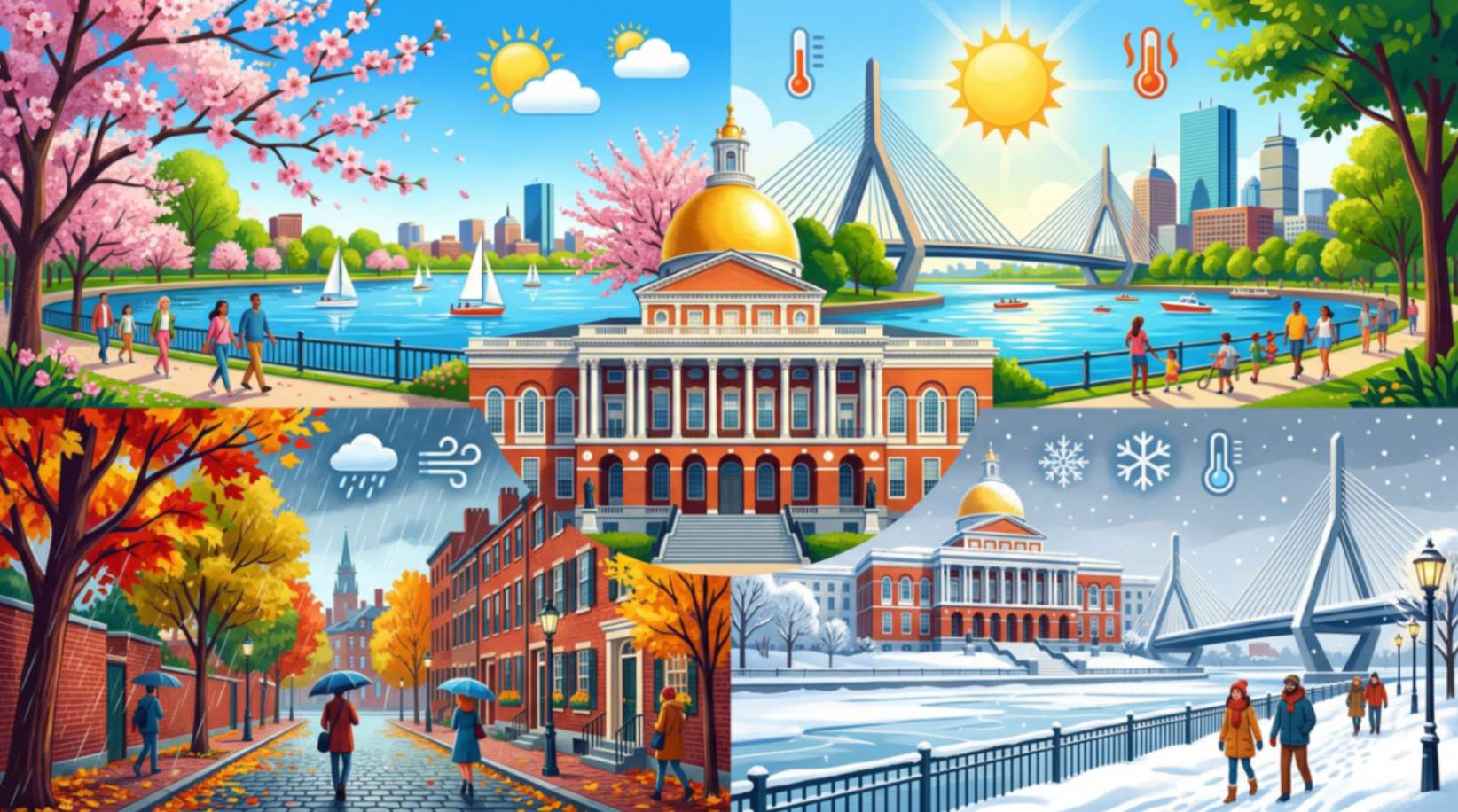
🔍 What You'll Find in This Guide (And Why Boston Weather Is Not a Joke)
Let me tell you about my first Boston winter.
I arrived from a part of the world where "cold" meant 50°F (10°C) and you complained about it. I thought I knew what winter was. Then, in January, Boston hit me with 15°F (-9°C), a Nor'easter that dumped 18 inches of snow overnight, and a wind off the Charles River that cut through every layer I owned. I stood at the Kendall Square T stop, shivering in a jacket that was designed for fashion, not survival, and thought: "I have made a terrible mistake."
The next day, I bought a proper winter coat. Real boots. Thermal layers. And I learned.
Boston weather is not a background detail. It is a character in the story of your life here. It will determine what you wear, how you commute, when you travel, and whether you love or hate your apartment. But here's the secret: once you prepare for it—really prepare—Boston's seasons become one of the city's greatest gifts.
I'm Hussein Abdullah, founder of "Arabs in America." Over fifteen years, I've helped hundreds of Arab students, families, and professionals prepare for Boston's four-season reality. This guide is built from that experience.
Here's exactly what you'll get:
- Climate Overview: What kind of weather system Boston actually has, and why it shifts so fast.
- Season-by-Season Breakdown: Winter, spring, summer, fall—what to expect, what to wear, and how to thrive.
- Monthly Temperature Table: A quick-reference guide you can bookmark.
- Snow in Boston: The Real Story: How much snow, when, and the Nor'easter threat.
- Best Times to Visit or Move: When to arrive, and when to avoid.
- Practical Survival Tips: Clothing, car, apartment, and heating advice.
- Real Stories from Arabs in Boston Winters: Those who learned the hard way so you don't have to.
- Hussein's Honest Take: Is Boston weather a dealbreaker?
Boston weather is not the enemy. Unpreparedness is. Let's fix that.
Climate Overview: What You're Actually Dealing With
Boston has a humid continental climate with strong maritime influence from the Atlantic Ocean. In plain language: it gets cold in winter, hot and sticky in summer, and the weather can change dramatically within a single day.
| Climate Feature | What It Means for You |
|---|---|
| Four distinct seasons | You'll experience everything—blizzards, heat waves, and perfect fall days. |
| Atlantic Ocean influence | Moderates extreme temperatures but adds moisture (humidity in summer, heavy snow in winter). |
| Clashing air masses | Cold Canadian air meets warm Atlantic air over New England. This creates rapid weather shifts and Nor'easters. |
| Urban heat island | Downtown Boston is often 2-5°F warmer than surrounding suburbs. |
Boston Weather by Season
❄️ Winter (December – March)
This is the season that defines Boston's reputation. It is long, cold, and snowy. But it is also survivable—and even beautiful—if you prepare.
| Winter Reality | What to Expect |
|---|---|
| Temperature Range | 20-40°F (-7 to 4°C). Nighttime lows can drop into the single digits. |
| Snowfall | Average annual snowfall is 48 inches (122 cm). Some winters are lighter; others are brutal. |
| Coldest Month | January. This is when polar vortex events can push temperatures below 0°F (-18°C). |
| Nor'easters | Powerful coastal storms that bring heavy snow, strong winds, and coastal flooding. They can shut down the city for 1-3 days. |
| Daylight | By December, the sun sets around 4:15 PM. This darkness affects mood—plan for it. |
What to Wear in Winter:
- Base layer: Thermal underwear (top and bottom). Merino wool is best.
- Mid layer: Fleece or wool sweater.
- Outer layer: A serious, insulated, waterproof winter coat. Not a fashion coat. A coat rated for sub-zero temperatures.
- Feet: Waterproof, insulated boots with good traction for ice. Wool socks.
- Accessories: Hat that covers your ears, scarf or neck gaiter, insulated gloves or mittens.
Hussein's Take: Do not try to save money on your winter coat. I did. I regretted it. Spend $150-$300 on a proper coat (Columbia, North Face, Patagonia, or Eddie Bauer). It will last you years and save you from misery. Buy it before you arrive—prices are higher in Boston in winter.
🌸 Spring (April – May)
Spring in Boston is a slow, messy, beautiful awakening.
| Spring Reality | What to Expect |
|---|---|
| Temperature Range | 40-70°F (4-21°C). Starts cold, ends pleasantly warm. |
| Mud and Melt | Melting snow creates slush and mud. Waterproof boots are still useful in March and early April. |
| Rain | Frequent spring showers. Keep a compact umbrella in your bag. |
| Best Part | By late April and May, the city blooms. The Public Garden is spectacular. Outdoor dining returns. |
☀️ Summer (June – August)
Boston summers are warm, humid, and energetic.
| Summer Reality | What to Expect |
|---|---|
| Temperature Range | 65-85°F (18-29°C), but heat waves can push temperatures above 95°F (35°C). |
| Humidity | This is the real challenge. Boston can feel sticky and oppressive in July and August. |
| Best Part | Long daylight (sunset after 8 PM), outdoor concerts, Charles River activities, and a city that feels alive. |
What to Prepare for Summer:
- Air conditioning: Not all older Boston apartments have central AC. When apartment hunting, ask about AC. A window unit can be a lifesaver.
- Light clothing: Cotton, linen, breathable fabrics.
- Hydration: Carry water. The combination of heat, humidity, and walking can dehydrate you quickly.
🍂 Fall (September – November)
This is Boston's reward for surviving winter. Fall is glorious.
| Fall Reality | What to Expect |
|---|---|
| Temperature Range | 45-75°F (7-24°C). Crisp, cool, and comfortable. |
| Foliage | New England's fall colors are world-famous. Peak foliage is typically mid-October. |
| Best Part | The weather is near-perfect. It's the best season for walking, exploring, and outdoor activities. |
Monthly Average Temperature Reference
| Month | Avg High °F | Avg Low °F | Avg High °C | Avg Low °C | What to Wear |
|---|---|---|---|---|---|
| Jan | 36 | 22 | 2 | -6 | Full winter gear |
| Feb | 39 | 24 | 4 | -4 | Full winter gear |
| Mar | 45 | 31 | 7 | -1 | Winter coat, layers |
| Apr | 56 | 40 | 13 | 4 | Jacket, umbrella |
| May | 67 | 49 | 19 | 9 | Light jacket, layers |
| Jun | 77 | 59 | 25 | 15 | Light clothing |
| Jul | 82 | 65 | 28 | 18 | Summer clothes, AC |
| Aug | 80 | 64 | 27 | 18 | Summer clothes, AC |
| Sep | 72 | 56 | 22 | 13 | Light layers |
| Oct | 61 | 45 | 16 | 7 | Jacket, sweaters |
| Nov | 51 | 37 | 11 | 3 | Coat, layers |
| Dec | 41 | 28 | 5 | -2 | Full winter gear |
Snow in Boston: The Real Story
Snow is not occasional in Boston. It is a central fact of winter life. Here's what you need to know.
| Snow Reality | Detail |
|---|---|
| Average annual snowfall | ~48 inches (122 cm) |
| Snowiest months | January and February |
| Nor'easters | These are the storms that make national news. They can drop 12-24 inches of snow in 24 hours, accompanied by strong winds and coastal flooding. The city usually shuts down for 1-2 days. |
| Black ice | A major pedestrian and driving hazard. After snow melts during the day and refreezes at night, sidewalks and roads become dangerously slick. |
Winter Essentials for Your Home and Car:
- Snow shovel (buy before the first storm, they sell out).
- Ice melt salt for your sidewalk and stairs.
- Car ice scraper and snow brush.
- Winter windshield washer fluid (the blue stuff—summer fluid freezes).
Best Times to Visit or Move to Boston
| Purpose | Best Months | Why |
|---|---|---|
| Tourism | May-June, September-October | Perfect weather, manageable crowds. |
| Moving/Relocating | August-September | Aligns with the academic calendar, weather is still good. |
| Budget travel | January-February | Cheapest hotel rates, but coldest weather. |
| Avoid if possible | January-February | Harsh conditions, short days, winter storms. |
Hussein's Take: If you're an Arab student arriving for the first time, aim for an August arrival. This gives you 4-6 weeks of decent weather to settle in, explore the city, and buy your winter gear before the cold hits. Arriving in January is a shock I don't recommend.
📖 Real Stories: Arabs Who Survived (and Learned to Love) Boston Winters
Ahmed's Story (Syria)
Ahmed, a Syrian PhD student at Northeastern, arrived in September. "I bought a stylish wool coat in Damascus before I left. It looked great. It was useless. In January, I was freezing at the bus stop every morning. A classmate from Minnesota took me to an Eddie Bauer outlet and said, 'Buy this parka. Now.' It cost me $200 and it changed my life. I've had it for four years. Don't buy fashion. Buy function."
Fatima's Story (UAE)
Fatima, an Emirati undergraduate at BU, experienced her first snow in November. "I was so excited. I ran outside in sneakers and a light jacket. Ten minutes later, my feet were soaked and I couldn't feel my fingers. I learned: waterproof boots. Always. And gloves. Never forget gloves."
Practical Adaptation Tips
- Master the art of layering. A single heavy coat is not enough. Layers trap warm air and let you adjust as temperatures shift. Base layer + mid layer + outer shell is the formula.
- Buy waterproof winter boots early. Do not wait until the first snow. Stores sell out. Your feet will thank you.
- Check the forecast daily. Boston weather can shift dramatically within 12 hours. Use a reliable weather app (Weather.com, AccuWeather, or the National Weather Service).
- Prepare your car for winter. If you own a car, get winter tires or at least all-season tires rated for snow. Keep an emergency kit in your trunk: blanket, flashlight, snacks, water, jumper cables.
- Confirm summer AC options when apartment hunting. Many older Boston apartments do not have central air conditioning. Ask before signing a lease. A window AC unit ($200-$400) can make the difference between sleeping comfortably and suffering through July.
- Take vitamin D in winter. Short days and limited sunlight can affect your mood. Vitamin D supplements are inexpensive and widely recommended by Boston doctors.
Frequently Asked Questions (FAQ)
Q1: Is Boston too cold for someone from a warm climate? A: It is cold, but millions of people from warm climates live here comfortably. Preparation—clothing, home heating, and mindset—makes all the difference. The first winter is the hardest. It gets easier.
Q2: Do I need a car with all-wheel drive (AWD) in Boston? A: Not necessarily if you live in central Boston or near the T. Winter tires on a front-wheel-drive car are often sufficient. If you live in the suburbs or commute by car daily, AWD provides added security.
Q3: What is the coldest month in Boston? A: January. This is when polar vortex events can push temperatures well below freezing.
Q4: What is the warmest month? A: July. Hot and humid. AC is your friend.
Q5: Are hurricanes common in Boston? A: Less than in southern coastal states. Winter storms (Nor'easters) are the larger local concern. Hurricanes occasionally brush the region in late summer/early fall but are rarely direct hits.
Q6: How do I prepare my apartment for winter? A: Check that your heating system works before winter. Seal drafty windows with plastic insulation kits (sold at any hardware store). Have extra blankets available.
Q7: What's the best month to visit Boston? A: October for fall foliage and perfect weather. May for spring blooms and pre-summer calm.
Q8: Does Boston get a lot of snow? A: Yes. Average is 48 inches per year, but some winters see much more. The winter of 2014-2015 dropped over 110 inches.
Conclusion: Preparedness Turns Weather Into an Advantage
Boston weather is part of the city's identity. It is not an obstacle to endure—it is a rhythm to embrace. Once you prepare season by season, it becomes manageable and even enjoyable. The fall foliage, the first snow on the Charles, the spring cherry blossoms in the Public Garden—these are experiences that reward those who dressed for them.
A final word from Hussein Abdullah: I've seen Arab newcomers terrified of Boston's reputation for cold. And I've seen those same people, a year later, posting photos of themselves ice skating on the Frog Pond, skiing in Vermont, and drinking hot chocolate while watching the snow fall outside their window. Boston weather is not the enemy. Unpreparedness is. Buy the coat. Get the boots. Learn to layer. And then get outside and enjoy one of America's most beautiful, seasonally rich cities.
🔗 Continue Planning Your Boston Life:
- Arabs in Boston: Complete Community Guide
- Boston Tourism for Arabs
- Boston Hotels for Arabs
- Travel to Boston: Flights, Trains, and Airport Transfers
- Health Insurance in America
Share your Boston weather story: What was your first Boston winter like? What piece of clothing or gear saved you? Leave your tips in the comments below—your experience could help the next Arab newcomer survive their first Nor'easter.

Author: حسين عبد الله
Hussein Abdullah is a web developer and specialized content writer with more than eight years of experience enriching Arabic digital content. He combines an analytical programming mindset with a deep passion for writing to deliver accurate, reference-quality guides. On Arabian in USA (عرب في أمريكا), he focuses on simplifying complex steps for new immigrants and sharing reliable information on housing, work, and financial setup—so every newcomer has a trustworthy path toward stable life in the United States.


Continue reading
- Muslim Population in America 2026: Complete State-by-State Guide, Statistics & Interactive Map
- Top 10 Best States for Muslims in America: Ultimate Guide (Updated 2026)
- Top 7 Best States for Arabs in America: Ultimate Guide (Updated 2026)
- Work in America for New Immigrants 2026: The Complete Guide from Day One to Your Dream Career [Step-by-Step Plan]
- Immigrate to Boston 2026: Complete Guide to Relocation and Settlement for New Immigrants
- Boston University for Arabs 2026: Complete Guide to Admission, Scholarships, and Student Life