Arabs in Boston 2026: Complete Guide to Community, Mosques, Islamic Schools, and Best Neighborhoods
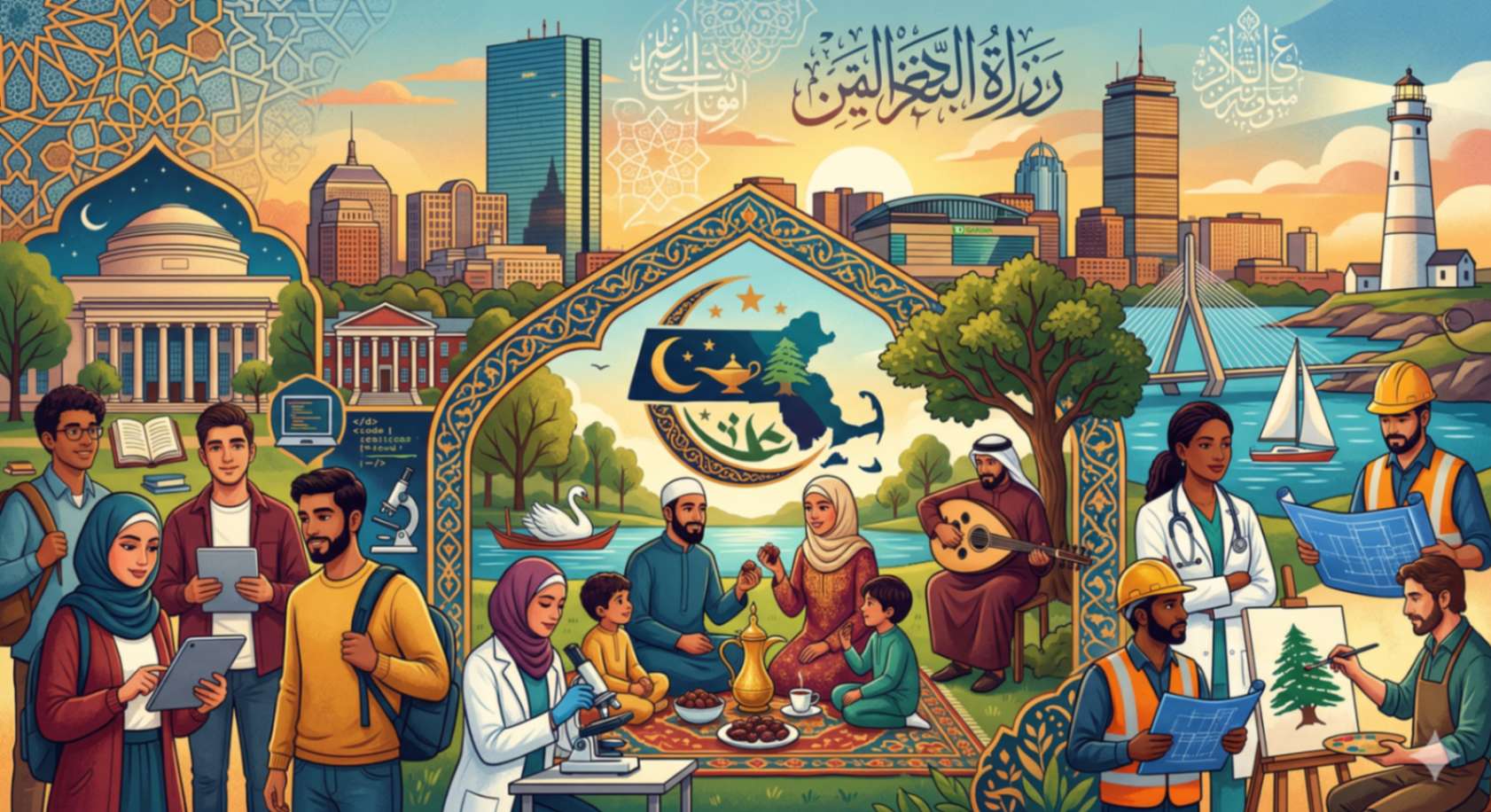
🔍 What You'll Find in This Guide (And Why Boston Might Be Your City)
Boston is not cheap. It's not easy. The winters are brutal, the rents are among the highest in America, and the traffic on I-93 can test the patience of a saint. But here's what I've learned over fifteen years of watching Arab families build lives in this city: Boston delivers a return on investment that few other American cities can match.
I'm Hussein Abdullah, founder of "Arabs in America." I've walked through the Islamic Society of Boston Cultural Center (ISBCC) in Roxbury—the largest mosque in New England. I've eaten shawarma in Allston with Syrian medical residents and Lebanese PhD candidates. I've talked with Palestinian families in Quincy who chose the suburb's public schools over private education and never looked back.
Boston is home to one of the oldest and most established Arab communities in the United States. It's also home to the densest concentration of elite universities, world-class hospitals, and biotech companies on the planet. For the right family—one that values education, professional growth, and long-term stability—Boston can be transformational.
Here's exactly what you'll get in this guide:
- Community Roots: How Arabs came to Boston (hint: some families have been here since the 1890s), and who makes up the community today.
- Neighborhood Map: Where Arab families actually live—from Roxbury to Quincy, from Allston to Malden—with real rent estimates.
- Mosques and Islamic Centers: A complete directory of where to pray, learn, and connect, led by the landmark ISBCC.
- Islamic Education: Full-time Islamic schools, weekend programs, and how families combine public and Islamic education.
- Career Pathways: Healthcare, biotech, academia, tech, and small business—where Arabs are building careers in Boston.
- Real Housing Costs (2026): Neighborhood-by-neighborhood rent estimates, so you can budget realistically.
- Practical Newcomer Tips: From the MBTA to winter preparation to MassHealth.
- Real Stories from Boston Arabs: Families and students who made the move and what they learned.
- Hussein's Honest Verdict: Is Boston right for your family?
Boston isn't for everyone. But for those who choose it, it can be the smartest decision they ever make.
Chapter One: Community Background—A History Deeper Than You Think
Boston's Arab community is not recent. It is one of the oldest in America, with roots stretching back to the late 19th century.
- First Wave (1880s-1920s): The earliest Arab immigrants to Boston came from Greater Syria (modern-day Lebanon, Syria, and Palestine). They were predominantly Christian, working as peddlers, textile workers, and small business owners. Many settled in the South End and later Roxbury.
- Palestinian Migration (post-1948): A significant Palestinian community established itself in Boston, contributing to the city's academic, medical, and business life.
- Lebanese Expansion (1970s-1990s): The Lebanese Civil War drove new waves of immigration, expanding the community significantly.
- The Academic and Medical Pipeline (2000s-Present): Boston's unparalleled concentration of universities and hospitals has attracted a continuous stream of Arab students, physicians, researchers, and engineers. Many arrive for education or training and stay to build careers and families.
In 2026, the Arab population in Greater Boston is estimated at 40,000 to 50,000, spread across city neighborhoods and inner suburbs. The community is diverse—Lebanese, Palestinian, Syrian, Egyptian, Iraqi, Moroccan, and more recently, Sudanese and Yemeni communities are growing.
Hussein's Take: I've met Arab families in Boston whose great-grandparents arrived here in the 1890s. They're as Bostonian as clam chowder—but they still speak Arabic at home and attend the ISBCC on Fridays. That depth of roots means that the community infrastructure here is mature, well-funded, and built to last. This isn't a community that's figuring things out. It's a community that has already figured them out.
🔗 Related Reading: Massachusetts 2026 Guide | Best State for Arabs in America | Best State for Muslims in America
Chapter Two: Where Arab Families Are Concentrated—The Neighborhood Map
Greater Boston's Arab community is distributed across several key neighborhoods and suburbs. Each offers a different balance of cost, space, community proximity, and school quality.
Roxbury
Roxbury is the heart of Boston's Muslim community. It is home to the Islamic Society of Boston Cultural Center (ISBCC) —the largest mosque in New England and a landmark institution. Strong Islamic-community presence, multiple halal markets, and a sense of belonging that is hard to replicate elsewhere in the city. Housing here is relatively more affordable than downtown or Cambridge.
Allston / Brighton
A student-heavy area with active Arab youth life. The concentration of young Arabs—graduate students, medical residents, young professionals—creates a vibrant social scene. Halal restaurants, Middle Eastern groceries, and a palpable energy define these neighborhoods. Rents are moderate by Boston standards but rising.
Cambridge
The academic center, home to Harvard and MIT. Very safe, very expensive. Arab students, postdocs, and faculty live here for proximity to campus. The Islamic Society of Boston in Cambridge provides community infrastructure.
Quincy
The top family-oriented suburb for Arabs in Boston. Better value than central Boston, excellent public schools, and a growing Arab-Muslim presence. The Quincy Islamic Center serves the community. Many Arab families who left apartments in the city for more space and better schools have chosen Quincy.
Malden / Revere
More affordable options with access to public transit (the MBTA Orange and Blue Lines). These areas have attracted Arab families priced out of closer-in neighborhoods. Active Islamic centers serve both communities.
| Neighborhood | Vibe | Who Lives There |
|---|---|---|
| Roxbury | Community heart, near ISBCC | Families, long-established residents |
| Allston/Brighton | Student/young professional energy | Grad students, medical residents |
| Cambridge | Academic elite, very expensive | Students, postdocs, faculty |
| Quincy | Family-oriented suburb | Established Arab families |
| Malden/Revere | More affordable, transit-accessible | Newcomer families |
Chapter Three: Mosques and Islamic Centers in Greater Boston
Greater Boston offers a developed and diverse Islamic infrastructure. These centers are more than prayer spaces—they are community anchors.
| Islamic Center | Location | Key Services |
|---|---|---|
| ISBCC (Islamic Society of Boston Cultural Center) | 100 Malcolm X Blvd, Roxbury | Largest mosque in New England. Five daily prayers, Jummah, weekend school, youth programs, interfaith outreach, social services. |
| ISB Cambridge | Near MIT/Cambridge | Serves the academic community. Prayers, educational programs, student support. |
| Quincy Islamic Center | Quincy | Community anchor for the South Shore Arab-Muslim community. Prayers, family programs. |
| Malden Islamic Center | Malden | Serves the growing Arab community north of Boston. |
| East Boston Islamic Center | East Boston | Serves East Boston and surrounding areas. |
Chapter Four: Islamic Schools and Education
Boston offers both full-time Islamic schools and robust weekend programs.
Full-Time Islamic Schools
- Al-Noor Academy: A well-regarded Islamic school serving the community.
- Boston Islamic School: Provides Islamic education alongside a secular curriculum.
Weekend and Supplementary Programs
Most major mosques—including ISBCC and ISB Cambridge—operate weekend Arabic and Quran programs for children. These programs are essential for families who choose high-performing public schools (which Boston has in abundance) and want to maintain Arabic language and Islamic education.
🔗 For national context: Islamic Schools in America 2026
Chapter Five: Job Opportunities—Where Boston Shines
Boston's economy is driven by sectors where Arabs are strongly represented.
1. Healthcare and Medicine
Boston is a global healthcare capital. Massachusetts General Hospital (MGH) , Brigham and Women's Hospital, Boston Children's Hospital, and Beth Israel Deaconess Medical Center are just the biggest names. Arab physicians, nurses, and allied health professionals are employed across all these systems.
2. Higher Education and Research
Harvard University, MIT, Boston University, Northeastern University, Tufts, and Brandeis form the densest academic cluster in the world. Arab professors, researchers, postdoctoral fellows, and graduate students are a significant part of this ecosystem.
3. Biotech and Pharma
Kendall Square in Cambridge is the epicenter of American biotech. Companies like Moderna, Biogen, and hundreds of startups offer high-paying roles for scientists, data analysts, and engineers.
4. Technology
Software engineering, data science, and product management roles are plentiful across the Boston-Cambridge tech corridor.
5. Small Business and Entrepreneurship
Halal restaurants, Arab groceries, professional services (legal, accounting, real estate), and service businesses thrive in the Arab community.
🔗 For broader career guidance: Work in America for New Immigrants
Chapter Six: Housing and Living Costs (2026)
Let's be honest: Boston is one of the most expensive housing markets in America. But knowing the numbers helps you plan.
| Area | Typical 2BR Rent/Month (2026) | Notes |
|---|---|---|
| Downtown / Back Bay | $4,500 - $6,000+ | Premium, central, walkable |
| Cambridge | $3,500 - $4,800 | Academic core, very safe |
| Allston / Brighton | $2,800 - $3,500 | Student-heavy, good value |
| Roxbury / Jamaica Plain | $2,500 - $3,200 | Community heart, near ISBCC |
| Quincy | $2,200 - $2,800 | Top family suburb, excellent schools |
| Malden / Revere | $2,100 - $2,600 | More affordable, transit-accessible |
Hussein's Take: If you're moving to Boston, Quincy is where I've seen the most Arab families settle in recent years. It offers the best balance of housing cost, school quality, and community access. You get more space for your dollar than in Cambridge or downtown, and you're still within a reasonable commute.
Chapter Seven: Five Practical Newcomer Tips
- Use the MBTA before committing to car ownership. Boston's public transit system (the "T") is one of the best in America. Buses, subways, and commuter rail connect most neighborhoods and suburbs. Parking in Boston is expensive and scarce.
- Prepare seriously for winter weather. Boston winters are long, cold, and snowy. Budget for heating costs. Invest in a proper winter coat, boots, and snow tires if you have a car.
- Start your rental search months early—especially before September. Boston's rental market is driven by the academic calendar. Apartments turn over on September 1st, and the market is fiercely competitive in July and August. Start looking in May or June.
- Use mosque and community networks for housing leads. The ISBCC, ISB Cambridge, and community WhatsApp groups often have rental listings that never appear on public platforms. Arab landlords sometimes prefer Arab tenants.
- Explore MassHealth eligibility early. Massachusetts has one of the most comprehensive state health insurance programs in America. New immigrants may qualify. Don't wait until you're sick to figure out your coverage.
🔗 For financial settling-in: How to open a US bank account as a new immigrant | How to build your credit score from scratch | Health insurance in America
Frequently Asked Questions (FAQ)
Q1: How many Arabs live in Boston? A: In 2026, the Arab population in Greater Boston is estimated at 40,000 to 50,000, making it one of the oldest and most established Arab communities in America.
Q2: What is the best neighborhood for Arab families in Boston? A: Quincy has become the top choice for families seeking excellent public schools, more space, and a growing Arab-Muslim presence. Roxbury remains the community's spiritual and cultural heart.
Q3: Where is the largest mosque in Boston? A: The ISBCC (Islamic Society of Boston Cultural Center) at 100 Malcolm X Blvd in Roxbury is the largest mosque in New England.
Q4: Are there Islamic schools in Boston? A: Yes. Al-Noor Academy and Boston Islamic School offer full-time Islamic education. Most major mosques also operate weekend Arabic and Quran programs.
Q5: Is Boston expensive for Arab families? A: Yes, Boston is one of the most expensive U.S. cities. However, the strong job market in healthcare, biotech, and academia offers salaries that can offset the high costs for professionals.
Q6: How does Boston compare to Michigan for Arab families? A: Boston offers a stronger academic and professional job market, particularly in healthcare and biotech. Michigan (Dearborn/Detroit) offers a much larger Arab community, lower costs, and a more Middle Eastern cultural environment. The choice depends on your priorities: career upside vs. community immersion.
Q7: What are the best job sectors for Arabs in Boston? A: Healthcare (physicians, nurses), biotech/pharma, higher education and research, and technology are the strongest sectors.
Conclusion: Is Boston Right for Your Family?
Boston in 2026 remains one of the strongest long-term destinations for Arab families focused on education, professional growth, and stable community life. Costs are high, but career upside and social infrastructure can justify the move when planned properly.
A final word from Hussein Abdullah: Boston is not a city you stumble into. It's a city you choose—deliberately, with eyes wide open to the cost. But for the Arab physician doing her residency at MGH, the Lebanese engineer building the next biotech startup in Kendall Square, or the Palestinian family seeking the best possible public schools for their children, Boston delivers. It has for over a century. It still does today.
🔗 Continue Your Research:
- Best State for Arabs in America
- Best State for Muslims in America
- Work in America for New Immigrants
- How to open a US bank account
- Living in Michigan for Arab Immigrants
Share your experience: Are you an Arab living in Boston? What neighborhood did you choose, and how has your experience been? Leave your story in the comments below—it could guide the next family considering this move.
Author: حسين عبد الله
Hussein Abdullah is a web developer and specialized content writer with more than eight years of experience enriching Arabic digital content. He combines an analytical programming mindset with a deep passion for writing to deliver accurate, reference-quality guides. On Arabian in USA (عرب في أمريكا), he focuses on simplifying complex steps for new immigrants and sharing reliable information on housing, work, and financial setup—so every newcomer has a trustworthy path toward stable life in the United States.


Continue reading
- Mosques in Boston 2026: Complete Guide to Major Mosques and Islamic Centers
- Muslim Population in America 2026: Complete State-by-State Guide, Statistics & Interactive Map
- Top 10 Best States for Muslims in America: Ultimate Guide (Updated 2026)
- Top 7 Best States for Arabs in America: Ultimate Guide (Updated 2026)
- Boston Hotels for Arabs 2026: Complete Guide to Best Stays Near Mosques and Halal Restaurants
- Work in America for New Immigrants 2026: The Complete Guide from Day One to Your Dream Career [Step-by-Step Plan]