Living in Michigan 2026: Ultimate Guide for Arabs and Immigrants (Housing, Jobs, Schools, Mosques)
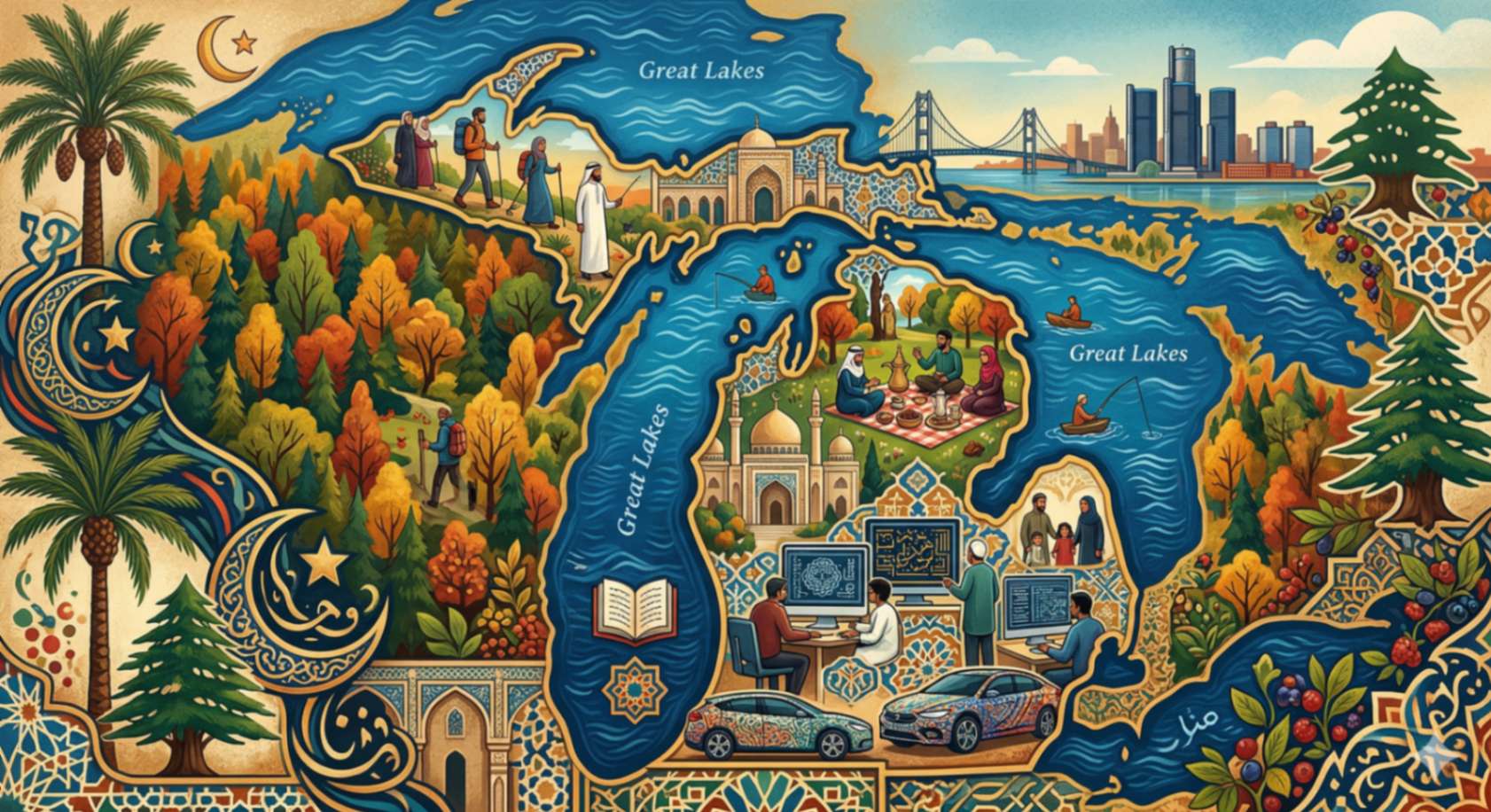
🔍 What You'll Find in This Guide (And Why Michigan Could Be Your Family's Best Decision)
Let me tell you about a family I helped relocate three years ago.
They were living in a two-bedroom apartment in Brooklyn, paying $3,800 a month in rent. The father was a mechanical engineer. The mother was a pharmacist. They had two children and were expecting a third. They were educated, hardworking, and—despite a combined household income of $140,000—they were living paycheck to paycheck. They couldn't save. They couldn't buy a home. They felt trapped.
I showed them Dearborn. A four-bedroom house for $260,000. Islamic schools within a 10-minute drive. A mosque community that would embrace them. Arabic-speaking doctors. Halal grocery stores where they could buy a week's worth of food for what they spent in three days in Brooklyn. And a job market hungry for engineers.
They moved six months later. They bought their house a year after that. Their children are in an Islamic school. They are saving money. And when I spoke to the father last month, he said something I'll never forget: "I didn't realize how much financial stress was crushing our family life until it was gone. Michigan gave us our lives back."
I'm Hussein Abdullah, founder of "Arabs in America." Over fifteen years, I've watched Michigan—and especially the Dearborn-Detroit corridor—transform the trajectories of Arab families who were treading water in more expensive states. This guide is your complete picture of what it actually means to live here.
Here's exactly what you'll get:
- The Honest Pros and Cons: Why Michigan is worth it—and what you'll sacrifice.
- Cost of Living Reality: Rent, home prices, and monthly budgets across every major city.
- Where to Live: Dearborn, Dearborn Heights, Canton, Ann Arbor, Detroit, Hamtramck—ranked and explained for Arab families.
- Mosques and Islamic Life: The institutions that will anchor your family's spiritual life.
- Education: Public schools, Islamic schools, and university pathways.
- Jobs and Economy: Which sectors are hiring, what salaries look like, and where Arabs are building careers.
- Winter Survival: What you actually need to know about Michigan's longest season.
- Transportation Reality: Why you need a car, what insurance will cost, and how to navigate.
- Practical Relocation Checklist: What to do before you move, and in your first 30 days.
- Real Stories from Michigan Arabs: Families who made the move and what they learned.
- Hussein's Honest Take: Is Michigan right for your family?
Michigan is not for everyone. The winters are long. The car insurance is expensive. But for a family that values community, affordability, and a realistic path to homeownership and savings, it may be the most strategic choice in America.
Chapter One: Why Michigan? The Honest Pros and Trade-offs
✅ The Pros
- Largest Arab community concentration in the U.S. Nowhere else in America will you find the density of Arabic-speaking institutions, halal businesses, and community networks that exist in the Dearborn-Detroit corridor. For a new immigrant still building English skills, this is priceless.
- Lower living costs than most coastal states. Housing costs in Michigan are 30–50% lower than California or New York for comparable spaces. This alone can transform a family's financial trajectory.
- Homeownership is still realistic. In Dearborn and its surrounding suburbs, solid single-family homes can still be purchased for $200,000–$300,000—a dream that has evaporated in coastal markets.
- Strong, diversified employment base. Automotive manufacturing, healthcare, higher education, and technology provide stable career paths.
- Excellent family support infrastructure. Mosques that function as community hubs, Islamic schools that combine academic rigor with religious education, and social services tailored to Arab and Muslim newcomers.
⚠️ The Cons
- Long, cold winters. Snow can fall from November through April. This is not a minor inconvenience—it's a lifestyle adjustment that requires real preparation and mental fortitude.
- High car insurance costs. Michigan's no-fault insurance system drives premiums to among the highest in the nation.
- Car dependence. Outside a few transit corridors, you will need a vehicle. Public transit is not a viable primary option for most families.
- Neighborhood quality varies dramatically. Detroit proper ranges from revitalized, safe areas to distressed blocks. You must do your homework before choosing where to live.
Hussein's Take: I tell every Arab family considering Michigan the same thing: the winter is the price of admission. If you can make peace with four months of cold and snow, what you get in return—community, affordability, and stability—is unmatched in the United States.
🔗 For comparison with other states:
- Arabs in Michigan: Complete Community Guide
- Cost of Living in Michigan 2026
- Best State for Arabs in America
- Best State for Muslims in America
Chapter Two: Cost of Living Snapshot (2026)
| City | Avg. 2-Bedroom Rent | Avg. Home Price | Family Monthly Budget |
|---|---|---|---|
| Dearborn | $1,200 – $1,600 | $200,000 – $280,000 | $3,700 – $5,450 |
| Dearborn Heights | $1,100 – $1,500 | $180,000 – $250,000 | $3,500 – $5,200 |
| Canton | $1,300 – $1,700 | $300,000 – $400,000 | $4,000 – $5,800 |
| Ann Arbor | $1,500 – $2,000 | $350,000 – $500,000 | $4,500 – $6,500 |
| Detroit | $900 – $1,300 | $70,000 – $150,000 | $2,500 – $3,850 |
| Grand Rapids | $1,100 – $1,500 | $250,000 – $350,000 | $3,200 – $4,800 |
Fuel often ranges near $3.20–$3.70/gallon, while car insurance can run $100–$200/month depending on your driving history and zip code.
For a complete line-by-line budget breakdown, see Cost of Living in Michigan 2026.
Chapter Three: Best Michigan Cities for Arab Families
🥇 Dearborn—The Heart of Arab America
The strongest Arab ecosystem in the United States. Arabic is part of daily commercial life. Warren Avenue is the cultural and culinary spine of the community. Islamic Center of America is here. Halal groceries, restaurants, and professional services are everywhere. For a newcomer still building English skills, Dearborn removes the isolation that defines the immigrant experience in most American cities.
🥈 Dearborn Heights—The Quieter Extension
Adjacent to Dearborn with a very large Arab population. Rent and home prices are slightly lower while community access remains immediate. Excellent for families who want the benefits of Dearborn with slightly more space and quiet.
🥉 Canton—The Suburban Upgrade
A growing Arab presence in a higher-performing public school district. Many second-generation families move here when schools become the top priority. More space, newer homes, but you'll drive to Dearborn for specialized halal shopping.
Ann Arbor—The Academic Hub
Home to the University of Michigan. The Arab community here is smaller but highly educated—faculty, physicians, researchers, and graduate students. Strong Islamic infrastructure through the Islamic Center of Ann Arbor. Higher housing costs, but unmatched for academic and professional opportunities.
Detroit/Hamtramck—The Value Play
Detroit offers dramatically lower housing costs, but neighborhood quality varies significantly. Hamtramck, a small city surrounded by Detroit, is a unique diversity hub with the first Muslim-majority city council in America and very large Yemeni and Bangladeshi communities.
Chapter Four: Mosques and Islamic Infrastructure
Religious infrastructure is one of Michigan's greatest strengths for Muslim families.
| Institution | Location | Significance |
|---|---|---|
| Islamic Center of America | Dearborn | Largest mosque in North America. Full community hub. |
| Islamic Center of Dearborn Heights | Dearborn Heights | Strong youth and family focus. |
| IAGD (Canton) | Canton | Major suburban mosque with athletics and youth programs. |
| Islamic Center of Ann Arbor | Ann Arbor | Serves U-M community and local families. |
| Hamtramck Islamic Center | Hamtramck | Yemeni and Bangladeshi community anchor. |
🔗 For comparison with other states: Mosques in California | Mosques in Utah
Chapter Five: Education—Public, Islamic, and Higher Ed
Public Schools
- Dearborn Public Schools are a national model for serving Arab and Muslim students—halal meal options, Arabic-speaking staff, ESL programs, and respect for Islamic holidays.
- Canton, Livonia, and Novi offer top-rated suburban public school districts popular with second-generation Arab families.
Islamic Schools
- Star International Academy (Dearborn Heights): Combines Islamic values with strong academic outcomes.
- Universal Academy (Detroit): Diverse, with intensive Arabic and Islamic studies.
- Michigan Islamic Academy (Ann Arbor): Rigorous environment for university-town families.
- Iqra Academy (Dearborn): Focused on Islamic identity and Arabic literacy.
Higher Education
- University of Michigan (Ann Arbor): World-class, with a large and active Arab student community.
- Michigan State University: Strong in engineering, agriculture, and business.
- Wayne State University (Detroit): Excellent for medicine, sciences, and attracts many Dearborn-area students.
- Henry Ford College (Dearborn): Affordable community college pathway to a four-year degree.
🔗 For national Islamic school context: Islamic Schools in America 2026
Chapter Six: Economy and Work Outlook
| Sector | Example Employers | Typical Roles |
|---|---|---|
| Automotive & Manufacturing | Ford, GM, Stellantis | Engineers, technicians, assembly, logistics |
| Healthcare | Henry Ford Health, Beaumont, Trinity Health | Physicians, RNs, allied health, administration |
| Technology & Data | Growing startup scene, auto-tech (EV/autonomy) | Software engineers, data analysts |
| Education & Research | UMich, MSU, Wayne State | Faculty, researchers, administrators |
| Small Business | Restaurants, groceries, contracting, retail | Entrepreneurs, family business operators |
🔗 For detailed salary breakdowns: Work in Michigan 2026 | Work in America for New Immigrants
Chapter Seven: Winter Survival—What You Actually Need to Know
Michigan winters are not a minor detail. They define daily life from November through March. Here's what matters:
| Winter Essential | Why It Matters |
|---|---|
| Proper winter coat | Not a fashion coat. A rated, insulated winter coat. Budget $150–$300. |
| Waterproof boots | Snow and slush are constant. Your feet need to stay dry. |
| Snow tires | All-season tires are often insufficient. Budget $600–$1,000 for a set. |
| Home heating budget | Ask about average utility costs before signing a lease. January gas bills can hit $200–$350. |
| Layers | Learn to dress in layers. The temperature can swing 20 degrees in a day. |
| Car emergency kit | Blanket, flashlight, snacks, jumper cables, ice scraper. Keep these in your trunk. |
Hussein's Take: The first winter is the hardest. The second is easier. By the third, you'll be giving advice to newcomers. Invest in the gear. Don't cheap out on your coat or boots. And remember: spring in Michigan is glorious precisely because the winter is so demanding.
Chapter Eight: Transportation Reality
- You need a car. Public transit exists in Detroit (DDOT/SMART buses) and Ann Arbor (TheRide), but it is not a viable primary transportation option for most families.
- Car insurance is expensive. Michigan's no-fault system drives premiums to $100–$200/month per vehicle. New immigrants without U.S. driving history pay more. Shop around annually.
- Fuel is reasonable. Gasoline typically runs $3.20–$3.70/gallon—cheaper than California, comparable to the national average.
- Snow tires are not optional. If you're driving regularly in winter, budget for a set of dedicated winter tires.
Chapter Nine: Practical Relocation Checklist
Before You Move
- Research neighborhoods using Zillow, Realtor.com, and local Arab Facebook groups.
- Start job applications early (Indeed, LinkedIn, company career pages).
- Contact mosques in your target city for community connections.
- Budget for first-month rent + last-month rent + security deposit + potential broker fee.
- If arriving in fall/winter, order your winter coat and boots before you leave.
First 30 Days in Michigan
- Apply for SSN at the nearest Social Security Administration office.
- Open a bank account (Bank of America and Chase have branches throughout metro Detroit).
- Obtain a Michigan driver's license (RMV).
- Enroll children in school (bring lease, birth certificates, immunization records).
- Register for health insurance (employer plan, HealthCare.gov, or Michigan Medicaid if eligible).
- Visit your nearest mosque and introduce yourself.
🔗 Essential new-immigrant guides:
Chapter Ten: Real Stories from Arabs Living in Michigan
📖 The Mahmoud Family (Palestine → California → Dearborn)
Abu Mahmoud, a mechanical engineer, moved his family from Irvine, California, to Dearborn in 2022. "In California, we were renting a two-bedroom apartment for $3,400. We couldn't save. We couldn't buy a house. In Dearborn, we bought a four-bedroom house for $260,000. Our mortgage is less than our California rent. My kids are in an Islamic school. My wife found a community of Arabic-speaking mothers. We should have moved five years earlier."
📖 Fatima's Story (Yemen → Hamtramck)
Fatima, a Yemeni mother of four, resettled in Hamtramck in 2019. "I didn't speak English when I arrived. In Hamtramck, I didn't need to. The grocery store owners speak Arabic. The doctors speak Arabic. The mosque is two blocks away. Now I'm learning English at a free community class, but those first two years, the community carried me. I don't know how immigrants survive in places without this."
Frequently Asked Questions (FAQ)
Q1: Is Michigan a good place for Arab families? A: Yes—arguably the best in America for community density, Islamic infrastructure, and affordability. The trade-off is winter.
Q2: What is the best city in Michigan for a new Arab immigrant? A: Dearborn if community and cultural familiarity are your top priorities. Canton if schools are your top priority. Ann Arbor if you're in academia or healthcare.
Q3: How much does a family need to live comfortably in Michigan? A: A family of four typically needs a gross household income of $54,000–$78,000 annually for a comfortable life in the Dearborn area—far less than coastal cities.
Q4: Are there Islamic schools in Michigan? A: Yes—several, including Star International Academy, Universal Academy, Michigan Islamic Academy, and Iqra Academy.
Q5: Is a car necessary in Michigan? A: For most families, yes. Public transit is limited. Budget for a reliable used vehicle and expensive car insurance.
Q6: How bad is the winter, really? A: It's serious. Snow from November through April. Temperatures below freezing for weeks at a time. But with proper gear and preparation, it becomes manageable.
Q7: Can I find halal food easily? A: In Dearborn and surrounding suburbs, halal food is more accessible and affordable than anywhere else in America. Outside of southeast Michigan, options are present but less dense.
Q8: Are there Arab-speaking professionals (doctors, lawyers, real estate agents) in Michigan? A: Yes—especially in Dearborn and Dearborn Heights. You can find Arabic-speaking physicians, dentists, attorneys, and real estate agents throughout the community.
Conclusion: Michigan—A Strategic Choice for Your Family's Future
Michigan in 2026 remains a strategic choice for Arab immigrants who want community support, realistic costs, and durable job pathways. If you are ready for winter, the long-term upside for family stability and financial progress is strong.
A final word from Hussein Abdullah: I've watched families arrive in Michigan exhausted—financially drained from years of high-cost coastal living, emotionally drained from feeling like outsiders. And I've watched those same families, within two or three years, become homeowners, community leaders, and confident Americans. Michigan does that. Not because it's easy—the winters are hard, the car insurance is frustrating, and the adjustment is real. But because the community infrastructure here is deep enough to catch you when you fall, and the cost of living is low enough to let you build. If you're willing to trade palm trees for snow and a higher salary for real purchasing power, Michigan is waiting for you.
🔗 Continue Planning Your Michigan Life:
- Arabs in Michigan: Complete Community Guide
- Cost of Living in Michigan 2026
- Work in Michigan 2026: Jobs and Salaries
- Health Insurance in America
- Opening a U.S. Bank Account
Share your Michigan story: Are you living in Michigan—or planning to move? What city did you choose, and what surprised you most about life here? Leave your experience in the comments below. Your story could be the guide that helps the next Arab family make the best decision of their lives.

Author: حسين عبد الله
Hussein Abdullah is a web developer and specialized content writer with more than eight years of experience enriching Arabic digital content. He combines an analytical programming mindset with a deep passion for writing to deliver accurate, reference-quality guides. On Arabian in USA (عرب في أمريكا), he focuses on simplifying complex steps for new immigrants and sharing reliable information on housing, work, and financial setup—so every newcomer has a trustworthy path toward stable life in the United States.


Continue reading
- Arabs in Michigan 2026: Complete Guide to Community, Cost of Living, Study, and Work
- Top 10 Best States for Muslims in America: Ultimate Guide (Updated 2026)
- Muslim Population in America 2026: Complete State-by-State Guide, Statistics & Interactive Map
- Top 7 Best States for Arabs in America: Ultimate Guide (Updated 2026)
- Cost of Living in Michigan 2026: Rent, Transportation, Taxes & Monthly Budget for Arab Families
- Work in America for New Immigrants 2026: The Complete Guide from Day One to Your Dream Career [Step-by-Step Plan]