

Michigan
Your practical guide to living, working and studying in Michigan.
Arab presence
300,000–400,000 Arabs (largest U.S. concentration); Dearborn 40–45% Arab; 80+ mosques/Islamic centers; thousands of Arab-owned businesses.
Approximate estimate
Top cities (monthly per person)
- Dearborn$1,800 - $2,200 / mo
- Dearborn Heights$1,600 - $2,000 / mo
- Ann Arbor$2,400 - $3,000 / mo
- Detroit (Downtown)$1,700 - $2,300 / mo
- Canton$1,900 - $2,400 / mo
Real job opportunities
Average salaries
Min wage $10.50–$12/hr | Factory: $40k–$55k | Mech/Elec engineer: $85k–$130k | RN: $75k–$110k | CDL: $60k–$95k | Restaurant/small biz: $50k–$80k+
Varies depending on education level, years of experience, and company size.
Articles
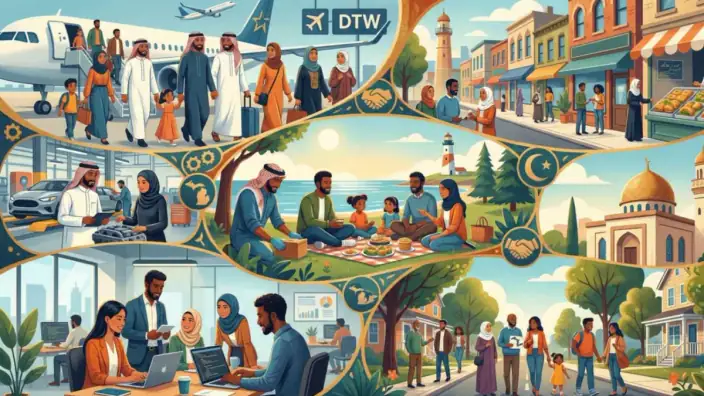 Daily life
Arabs in Michigan 2026: Complete Guide to Community, Cost of Living, Study, and Work
Complete 2026 guide for Arabs in Michigan: Dearborn community, mosques, Islamic schools, auto and healthcare jobs, housing costs, university options, and practical tips for newcomers. Discover why Michigan is America's Arab capital.
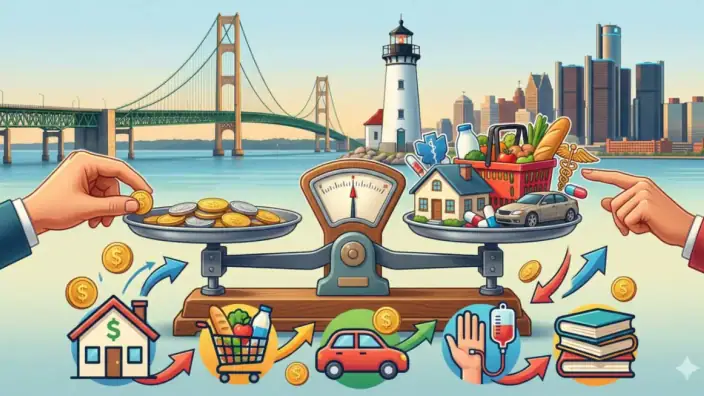 Daily life
Cost of Living in Michigan 2026: Rent, Transportation, Taxes & Monthly Budget for Arab Families
Complete 2026 Michigan cost-of-living guide for Arab newcomers: Dearborn, Dearborn Heights, Canton, Detroit, Ann Arbor & Grand Rapids rent and housing; flat 4.25% income tax; no-fault car insurance explained; halal groceries; Islamic schools; two real family budgets with salary benchmarks.
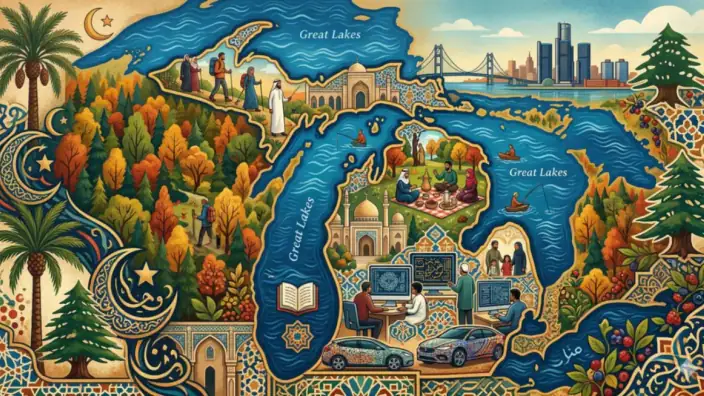 Daily life
Living in Michigan 2026: Ultimate Guide for Arabs and Immigrants (Housing, Jobs, Schools, Mosques)
Complete 2026 guide to living in Michigan for Arab families and immigrants: Dearborn, Detroit, Ann Arbor, Canton—housing costs, job sectors, Islamic schools, mosques, winter survival, transportation, and a practical relocation checklist.
 Services guide
Michigan Tax Laws 2026: Ultimate Guide to Filing Tax Returns for New Immigrants
Complete 2026 Michigan tax guide for newcomers: flat 4.25% state income tax explained, who must file, W-2 vs 1099 differences, key deadlines, deductions and credits (EITC, Homestead), free filing options, and common mistakes to avoid. Essential for Arab immigrants and new residents.
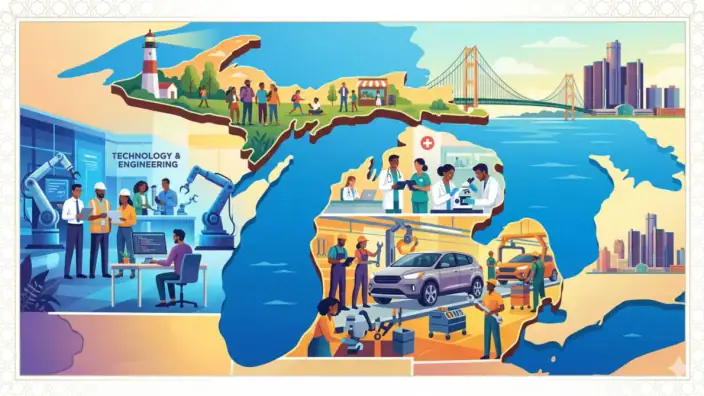 Work in USA
Work in Michigan 2026: Ultimate Guide to Jobs, Salaries, and Immigrant Opportunities
Complete 2026 Michigan jobs guide for immigrants and Arabs: top growth sectors (automotive, healthcare, tech, logistics), realistic salaries by city (Dearborn, Detroit, Ann Arbor, Grand Rapids), entry-level pathways, resume and interview strategy, staffing agencies, and labor rights.
 Daily life
How to Rent an Apartment Without a Credit Score in Michigan? Comprehensive Guide for Immigrants 2026
A battle-tested, comprehensive reference guide detailing every legal and practical strategy for renting an apartment in Michigan cities (Dearborn, Detroit, Ann Arbor) without a credit history. Written specifically for immigrants, international students, and H1B workers.
Michigan 2026 Reference Guide: Geography, Economy, and Life in the Great Lakes State
Michigan is one of the most important states in the U.S. Midwest. Its significance goes beyond being a global automotive capital: it offers distinctive geography, a diversified economy, and a unique demographic mix that includes some of the largest immigrant communities in the United States.
This 2026 reference guide summarizes Michigan's geography, economy, higher education, and baseline cost of living. For daily life, Arab community infrastructure, mosques, schools, and detailed budgets, see also the Arabs in Michigan 2026 guide.
Geography and climate: natural beauty and winter reality
Michigan's map is famously split into the Upper Peninsula and Lower Peninsula, connected by the Mackinac Bridge.
- Great Lakes shoreline: Michigan touches four of the five Great Lakes (Superior, Michigan, Huron, Erie), creating the longest freshwater coastline in the world.
- Climate: four distinct seasons; summers are mild and great for outdoor water activities. Winters are long and cold with heavy snow, including lake-effect snow—plan for clothing, tires, and heating.
Economy and major 2026 sectors
- Automotive and advanced manufacturing: Detroit metro remains the core of Ford, GM, and Stellantis operations, with strong hiring tied to EV platforms and automation.
- Healthcare and life sciences: large hospital systems such as Beaumont and Henry Ford are major employers statewide.
- Agriculture: Michigan is the second-most agriculturally diverse U.S. state after California, known for apples, cherries, and cranberries.
- Tourism: forests, ski resorts, and destinations like car-free Mackinac Island drive billions in annual spending.
Demographics and cultural diversity
Michigan's population exceeds 10 million. Metro Detroit is exceptionally diverse and hosts one of the largest Arab and Muslim communities in the United States, alongside many other communities—creating a rich cultural landscape.
Cost of living and taxes
Michigan is economically attractive: overall cost of living is roughly 10%–15% below the U.S. average. Housing is far more approachable than in coastal states. The state income tax is a flat rate around 4.25%. Sales tax is 6% with exemptions for many groceries and prescription drugs. Property taxes vary by locality.
Higher education highlights
- University of Michigan (Ann Arbor): consistently ranked among the top U.S. public universities; strengths in medicine, engineering, and business.
- Michigan State University: nationally known for agriculture, veterinary medicine, and supply chain programs.
- Wayne State University (Detroit): major research footprint in medicine and sciences.
For a state-by-state education comparison, see Education in California for Arab families.
📊 Arab presence in Michigan
- Estimated population: roughly 300,000 to 400,000 people of Arab origin (one of the largest concentrations in the U.S.).
- Dearborn: Arabs represent more than 40% to 45% of the city's population.
- Origins: long-standing Lebanese, Iraqi, Yemeni, Palestinian, Syrian communities and more.
- Community infrastructure: more than 80 mosques and Islamic centers, plus thousands of Arab-owned businesses.
🏙️ Top cities and monthly cost estimates (single adult)
Estimates include a typical 1-bedroom rent, utilities, food, and transportation for 2026.
| City | Estimated monthly cost (one person) | Why it fits many Arab families |
|---|---|---|
| Dearborn | $1,800 - $2,200 | Core Arab commercial life, halal retail density, rents mid-to-high due to demand. |
| Dearborn Heights | $1,600 - $2,000 | Quieter extension of Dearborn; slightly lower housing costs. |
| Ann Arbor | $2,400 - $3,000 | College-town premium; strong for students and professionals near UMich. |
| Detroit (Downtown) | $1,700 - $2,300 | Rapid downtown reinvestment; good for workers tied to urban cores. |
| Canton | $1,900 - $2,400 | Suburban schools and stability; popular with growing families. |
💼 Real hiring demand in 2026
- Automotive and mechanical engineering: sustained need for EV talent, technicians, and assembly roles across Ford, GM, and suppliers.
- Healthcare and nursing: persistent shortages for RNs, anesthesia, and support roles in major hospital networks.
- Skilled trades and logistics: CDL drivers, HVAC technicians, electricians.
- Small business and services: restaurants, halal markets, contracting, and used-car retail benefit from strong local purchasing power.
💰 Typical annual salaries (2026 pre-tax estimates)
- State minimum wage: about $10.50 - $12.00 per hour (subject to policy changes in 2026).
- Factory / assembly worker: $40,000 - $55,000 (often with strong union healthcare).
- Mechanical / electrical engineer: $85,000 - $130,000.
- Registered Nurse (RN): $75,000 - $110,000.
- Commercial driver (CDL): $60,000 - $95,000.
- Restaurant manager / small business owner: $50,000 - $80,000+.
Compare with a coastal labor market: California jobs guide for Arabs and Work in America for new immigrants.