Mosques in Boston 2026: Complete Guide to Major Mosques and Islamic Centers
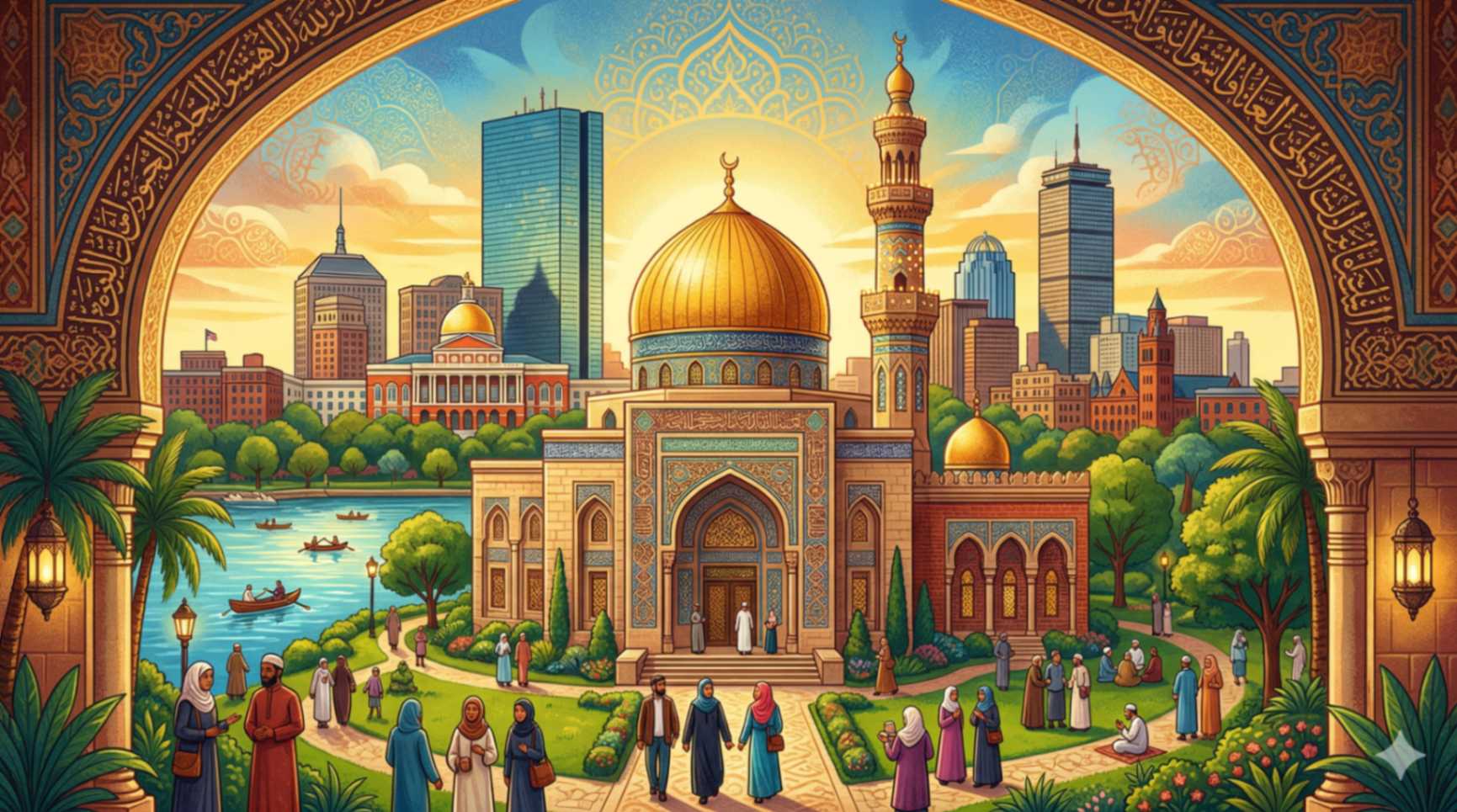
🔍 What You'll Find in This Guide (And Why Boston's Mosques Matter)
The first Friday prayer I attended in Boston changed everything for me.
I had been in the city for less than a week. I was lonely. I was disoriented. I didn't know a single person. Then someone told me about the ISBCC in Roxbury. I walked in on a Friday afternoon, and the building was alive—hundreds of people from every background imaginable: Arabs, South Asians, African Americans, Somalis, Bosnians. I heard Arabic. I heard Urdu. I heard English. And for the first time since landing at Logan Airport, I felt like I belonged somewhere.
After the prayer, a man next to me introduced himself. He was a Palestinian doctor who had been in Boston for twenty years. He asked where I was from, what I did, whether I needed help finding housing. Within ten minutes, I had three phone numbers and an invitation to an iftar the following week.
That is what a mosque in Boston can do for you.
I'm Hussein Abdullah, founder of "Arabs in America." Over fifteen years, Boston's mosques have been the backbone of my community life here. They are where I've prayed, where I've broken fast during Ramadan, where I've attended weddings and funerals, and where I've watched new immigrants find their footing. This guide is built from that experience.
Here's exactly what you'll get:
- The Muslim Community in Context: How many Muslims in Boston, where they're from, and how the community is organized.
- Complete Mosque Directory: A detailed map of every major mosque and Islamic center—ISBCC, ISB Cambridge, Quincy, Malden, Brighton, Worcester, and more—with addresses, services, and what makes each one unique.
- Quick-Reference Comparison Table: A snapshot of each center.
- Islamic Schools: Full-time and weekend options for families.
- Islamic Life: Ramadan, Eid, and Community: What to expect during the holy months.
- Practical Tips for Newcomers: How to find your mosque, how to navigate Friday prayer, and what to know before you go.
- Real Stories from Boston Muslims: How the mosque became their anchor.
- Hussein's Personal Take: Which mosque I recommend based on your situation.
Whether you're a student at BU, a family settling in Quincy, or a visitor looking for Jummah during your trip, this guide will connect you to your community.
Chapter One: Muslims in Boston—Quick Context
Boston's Muslim community is not new. It is one of the oldest and most established in America, with organized community life dating back decades and major institutional growth in the modern era.
| Community Snapshot | Detail |
|---|---|
| Estimated Muslim Population (Greater Boston, 2026) | 50,000 to 60,000 |
| Ethnic Diversity | Arabs (Levant, Egypt, Maghreb), African American Muslims, South Asian communities (Pakistani, Indian, Bangladeshi), Somali families, Bosnian community, Turkish, and Iranian. |
| Geographic Concentration | Roxbury, Dorchester, East Boston, Cambridge, Allston/Brighton, Quincy, Malden. |
| Number of Active Mosques/Islamic Centers | Over 15 major centers across Greater Boston. |
| Role of the Mosque | Prayer, social support, housing/job orientation, youth programs, Quran classes, zakat distribution, cultural stability for newcomers. |
Hussein's Take: What makes Boston's Muslim community unique is its institutional depth. The ISBCC isn't just a prayer space—it's a community anchor with paid staff, social services, and programs that rival any Islamic center in America. This didn't happen overnight. It's the result of decades of organizing by earlier generations of Muslims. As a newcomer, you inherit the benefits of that work.
🔗 Related Context:
- Arabs in Boston: Complete Community Guide
- Muslim Population in America 2026: State-by-State Guide
- Best State for Muslims in America 2026
Chapter Two: Main Boston Mosques and Islamic Centers (Detailed Map)
🥇 1. ISBCC (Islamic Society of Boston Cultural Center)—The Landmark
- Address:
100 Malcolm X Blvd, Roxbury, MA 02120 - Status: The largest and most complete Islamic center in New England. A landmark institution.
- Services:
- Five daily prayers and multiple Friday prayer waves (to accommodate the massive attendance)
- Weekend school (Arabic, Quran, Islamic studies)
- Youth programs, community events, and interfaith outreach
- Social aid, zakat distribution, and new immigrant support
- Ramadan iftars (daily, communal), full taraweeh program
- Website: isbcc.org
- Hussein's Take: If you visit only one mosque in Boston, make it the ISBCC. It's the heart of the community. Go for Jummah. Stay for the community announcements. Introduce yourself to the person next to you. This is where connections are made.
🥈 2. ISB Cambridge—The Academic Hub
- Address:
204 Prospect St, Cambridge, MA 02139 - Profile: Highly academic environment; strong student presence from Harvard and MIT. If you're a student, postdoc, or academic, this will feel like home.
🥉 3. Islamic Center of Quincy (ICQ)—The Family Anchor
- Address:
40 Quincy Ave, Quincy, MA 02169 - Profile: A strong family-centered suburban option south of Boston. Quincy has a large and growing Arab community, and the ICQ is its spiritual anchor.
- Services: Daily and Friday prayer, children's programs, weekend Islamic education, family events, and community support.
- Best For: Arab families living in Quincy, Braintree, and surrounding South Shore communities.
4. Masjid Al-Hamd (Brighton)—The Student-Friendly Option
- Address:
190 Corey Rd, Brighton, MA 02135 - Profile: A practical, accessible location for students in Allston/Brighton—the neighborhood with the densest halal food scene in Boston. Close to Boston University.
- Services: Daily and Friday prayer, tafsir classes, youth gatherings.
- Best For: BU students, young professionals in Allston/Brighton.
5. OCRC Malden—The North Suburb Hub
- Address:
22 Pleasant St, Malden, MA 02148 - Profile: Serves the growing Muslim community in the northern suburbs, including Malden, Revere, and Everett. Strong family focus.
- Services: Family support, youth outreach, local educational activities.
- Best For: Families in Malden, Revere, Everett.
6. Worcester Islamic Center (WIC)—Central Massachusetts Hub
- Address:
248 E Mountain St, Worcester, MA 01606 - Profile: The major center in central Massachusetts, outside the core Boston metro. Large mosque capacity, school infrastructure, and broad community services.
- Best For: Muslims living in or moving to the Worcester area.
Additional Centers Worth Knowing
- Masjid Al-Quran (Dorchester)—Serves the Dorchester Muslim community.
- Islamic Society of Boston Seminary (Roxbury)—Focuses on Islamic higher education and scholarship.
- Prayer spaces at universities: Harvard, MIT, BU, Northeastern, and Tufts all have dedicated Muslim prayer rooms and active MSAs (Muslim Student Associations).
Chapter Three: Boston Mosque Summary Table (2026)
| Mosque / Center | Area | Approx. Address | Main Services | Best For |
|---|---|---|---|---|
| ISBCC | Roxbury | 100 Malcolm X Blvd | Prayer, school, social support, iftar | Everyone—the community flagship |
| ISB Cambridge | Cambridge | 204 Prospect St | Prayer + academic programming | Harvard/MIT students, academics |
| ICQ | Quincy | 40 Quincy Ave | Family services + weekend school | Arab families, South Shore |
| Masjid Al-Hamd | Brighton | 190 Corey Rd | Prayer + student support | BU students, Allston/Brighton |
| OCRC | Malden | 22 Pleasant St | Family/youth outreach | North suburb families |
| WIC | Worcester | 248 E Mountain St | Large regional center | Central Massachusetts |
Chapter Four: Islamic Schools in and Around Boston
In addition to mosque-based weekend programs, the Boston region offers structured full-time Islamic-school options. These schools combine U.S. academic standards with Arabic and Islamic studies.
| School | Level | Location |
|---|---|---|
| Boston Islamic School | Elementary | Boston area |
| Al-Noor Academy | Middle & High School | Cambridge/Mansfield |
| Alhuda Academy | K-8 | Worcester area |
Many families use these schools to preserve cultural and religious identity while keeping their children academically competitive. Weekend programs at ISBCC, ISB Cambridge, and ICQ supplement public school education for children who attend mainstream schools.
🔗 For national context: Islamic Schools in America 2026
Chapter Five: Islamic Life in Boston—Ramadan, Eid, and Community
Ramadan in Boston
- Daily community iftars at ISBCC, ISB Cambridge, and ICQ—especially valuable for students and new arrivals who don't have family in the city.
- Full taraweeh programs at larger mosques. ISBCC typically has the most extensive programming.
- Many mosques coordinate zakat al-fitr collection and distribution.
Eid in Boston
- Eid prayers are held at expanded venues (convention centers, parks, or stadiums) due to the high attendance—ISBCC alone draws thousands.
- Community festivals, bazaars, and family events follow the prayers.
Year-Round Community Life
- Ongoing youth conferences and open-mosque community events.
- Marriage services, counseling, and new Muslim support programs at major centers.
- Active MSAs (Muslim Student Associations) at all major universities.
Chapter Six: Five Practical Tips for Newcomers and Visitors
- Use Google Maps + prayer apps. Apps like Muslim Pro and Athan help you find the closest active center and accurate prayer times. Boston's daylight shifts dramatically between winter and summer—prayer times change significantly.
- Arrive early for Friday prayer. Parking near major mosques (especially ISBCC) can be challenging. Use the MBTA when possible, or arrive 20-30 minutes early to find parking and a good spot.
- Check if a mosque runs multiple Jummah slots. ISBCC, in particular, offers multiple Friday prayer waves to accommodate the large crowd. This can be a lifesaver if you're coming from work or class.
- Most major centers provide women's prayer space. ISBCC, ISB Cambridge, ICQ, and others have dedicated, comfortable spaces for sisters.
- Don't be shy—introduce yourself. Boston's Muslim community is genuinely welcoming. If you're new, tell the person next to you after prayer. You'll likely walk away with a phone number, a dinner invitation, or a job lead.
Chapter Seven: Real Stories—How the Mosque Became an Anchor
📖 Fatima's Story (Syria)
Fatima, a Syrian refugee, arrived in Boston in 2019 with her husband and three children. "The ISBCC was the first place we went after we got our apartment keys. We didn't know anyone. We walked in for Friday prayer, and by the time we left, someone had invited us to an iftar, someone else had given my husband a lead on a job at a warehouse, and a sister had offered to help enroll our kids in school. The mosque wasn't just a place to pray. It was our lifeline."
📖 Omar's Story (Egypt)
Omar, an Egyptian graduate student at BU, told me: "I went to Masjid Al-Hamd in Brighton my first week. I was struggling—homesick, overwhelmed by coursework, unsure if I'd made the right decision. After prayer, I mentioned to a brother that I was having a hard time. He sat with me for an hour, bought me dinner at a halal place nearby, and connected me with the MSA at BU. That single conversation changed my entire experience. I went from surviving to thriving."
Frequently Asked Questions (FAQ)
Q1: How many mosques and Islamic centers are in Greater Boston? A: Generally around 15-20 active sites, ranging from the massive ISBCC to smaller neighborhood musallas and university prayer rooms.
Q2: What is the largest mosque in Boston? A: The ISBCC (Islamic Society of Boston Cultural Center) in Roxbury is the largest and most complete Islamic center in New England.
Q3: Are Friday khutbahs in Arabic? A: Khutbahs are usually delivered in English, with Arabic references for Quran and hadith. Some centers offer Arabic-language programming or lectures at other times.
Q4: Do major universities have Muslim prayer rooms? A: Yes. Harvard, MIT, BU, Northeastern, and Tufts all have dedicated Muslim prayer spaces and active MSAs.
Q5: Can short-term visitors attend? A: Yes. All major centers are open and welcoming to visitors, with standard etiquette (remove shoes, dress modestly, maintain quiet during prayer).
Q6: Where is the best mosque for Arab families in Boston? A: ICQ (Quincy) and ISBCC (Roxbury) are the top choices for Arab families, with strong community presence and family programming.
Q7: Are there women's prayer spaces at Boston mosques? A: Yes. ISBCC, ISB Cambridge, ICQ, and most major centers provide dedicated, comfortable prayer areas for women.
Q8: How do I find a mosque near me in Boston? A: Use Google Maps (search "mosque near me"), the Muslim Pro or Athan apps, or refer to the directory in this guide.
Conclusion: More Than a Prayer Space
Boston mosques in 2026 are not only places for prayer—they are complete support ecosystems for faith, family, and integration. Whether you are a student, a new immigrant, or a visitor, this guide gives you a clear starting map to connect with the Muslim community confidently.
A final word from Hussein Abdullah: I've prayed in mosques across America. Boston's mosque infrastructure is not the largest, but it is among the most organized, diverse, and welcoming. The ISBCC alone offers services that many Muslim communities in smaller cities can only dream of. When you arrive in Boston, don't isolate yourself. Go to the mosque. Introduce yourself. Accept the iftar invitation. The community is ready for you—you just need to walk through the door.
🔗 Continue Exploring Boston's Muslim Community:
- Arabs in Boston: Complete Community Guide
- Halal Restaurants in Boston: Complete Guide
- Islamic Schools in America 2026
- Best State for Muslims in America 2026
- Immigrate to Boston: Complete Settlement Guide
Share your experience: Which Boston mosque do you call home? What was your first Friday prayer experience like in the city? Leave your story in the comments below—it could be the welcome that guides another Muslim newcomer through the door.
Author: حسين عبد الله
Hussein Abdullah is a web developer and specialized content writer with more than eight years of experience enriching Arabic digital content. He combines an analytical programming mindset with a deep passion for writing to deliver accurate, reference-quality guides. On Arabian in USA (عرب في أمريكا), he focuses on simplifying complex steps for new immigrants and sharing reliable information on housing, work, and financial setup—so every newcomer has a trustworthy path toward stable life in the United States.


Continue reading
- Arabs in Boston 2026: Complete Guide to Community, Mosques, Islamic Schools, and Best Neighborhoods
- Muslim Population in America 2026: Complete State-by-State Guide, Statistics & Interactive Map
- Work in America for New Immigrants 2026: The Complete Guide from Day One to Your Dream Career [Step-by-Step Plan]
- Top 10 Best States for Muslims in America: Ultimate Guide (Updated 2026)
- Top 7 Best States for Arabs in America: Ultimate Guide (Updated 2026)
- Boston Hotels for Arabs 2026: Complete Guide to Best Stays Near Mosques and Halal Restaurants