Stanford University for Arab Students 2026: The Ultimate Guide to Admissions, Scholarships, Costs, and Campus Life
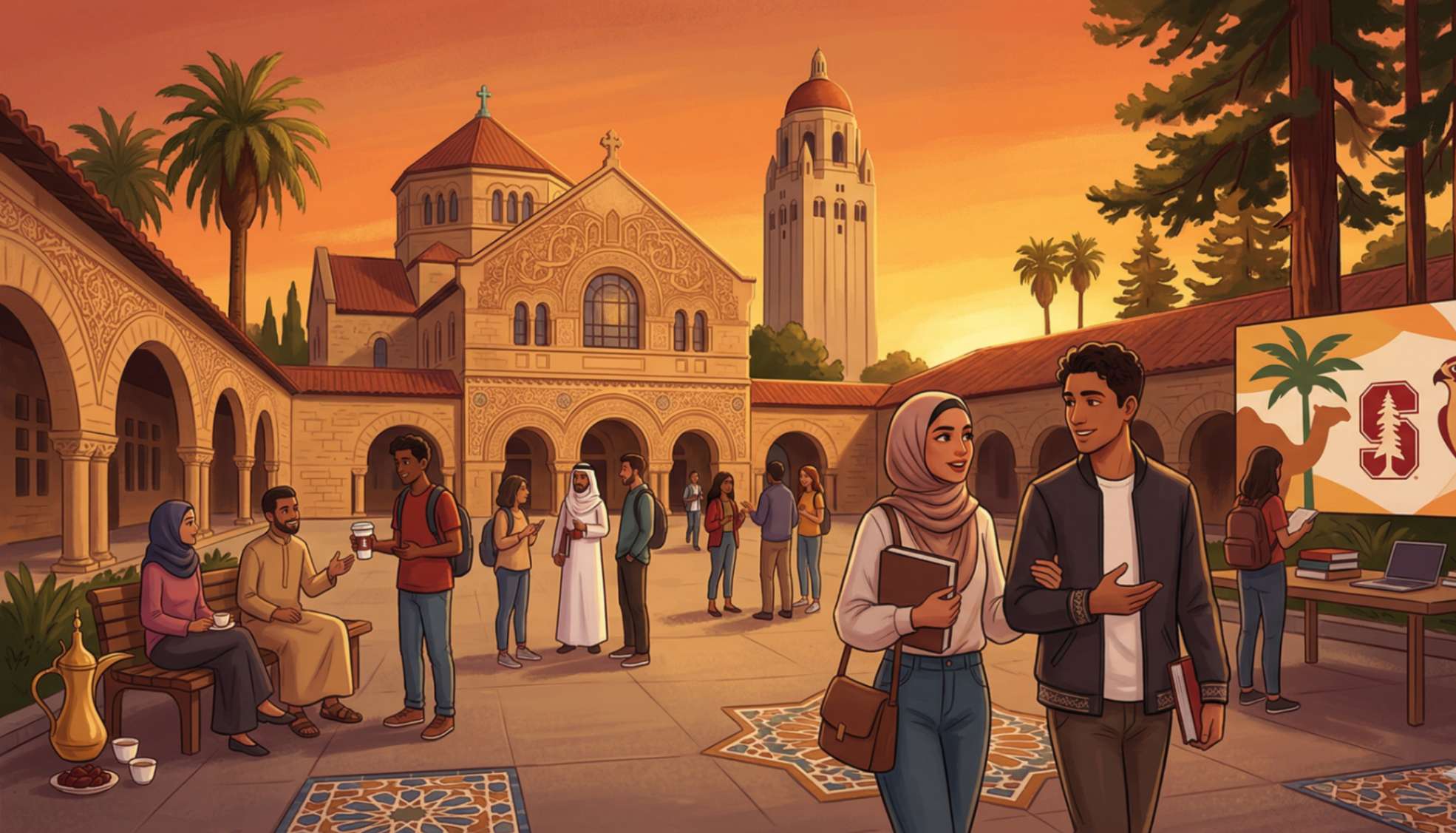
🔍 What You'll Get in This Article (Your Stanford Admission Playbook)
If you are an ambitious Arab student dreaming of studying at one of the world's most prestigious universities, this guide is your complete, battle-tested roadmap. By the time you finish reading, you will know exactly:
- ✅ Detailed admission requirements for both undergraduate and graduate programs, including the GPA, SAT, TOEFL, and GRE scores you need to be competitive.
- ✅ The real, all-in costs of attending Stanford in 2026—tuition, housing, meals, health insurance, and personal expenses—with a full financial breakdown.
- ✅ The best scholarship opportunities available to Arab students, including the legendary Knight-Hennessy Scholars program and Stanford's generous financial aid policies for international students.
- ✅ Proven strategies for writing standout personal essays that will distinguish you from tens of thousands of applicants and make the admissions committee remember you.
- ✅ An insider's look at Arab student life on campus: from the Arab Student Association to Friday prayers, halal dining options, and Ramadan celebrations.
- ✅ Real, inspiring success stories from Arab students who walked this exact path and made their Stanford dream a reality.
- ✅ A precise application timeline so you never miss a critical deadline.
- ✅ An objective comparison between Stanford and other Ivy League and elite universities to help you make the most informed decision.
Let's turn your Stanford dream into a concrete plan.
🎓 Introduction: Stanford—More Than Just a University
Stanford. The name alone carries an almost mythical weight, evoking a potent mix of ambition and awe in the heart of any serious student around the globe. This is not merely a university you attend to collect a diploma to hang on your wall; it is a genuine gateway to the future, an extraordinary incubator for minds that dare to reshape the world, and a relentless factory producing entrepreneurs, thought leaders, and Nobel laureates at a staggering pace. When your feet touch the ground of this legendary campus, you are not simply walking between lecture halls and libraries. You are literally walking in the footsteps of the individuals who fundamentally rewrote the rules of modern technology, medicine, business, and the arts as we experience them today.
Stanford University (officially Leland Stanford Junior University) is nestled in the very heart of Silicon Valley in California—that narrow geographic strip that has become the undisputed global epicenter of innovation and the digital revolution. From this precise location, companies that have transformed the daily lives of billions of people were launched: Google, Netflix, Yahoo, Hewlett-Packard, Instagram, and countless others. The symbiotic relationship between the university and Silicon Valley is not a mere accident of geography. It is the deliberate result of a unique academic culture that actively encourages calculated risk-taking, relentless thinking outside conventional boxes, and the translation of abstract ideas into tangible products and world-changing services.
If you are an ambitious Arab student—or a parent meticulously planning the best possible academic and professional future for your children—a torrent of complex questions is undoubtedly swirling in your mind. How can a student from the Middle East possibly compete for a seat at a university with an overall acceptance rate hovering around a brutally selective 3-4%? What scores are truly required on standardized tests like the SAT, TOEFL, and GRE? What are the actual, all-in costs, and do full scholarships genuinely exist that cover everything? And perhaps most importantly, how does an Arab Muslim student navigate daily life and maintain their cultural and religious identity on a campus located thousands of miles from home?
In this comprehensive, meticulously updated-for-2026 guide, we will take you on a complete and detailed journey to understand Stanford University for Arab students. We will pull back the curtain and reveal everything you need to know with precision and transparency: How do you get admitted? What are the exact costs? How do you secure a full scholarship? And what does the unique Stanford experience truly feel like on the ground? To connect your university aspirations with earlier educational stages in the United States, we recommend reviewing our comprehensive guides on Education in California: From Kindergarten to University and Islamic Schools in America if you are planning for younger family members. And for a broader perspective on life across different states, consult our guide on the Best State to Live in America for Arabs.
📜 Chapter One: Stanford at a Glance—A Legacy of Excellence and Innovation
To truly grasp the magnitude and value of this academic institution, we must first briefly examine its historical roots and the enduring legacy it carries into 2026.
A Storied History and a Touching Founding Story: Stanford University was officially chartered in 1885 by railroad tycoon and former California Governor Leland Stanford and his wife, Jane Stanford. The story behind its founding is one of profound tragedy and extraordinary inspiration. The couple resolved to build the university as a living memorial to their only child, Leland Stanford Jr., who died of typhoid fever at the tender age of 15 during a family trip to Italy. The morning after their son's death, Leland reportedly turned to his wife and uttered the now-famous words: "The children of California shall be our children." Their vision was to create an unprecedented educational institution that would seamlessly blend deep theoretical knowledge with direct practical application in service to humanity and societal advancement. This founding principle remains the unwavering guiding star of the university to this very day. The university's motto, "Die Luft der Freiheit weht" ("The wind of freedom blows"), reflects its deep-seated commitment to unfettered intellectual inquiry and academic freedom.
Strategic Geographic Location and Its Immense Importance: The university is located in Stanford, California (an unincorporated area bearing its own name) in Santa Clara County, adjacent to the famed cities of Palo Alto and Menlo Park. This location is anything but ordinary. It represents the pulsing nerve center and beating heart of Silicon Valley, the undisputed global capital of technology and innovation. To be a student at Stanford means that the world's most influential tech companies—Apple, Meta (formerly Facebook), Tesla, and Alphabet (Google)—are literally minutes away by car or even a short bike ride from your dorm room. This extraordinary geographic proximity creates unparalleled opportunities for summer internships, collaborative research projects, and direct recruitment upon graduation. For a deeper exploration of what it means to live and study in this captivating and diverse state, please refer to our detailed guide on Education in California.
Global Academic Rankings and Unrivaled Prestige: Stanford University does not merely appear on global rankings; it anchors the very top of them. It consistently occupies a position among the top three universities in the world across all major international league tables—including the QS World University Rankings, the Times Higher Education World University Rankings, and the Academic Ranking of World Universities (ARWU)—for 2026. In fact, it frequently vies for the absolute number one spot globally against the Massachusetts Institute of Technology (MIT) and Harvard University. This ranking is not an abstract number; it is a direct reflection of the sheer volume and impact of its research output, its legendary reputation among employers and academics alike, and the profound and sustained influence of its alumni network across every conceivable field.
Famous Alumni and Their World-Shaping Impact: The Stanford Alumni Network is, by any measure, a network of global elites and influential changemakers. The roster includes luminaries such as Sergey Brin and Larry Page, the co-founders of Google, who fundamentally altered how humanity accesses information. Reed Hastings, the co-founder and executive chairman of Netflix, who revolutionized global entertainment. Political and economic titans such as former U.S. President Herbert Hoover and European Commission President Ursula von der Leyen. Hollywood icons like Academy Award-winning actress Reese Witherspoon. And, crucially, dozens upon dozens of Nobel Prize laureates in Physics, Chemistry, Medicine, and Economics, as well as winners of the prestigious Fields Medal in mathematics. Belonging to this network is one of the single greatest intangible assets you acquire as a Stanford graduate.
🏆 Chapter Two: Why Stanford Specifically? Unmatched Advantages for Arab Students
Choosing to study in the United States as an Arab student broadly opens a vast landscape of academic and professional opportunities. However, choosing to study at Stanford University specifically places you in an entirely different echelon, among the global elite. Here are the unique and unparalleled advantages that make it the most sought-after academic destination for 2026:
Exceptional Academic Quality and a World-Class Faculty: The faculty at Stanford is composed of a critical mass of the world's brightest and most influential minds. When you attend a lecture at Stanford, you are not simply learning from textbooks and scholarly articles. You are receiving knowledge directly from the very authors of those textbooks and from the researchers who are actively expanding the boundaries of human knowledge on a daily basis in their state-of-the-art laboratories. From Nobel Prize-winning professors to serial entrepreneurs who have successfully built multi-billion-dollar companies, you will find yourself immersed in an environment populated by individuals who are not content merely to understand the present but are actively engaged in architecting the future.
Strategic Location and a Priceless Professional Network: Your presence as a student in the heart of Silicon Valley is a massive, irreplaceable competitive advantage. The world's leading technology and innovation companies are perpetually scouting for top young talent, and they exhibit a strong and documented preference for hiring Stanford graduates because they place immense trust in the quality and rigor of their preparation. The opportunities for summer internships and full-time employment upon graduation are simply unmatched in any other corner of the globe. Furthermore, the vast and powerful Stanford Alumni Network acts as a door-opener throughout your entire career, providing a support system and a conduit to opportunities that would otherwise remain inaccessible.
The Campus: An Architectural and Natural Masterpiece: The Stanford campus is widely celebrated as one of the most beautiful and awe-inspiring university campuses in the United States, if not the entire world. It sprawls across a staggering 8,180 acres (over 33 square kilometers)—an area larger than many small cities. It features a breathtaking blend of distinctive California Mission Revival-style architecture, characterized by historic sandstone buildings with red-tiled roofs, interspersed with vast expanses of manicured green lawns, flourishing gardens, elegant fountains, and stunning natural vistas. This unique environment provides an ideal atmosphere for creativity, deep contemplation, and intense intellectual focus. For nature enthusiasts, the campus even includes its own biological preserve (Jasper Ridge) and a world-class sculpture garden featuring works by artists like Rodin.
Campus Culture and the Entrepreneurial Spirit: Stanford is fundamentally defined by a pervasive spirit of innovation and entrepreneurship that saturates every facet of university life. The institution does not aim simply to produce competent employees; it actively cultivates company founders and leaders capable of creating jobs and driving meaningful change. There is immense, institutionalized support for entrepreneurship, including on-campus accelerators and incubators like StartX and the Stanford Venture Studio, as well as entire academic courses dedicated to the nuts and bolts of launching startups and securing venture capital funding. If you harbor an idea for a startup, you will find no more fertile or supportive environment on Earth to bring it to life.
Comprehensive and Tailored Support for International Students: Stanford University possesses a deep and nuanced understanding of the unique challenges faced by students arriving from different cultures and backgrounds, particularly during their initial transition years. Consequently, it provides dedicated, high-level offices and centers, such as the renowned Bechtel International Center, to deliver a holistic suite of support services. This includes expert legal guidance on complex student visa matters, psychological and social support to navigate culture shock and homesickness, and specialized academic advising to ensure a smooth and successful integration into the rigorous American educational system. This institutional scaffolding significantly alleviates the initial pressures and dramatically accelerates the process of adjustment and belonging.
Before you calibrate your expectations regarding the cost of living and community infrastructure in California, it may also be beneficial to consult our guide on the Best State for Muslims in America for a broader comparative perspective on community support and religious services across different states.
📚 Chapter Three: Key Schools and Most Popular Majors at Stanford
Stanford University comprises seven distinct schools that collectively cover virtually the entire spectrum of human knowledge and offer academic programs of the highest global caliber. For Arab students seeking to explore the available majors at Stanford, here is an overview of the most prominent schools and their defining strengths in 2026:
School of Engineering: Consistently ranked as one of the top two engineering schools on the planet (alongside MIT). It spearheads revolutionary global research in fields such as Artificial Intelligence (AI) and Machine Learning, Aeronautics and Astronautics, Bioengineering (which fuses engineering principles with medical applications), and Computer Science. This school is the primary aspiration for the overwhelming majority of Arab students passionate about technology and applied sciences.
Graduate School of Business (GSB): The Master of Business Administration (MBA) program at Stanford GSB is universally acknowledged as the most competitive and difficult-to-enter MBA program in the world, with an acceptance rate that typically hovers around a razor-thin 6-7%. The program does not merely teach the fundamentals of management and finance; it focuses intensely on transformational leadership, strategic thinking, and the management of innovation. GSB graduates ascend to senior executive positions at the world's largest corporations or launch their own disruptive startups.
School of Humanities & Sciences: This is the largest and most academically diverse school within the university, housing departments that span the natural sciences (Physics, Chemistry, Mathematics, Biology) and the social sciences and humanities (Economics, Psychology, Sociology, History, English Literature, Philosophy, and Languages). It serves as the academic backbone of the university and awards the vast majority of undergraduate degrees.
Stanford Law School: A premier destination for the world's most ambitious and talented aspiring lawyers. It is particularly renowned for its globally leading programs in Intellectual Property Law, Technology and Internet Law (Cyberlaw), and Corporate Law. Its graduates dominate the partnership ranks at the most prestigious global law firms and ascend to high judicial offices.
School of Medicine: A world-leading research and clinical care center that places a heavy emphasis on cutting-edge medical innovation, genetics and genomics, precision and personalized medicine, and biomedical engineering. The school is affiliated with two major teaching hospitals—Stanford Health Care and Lucile Packard Children's Hospital—that provide care at the highest level.
Graduate School of Education: Focuses intently on developing modern educational strategies, effectively integrating technology into learning systems, and conducting rigorous analysis of education policy. Graduates of this school lead educational reform efforts across the globe.
Stanford Doerr School of Sustainability: This is the university's newest school, established with monumental funding in 2022 to directly confront the existential challenges posed by climate change, energy and water security, and biodiversity loss. It offers highly interdisciplinary academic and research programs in these critical fields.
Majors Most Popular Among High-Achieving Arab Students: The academic interests of exceptional Arab students tend to cluster notably in Engineering (with a particularly strong emphasis on Computer Science, Artificial Intelligence, and Electrical Engineering), MBA programs for those seeking to accelerate their professional trajectories, Medicine and the biomedical sciences, and Engineering focused on renewable and sustainable energy systems.
📋 Chapter Four: Stanford Admission Requirements—A Detailed Breakdown
We have arrived at the most critical, challenging, and anxiety-inducing segment of the application journey. Stanford admission requirements are notoriously rigorous and non-negotiable. The overall acceptance rate hovers around a stark 3-4% of the colossal total applicant pool in 2026. The competition is ferocious on a global scale, but it is governed by a philosophy of "holistic review," meaning the decision rests on far more than just stellar grades and test scores.
1. Undergraduate Admission Requirements
For students graduating from secondary school (or its equivalent), the Stanford Admissions Committee is actively searching for individuals who have made a tangible, positive impact within their communities and who demonstrate a genuine, burning intellectual passion.
Grade Point Average (GPA): There is no officially stated minimum GPA requirement to submit an application. However, the brutal reality of the competitive landscape demands a near-perfect academic record. The average unweighted GPA for admitted students is an astonishing 3.96 out of 4.0. This indicates that the overwhelming majority of successful applicants received the highest possible marks (straight A's) in virtually every course they undertook throughout their entire high school career. Your academic transcript must be exceptional by any objective standard.
Standardized Testing (SAT or ACT): Although Stanford University continues its "Test-Optional" policy—initially adopted during the COVID-19 pandemic—into the 2026 admissions cycle, the practical reality is that submitting exceptionally high scores on the SAT or ACT remains a powerful and decisive competitive advantage that substantially strengthens your application file. The middle 50% SAT score range for admitted students who chose to submit their scores falls between 1500 and 1570 out of a possible 1600 (placing them firmly within the 99th percentile of all test-takers). If your personal circumstances permit you to take the test and achieve a score within this stratospheric range, you should do so without hesitation.
English Language Proficiency: As an international applicant from the Arab world, you are required to furnish definitive proof of your command of the English language. The accepted options and their competitive benchmarks are as follows:
- TOEFL iBT: A minimum score of 100 is generally expected, though the average score for admitted international students comfortably exceeds 110.
- IELTS Academic: A minimum overall band score of 7.0 is required, with 7.5 or higher being strongly preferred.
- Duolingo English Test: Stanford accepts this alternative, with a minimum score of 120 typically expected.
- You may qualify for a waiver of this requirement if you have studied for a minimum of four consecutive years in a secondary school where English is the sole and official language of instruction.
Personal Essays: This component is, without question, the single most important and influential element for distinguishing yourself from the vast, churning sea of highly qualified applicants. Perfect grades and stellar test scores are necessary but entirely insufficient for admission to Stanford. The admissions committee reads tens of thousands of essays annually and is searching desperately for an authentic voice, a unique and compelling narrative, and the genuine human personality that resides behind the numbers. Your personal essays must vividly convey your intellectual passions, your deep-seated curiosity, the formative lessons you have extracted from life's challenges, and, most critically, how you, specifically, will contribute a unique and valuable perspective to the richly diverse fabric of the Stanford community. Be honest. Be vulnerable where it reveals strength. And write in your own true voice, not in the voice you imagine the committee wants to hear.
Letters of Recommendation: The application requires two letters of recommendation from classroom teachers in your secondary school, plus an additional letter from your school counselor (or equivalent academic advisor). It is strongly advised that the teacher recommendations come from instructors in core academic subjects such as mathematics, science, English, or social studies. These letters must transcend generic platitudes and vague praise. They must provide concrete, specific, and compelling examples that illustrate your analytical prowess, your intellectual curiosity, your leadership character, and your contributions both inside and outside the classroom environment.
Extracurricular Activities and Achievements: Stanford is actively and deliberately searching for "leaders" and "changemakers" within their own communities. Whether you founded a volunteer initiative to provide educational support to underprivileged children, earned a medal at the International Mathematics or Physics Olympiad, possess exceptional talent at a national level in the arts, music, or athletics, or developed a software application that addresses a real-world problem, you must present these accomplishments with clarity and conviction. The committee's focus is squarely on the "depth" of your impact and its sustained duration, not on the sheer "quantity" of activities in which you have dabbled superficially.
2. Graduate Admission Requirements (Master's and PhD)
Admission requirements vary significantly between individual schools and even between specific programs within those schools. However, several common threads bind them:
Academic Background: A bachelor's degree (or its recognized international equivalent) with an overall grade record of "Excellent" or "Very Good" from an accredited and reputable university. Your undergraduate academic transcript must demonstrate clear and consistent excellence in your chosen field of study.
Standardized Tests (GRE or GMAT): For the vast majority of science, engineering, and social science disciplines, you will be required to take the GRE General Test (Graduate Record Examination) and achieve exceptionally high scores—typically placing you comfortably within the top 10% of all test-takers globally, especially on the Quantitative Reasoning section. For applicants to the Graduate School of Business (GSB), a stellar score on either the GMAT or GRE is a non-negotiable requirement.
Prior Research or Professional Experience: For doctoral (PhD) programs, demonstrable prior research experience—whether through a senior thesis project, work as an undergraduate research assistant in a laboratory, or other means—is an absolutely critical and decisive factor. Having your name on peer-reviewed publications in reputable academic journals or conference proceedings elevates your application to an entirely different tier of competitiveness. For professional master's programs, such as the MBA, a minimum of three to five years of substantive, post-baccalaureate professional experience demonstrating progressive leadership responsibility is generally required.
Statement of Purpose: This is a meticulously crafted, detailed academic document in which you must articulate with precision and clarity: Why have you chosen this specific field of study? Why Stanford University, specifically, and not any other institution? What are your precise, well-defined research or professional objectives? And, crucially, with which specific professors or research laboratories do you intend to collaborate, and why? The Statement of Purpose must be painstakingly tailored to Stanford and must not read like a generic template.
An Exclusive and Strategic Tip for Arab Applicants: Do not, under any circumstances, attempt to mimic generic, pre-packaged templates for your essays or Statements of Purpose. To succeed in gaining admission to Stanford, you must strategically leverage your Arab identity and cultural heritage as a unique source of strength, diversity, and perspective—never as a liability. Speak honestly and compellingly about the specific challenges within your local or regional environment (whether educational, economic, or environmental) and articulate how those very challenges ignited your passion and inspired you to pursue innovative and sustainable solutions. Elite American universities are actively and deliberately seeking students who bring distinct and underrepresented viewpoints from the Middle East and North Africa region—students who are poised to write a new and exciting chapter in academic and global history.
💰 Chapter Five: Stanford Tuition and Detailed Living Costs for 2026
Pursuing an education at one of America's elite private universities requires a substantial and carefully planned financial investment. When you search for "Stanford University tuition" online for the 2026 academic year, you will find figures that directly mirror the unparalleled academic quality, the extraordinary research facilities, and the comprehensive student services the university provides. However, as we will explain in thorough detail in the following chapter, these significant costs must not be perceived as an insurmountable barrier for students of exceptional academic merit.
Here is the precise, updated breakdown of Stanford tuition and associated living expenses for the 2025-2026 academic year:
Annual Undergraduate Tuition: The base academic tuition fee for full-time undergraduate students is $65,127 USD per year. This figure covers the cost of course enrollment and instruction only.
Annual Graduate Tuition: Tuition costs for graduate programs vary considerably based on the specific school and degree program. On average, annual tuition for master's programs falls within a range of $55,000 to $75,000 USD. Professional programs, such as the MBA at the Graduate School of Business and the MD at the School of Medicine, typically reside at the very top end of this range or may even exceed it slightly.
Room, Board, and Additional Living Expenses: The university estimates that the costs for on-campus housing (Residence Halls), a required meal plan, books and academic supplies, mandatory health insurance for international students (Cardinal Care), and modest personal spending will add an additional $22,000 to $28,000 USD per academic year. It is essential to internalize that the cost of living in the San Francisco Bay Area is among the highest in the entire United States.
Estimated Total Annual Cost of Attendance: As an international undergraduate student, you must provide documented evidence of your financial capacity—or proof of a full scholarship award—to cover a total annual cost of attendance that ranges between $87,000 and $93,000 USD for the 2025-2026 academic year.
A Quick Comparison with Peer Institutions: When you benchmark Stanford's total cost of attendance against its elite private peers in the Ivy League—such as Harvard, Yale, and Princeton—you will find that the figures are broadly comparable. This is the established norm for the most prestigious private, non-profit universities in the United States. For a comparative look at the cost of living in another state with a significant Arab population, you may wish to consult our guide on the Cost of Living in Texas as an alternative reference point (while bearing in mind that Stanford is geographically situated in the considerably more expensive San Francisco Bay Area).
🎓 Chapter Six: Scholarships and Financial Aid at Stanford—Don't Let the Price Tag Stop You
Do the financial figures outlined above cause you to hesitate or feel a sense of dismay? You should not. Stanford University possesses one of the largest financial endowments of any academic institution on the planet, currently exceeding $36 billion USD. This immense financial war chest empowers the university to offer extraordinarily generous opportunities to fund the education of students who demonstrate outstanding academic and personal merit through scholarships and financial aid at Stanford.
Undergraduate Admission and Financial Aid Policy for International Students: It is critically important to clarify Stanford's financial aid policy as it applies to international applicants. For U.S. citizens and eligible non-citizens (permanent residents), Stanford employs a "Need-Blind" admission policy. This means that an applicant's financial situation and ability to pay tuition are not considered as factors in the admission decision. For international students, however, the admission process is "Need-Aware." This signifies that your ability to finance your education may be one of several factors considered when making the final admission decision. Nevertheless—and this is the crucial point—Stanford University maintains a firm and public commitment to meeting 100% of the demonstrated financial need for every single international student who is offered admission at the undergraduate level. In practical terms, if you are accepted, the university guarantees that it will assemble a financial aid package—consisting of grants (which do not need to be repaid) and on-campus work-study opportunities—sufficient to cover the full gap between the total cost of attendance and what your family can reasonably afford to contribute.
The Knight-Hennessy Scholars Program: This is, without any doubt, one of the most famous, prestigious, and generous graduate fellowship programs in the entire world for 2026. The program's explicit goal is to build a multidisciplinary, global community of future leaders and changemakers. It provides full and comprehensive funding—covering all tuition and associated fees, on-campus room and board, a generous monthly living stipend to cover all personal expenses, and an annual round-trip economy airfare ticket. The scholarship is open to students of any nationality (including citizens of all Arab League nations) to pursue any eligible graduate degree program offered at Stanford. The program's selection criteria focus intensely on three specific attributes: independence of thought, purposeful leadership, and a civic mindset. Arab students are strongly encouraged to apply, and there is a growing and successful community of Arab Knight-Hennessy Scholars.
Research and Teaching Assistantships for Graduate Students: At the graduate level—and particularly within doctoral (PhD) programs—the overwhelming majority of admitted students receive full and guaranteed funding for the entire duration of their studies. This funding package is typically provided in exchange for service as a Research Assistant (RA) working in their faculty advisor's laboratory, or as a Teaching Assistant (TA) supporting undergraduate courses. This appointment comes with a full tuition waiver and a monthly living stipend that is sufficient to cover basic living expenses in the Bay Area.
External Scholarships for Arab Students: A very significant number of Arab students studying at Stanford are fully funded through generous national scholarship programs sponsored by their home governments (such as the prestigious scholarship programs offered by the Kingdom of Saudi Arabia, the United Arab Emirates, Qatar, Kuwait, and Oman). In addition, major regional educational foundations (such as the Abdulla Al Ghurair Foundation for Education) are dedicated to identifying and funding exceptional Arab minds to pursue their studies at the world's foremost universities.
How to Apply for Financial Aid: The process for undergraduate international applicants requires the accurate and timely completion of the CSS Profile form, along with the submission of official, translated supporting documentation that verifies your family's total income and assets. Transparency, accuracy, and meeting all deadlines are paramount in this process.
🏡 Chapter Seven: Student Life at Stanford—An Unforgettable, All-Encompassing Experience
To be a student at Stanford is to immerse yourself in a rich, holistic life experience that extends immeasurably beyond the confines of lecture halls and library stacks. Student life at Stanford is vibrant, diverse, and brimming with limitless opportunities for profound personal and intellectual growth.
The Unique Residential System (Houses and Dorms): Stanford University guarantees on-campus housing for all undergraduate students for the entirety of their four years of study. The system is built around a "House" or "Dorm" model, wherein incoming freshmen are assigned to a specific residential community. This structure intentionally fosters the creation of tight-knit micro-communities within the vastness of the larger campus, forging deep social bonds and friendships that often endure for a lifetime.
Student Clubs and Organizations: The campus teems with the energy of over 600 officially recognized student clubs and organizations, spanning every conceivable interest, passion, and identity. There are academic and pre-professional societies, cultural and ethnic affinity groups, religious organizations, political action committees, and performing arts and club sports teams. For Arab students, the Arab Student Association at Stanford serves as an indispensable second family and a vital cultural anchor. The ASA organizes weekly social gatherings, cultural awareness events, guest lectures by prominent Arab figures, and provides crucial peer-to-peer support and mentorship for new students navigating their first year away from home.
Cultural and Religious Life for Muslim Students: Stanford University demonstrates a profound and active respect for religious diversity and provides excellent facilities and services for its Muslim student population. Friday congregational prayers (Jummah) are held regularly in a dedicated, centrally located space on campus (often within the Center for Inter-Religious Community, Learning and Experiences, known as the CIRCLE). The university supports vibrant celebrations and programming during Arab American Heritage Month. Throughout the holy month of Ramadan, the university and the Office for Religious & Spiritual Life provide substantial support for daily communal Iftar meals, fostering a strong sense of community and shared faith. Eid al-Fitr and Eid al-Adha are also marked with special celebrations and gatherings.
Halal Food Options: The university's dining services have made a concerted and ongoing effort to accommodate the dietary needs of its diverse student body. Halal-certified meat and poultry options are consistently and reliably available at designated stations within the various dining halls across campus. Furthermore, there is an extensive and delicious array of vegetarian and vegan options to meet the needs of all students.
Athletics and Recreation: Stanford fields highly competitive varsity athletic teams, known as the Stanford Cardinal, that compete at the highest level of the NCAA Division I. The athletic and recreational facilities available to students are nothing short of world-class—including a championship golf course, numerous tennis courts, Olympic-sized swimming pools, and massive, state-of-the-art fitness centers. Students enjoy free or heavily subsidized access to these facilities.
👥 Chapter Eight: Arab Students at Stanford—Real Stories of Inspiration and Success
The Arab presence at Stanford University in 2026 is selective, highly accomplished, influential, and increasingly diverse. Arab students at Stanford are living proof, day after day, that exceptional talent and fierce ambition recognize no geographic or cultural boundaries.
Success Story 1: Omar—From Cairo to the Frontiers of Artificial Intelligence
Omar, a gifted young Egyptian software engineer, arrived at Stanford in the fall of 2024 to commence his Master's degree in Computer Science with a specialization in Artificial Intelligence. While Omar had been a top performer at his university in Egypt, he initially struggled mightily with the sheer breakneck pace and immense workload demanded by Stanford's academic environment. "During those first few weeks, I genuinely felt like I was drowning," Omar recalls. "Everyone around me seemed like a certified genius, and I was consumed by self-doubt about my ability to compete at this level." But Omar refused to succumb to despair. He made a disciplined habit of attending professors' office hours religiously, joined collaborative study groups with his classmates, and devoted countless hours to deep, focused work in the library. Gradually, almost imperceptibly at first, he began to find his footing and then to truly excel. By his second year, Omar was leading a small research team developing novel AI algorithms designed to enhance the diagnostic accuracy of medical imaging. He secured a highly coveted, paid summer internship at Apple, and as he approaches graduation, he is fielding multiple lucrative job offers from the most prominent technology companies in Silicon Valley. His advice to incoming Arab students is direct: "Do not allow Imposter Syndrome to consume you in those first difficult months. You were admitted because you belong here. Seek out help proactively, commit to the work, and you will prove to yourself, and to everyone else, that you have earned your place at this table."
Success Story 2: Noura—The Saudi Entrepreneur Forging a New Path at the GSB
Noura, a determined and visionary Saudi woman, earned admission to the prestigious MBA program at Stanford's Graduate School of Business (GSB). Prior to arriving on campus, Noura had worked as a management consultant in Riyadh and harbored a clear and ambitious dream: to launch her own technology startup focused on the education technology (EdTech) space, with a specific focus on serving the unique needs of the Arab market. "I arrived at the GSB with a clear vision," Noura explains, "but I knew I needed the specific toolkit, the deep knowledge, and the powerful network to transform that vision into a tangible reality." Noura immersed herself in the unparalleled entrepreneurial ecosystem at Stanford. She enrolled in specialized courses on new venture creation and venture capital fundraising. She became an active member of the Stanford Venture Studio, a campus incubator where she received invaluable one-on-one mentorship from seasoned entrepreneurs and investors. Most importantly, she strategically leveraged the GSB's immense network to connect with potential angel investors and co-founders. Before she even walked across the graduation stage, Noura had officially incorporated her startup and successfully closed her first round of seed funding. Today, her company is experiencing rapid growth and is positively impacting the educational journeys of thousands of students across the Arab region. Her message to other Arab students is clear: "Stanford provides you with an almost unbelievable platform. But the onus is entirely on you to take the initiative and fully exploit it. Never be shy about asking for help, and never hesitate to put your ideas out into the world for feedback."
Success Story 3: Youssef—The Lebanese Researcher Powering a Sustainable Future
Youssef, a brilliant Lebanese PhD candidate in Stanford's Doerr School of Sustainability, came to the university on a fully funded research scholarship based on his compelling proposal to develop novel nanomaterials for more efficient solar energy storage. For Youssef, the defining feature of his Stanford experience has been the access to cutting-edge research laboratories and the extraordinarily close collaboration with his faculty advisors. "The privilege of working alongside professors who are literally at the absolute vanguard of their scientific fields is impossible to overstate," Youssef reflects. "They do not simply provide you with answers; they teach you the far more valuable skill of how to formulate the right questions." Throughout his doctoral studies, Youssef has co-authored several high-impact research papers published in the world's most prestigious scientific journals and has presented his findings at major international conferences. As he nears the completion of his PhD, he has received offers for prestigious post-doctoral research fellowships at other elite universities, as well as attractive positions in the private energy sector. Ultimately, Youssef has chosen to return to Beirut to accept a faculty position as an Assistant Professor at the American University of Beirut, driven by a deep-seated desire to transfer the world-class knowledge and skills he acquired at Stanford to the next generation of Arab scientists and engineers.
🗓️ Chapter Nine: The Stanford Application Timeline—Your Ideal 2026 Roadmap
To demystify the process of applying to Stanford step by step and to ensure you never miss a critical deadline, we have constructed the following ideal timeline that ambitious Arab students should follow to submit a complete and polished undergraduate application:
| Time Period | Required and Important Action Steps |
|---|---|
| Summer (May - August) | Begin early, structured preparation for the SAT/ACT and TOEFL/IELTS exams. Take a virtual campus tour on the Stanford website. Start brainstorming initial ideas and themes for your personal essays. |
| August - September | Create your account on the Common Application platform. Begin writing serious first drafts of your personal essays. Proactively reach out to your chosen teachers and school counselor to formally request letters of recommendation. Gather your official academic transcripts and other key documents. |
| October | Take (or strategically retake) the SAT/ACT and TOEFL/IELTS exams if you have not yet achieved your target scores. Complete final revisions, editing, and proofreading of your personal essays. Complete and submit the CSS Profile form for financial aid consideration. |
| November 1 | Restrictive Early Action (REA) Deadline: This is an excellent opportunity for students who consider Stanford their absolute, unequivocal first choice. Stanford's REA program is "restrictive" (meaning you cannot apply early to other private U.S. universities) but "non-binding" (meaning you are not obligated to enroll if admitted). |
| January 5 | Regular Decision (RD) Deadline: This is the final deadline for submitting your complete application and all required financial aid materials for international students seeking admission for the following fall term. |
| March - April | Admission decisions and financial aid award letters are released. This is a critical period for admitted students to carefully review and compare their financial aid offers from different universities. |
| May 1 | National College Decision Day. This is the final, binding deadline to formally accept your offer of admission and submit your non-refundable enrollment deposit. |
(Crucial Note: Graduate program application deadlines vary enormously by specific school and department, typically falling between early December and mid-January. You must consult the official website of each individual graduate program for its precise and non-negotiable deadlines.)
📊 Table 1: Comprehensive Comparison—Stanford vs. Peer Elite Universities
| Dimension of Comparison | Stanford University | Harvard University | Massachusetts Institute of Technology (MIT) | Princeton University |
|---|---|---|---|---|
| Geographic Location | California (West Coast - Silicon Valley) | Massachusetts (East Coast - Boston Area) | Massachusetts (East Coast - Cambridge) | New Jersey (Near New York City) |
| Signature Academic Strengths | Engineering, Computer Science, Entrepreneurship, Business | Law, Medicine, Government, Business, Life Sciences | Engineering, Physics, Computer Science, Artificial Intelligence | Mathematics, Physics, Economics, Humanities |
| Global Ranking Band (QS 2026) | Top 3 | Top 3 | Top 3 | Top 15 |
| Dominant Campus Culture | Innovation, Collaborative, Entrepreneurial, Mild Climate | Intensely Competitive, Historic Traditions, Elite | Intense Focus on Practical Research and Technological Invention | Strong Focus on Undergraduate Education and Theoretical Inquiry |
| Overall Acceptance Rate (2026 Est.) | ~3.5% | ~3.2% | ~4.1% | ~4.5% |
| Financial Aid Policy for Internationals | Need-Aware (but commits to meeting 100% of demonstrated need for all admitted students) | Need-Blind (financial need not considered) | Need-Blind (financial need not considered) | Need-Blind (financial need not considered) |
| Endowment Size (Approx.) | ~$36 Billion USD | ~$50 Billion USD | ~$24 Billion USD | ~$34 Billion USD |
💡 Chapter Ten: Strategic Golden Tips for Arab Applicants to Stanford
Gaining admission to Stanford is not an impossibility, but it absolutely demands a carefully crafted, long-term strategy. Here is the distilled essence of expert advice from admissions consultants and successful former applicants for the 2026 cycle:
- Begin Exceptionally Early (This is the True Secret): Strategic planning for a university of Stanford's caliber does not commence in the final year of high school. It should ideally begin in the 9th or 10th grade. Use those formative years to deliberately build a robust and coherent profile of academic excellence and deep, sustained extracurricular involvement. Identify your genuine passions and pursue them with intensity and focus, rather than engaging in superficial participation in a scattered array of activities.
- Obsess Over Your Personal Essays: Your essays represent your single, golden opportunity to make the admissions committee fall in love with the person behind the transcript. A unique, authentic personal narrative, rendered in your own true voice, is the only thing that can effectively differentiate you from the thousands of other applicants who possess similarly stellar grades and test scores. The committee desperately wants to know: "Who are you, really? What core values animate your life?" Be honest. Be reflective. Be vulnerable where it reveals strength. Avoid all clichés and generic platitudes.
- Prepare for Standardized Tests with Military Discipline: Early and rigorous preparation for the SAT, TOEFL, and GRE examinations affords you the crucial luxury of time—time to take the test, analyze your performance, and retake it if necessary to elevate your scores into the required stratospheric percentiles. If your budget permits, consider investing in a reputable test preparation course. If not, diligently exploit the vast array of high-quality, free preparation resources available online.
- Actively Research Scholarships and Do Not Self-Reject Based on Cost: As we have thoroughly documented, substantial financial resources exist to support students of exceptional merit. Do not allow the formidable sticker price of attendance to deter you from submitting an application in the first place. Channel all of your energy and focus into constructing the most compelling and competitive application file you can possibly assemble. Secure the admission offer first, and then work collaboratively with the university to identify the financial pathways that will make your attendance feasible if you are a truly outstanding candidate. You may also find our guide on the Best State to Live in America for Arabs useful for understanding broader cost-of-living considerations across different regions.
- Proactively Network with Current Arab Students and Alumni: Do not be reticent. Utilize professional networking platforms like LinkedIn or social media channels to identify and reach out to current Arab students or recent alumni of Stanford, particularly those in the academic fields that interest you. The vast majority will be genuinely happy to offer candid advice and guidance. They may even be willing to review drafts of your application essays or provide you with invaluable, unvarnished insights into the realities of campus life that you will never find in official brochures. This informal network is an immensely powerful and often underutilized resource.
❓ Chapter Eleven: Frequently Asked Questions (FAQ) About Stanford for Arab Students
Q1: What is the absolute minimum SAT score required for Stanford? A: There is no officially published minimum SAT score requirement. However, the stark reality of the competitive landscape reveals that admitted students who submitted scores were overwhelmingly concentrated within the top 1% of all test-takers globally (a combined score between 1500 and 1570). Submitting a score significantly below 1450 would substantially weaken the competitiveness of your application file.
Q2: Can I apply to Stanford without taking the IELTS or TOEFL exam? A: Yes, you may be eligible for a waiver of the English proficiency testing requirement if you have studied for a minimum of four consecutive years in a secondary school (or university) that is fully accredited and where English is the sole and official language of instruction. You must provide formal, written documentation from the educational institution to verify this.
Q3: How can I obtain a fee waiver for the Stanford application fee? A: The application fee for Stanford is $90 USD. Students facing significant and demonstrable financial hardship may request an application fee waiver directly through the Common Application or Coalition Application platforms. The request form must be verified and signed by your designated school counselor.
Q4: Are there full, all-expenses-paid scholarships available for Arab students at the undergraduate level? A: Yes. As detailed extensively in this guide, Stanford University is firmly committed to meeting 100% of the demonstrated financial need for every single international student who is offered admission. If your family's documented financial resources are extremely limited, the university will assemble a financial aid package—comprised primarily of grants—that will cover the overwhelming majority, if not all, of your total costs of attendance.
Q5: Approximately how many Arab students are admitted to Stanford each year? A: The university does not publish official, disaggregated statistics on the number of students admitted from specific Arab countries. However, informed estimates suggest that between 50 and 80 new Arab students (spanning both undergraduate and graduate levels) join the Stanford community annually from across the 22 nations of the Arab League.
Q6: Could my identity as an Arab or a Muslim negatively impact my chances of admission? A: On the contrary. Elite American universities like Stanford place an immense and genuine institutional value on cultural, geographic, and religious diversity. They are actively and deliberately seeking to enroll students from a wide array of backgrounds and perspectives. Your Arab and Muslim identity is an asset—a unique element of diversity and strength—provided you present it with confidence and authenticity in your application materials.
Q7: What is the single "best" major at Stanford for an Arab student? A: There is no universally "best" major in any absolute sense. The most important consideration is that you select a field of study that aligns authentically and passionately with your own unique intellectual interests, aptitudes, and long-term personal and professional aspirations. However, based on enrollment patterns, the majors most commonly pursued by Arab students at Stanford include Computer Science, various Engineering disciplines, and Business Administration (MBA).
Q8: How can I get in touch with the Arab Student Association at Stanford before I apply? A: You can easily locate the "Stanford Arab Student Association" by searching for it on major social media platforms (such as Facebook and Instagram) or via the university's official student organizations directory on the Stanford website. They typically provide a public-facing contact email address through which you can direct your preliminary questions.
🏁 Conclusion: Stanford Awaits Exceptional Arab Minds
In conclusion, it is essential to state with absolute clarity and conviction that Stanford University is not merely a transient phase of academic study in a person's life. It is, rather, a profound, holistic, and deeply transformative life experience—one that hones character, forges a critical intellect, expands intellectual horizons immeasurably, and unlocks access to a professional and personal network capable of altering the entire trajectory of your future. It is a journey to the very summit of the global academic and technological landscape.
If you genuinely dream of studying at one of the finest and most prestigious universities the world has ever produced, and if you possess authentic intellectual passion, a demonstrable record of academic excellence, and the unyielding determination to effect positive and lasting change in your community and the wider world, then Stanford University for Arab students stands with its doors wide open, eagerly awaiting exceptional and distinctive students exactly like you in 2026 and beyond. The path may appear long, arduous, and fiercely competitive—and indeed it is. But reaching the pinnacle of Silicon Valley and joining the ranks of the global elite is a prize worth every ounce of the effort, sacrifice, and perseverance required.
An Interactive Call to the Arab Community: And now, we are eager to hear your voice. Are you seriously contemplating applying to Stanford University this year or in the years to come? In which specific academic discipline do you aspire to study? Or perhaps you have a prior experience or a specific, lingering question about the labyrinthine application process? Please share your questions, your anxieties, or even your own inspiring personal story in the comments section below this article. We would be genuinely delighted to assist you, to offer guidance, and to provide a measure of moral support as you embark on your exhilarating journey toward global academic excellence.

Author: حسين عبد الله
Hussein Abdullah is a web developer and specialized content writer with more than eight years of experience enriching Arabic digital content. He combines an analytical programming mindset with a deep passion for writing to deliver accurate, reference-quality guides. On Arabian in USA (عرب في أمريكا), he focuses on simplifying complex steps for new immigrants and sharing reliable information on housing, work, and financial setup—so every newcomer has a trustworthy path toward stable life in the United States.


Continue reading
- Education in California 2026: The Complete Guide for Arab Families from Kindergarten to University
- Boston University for Arabs 2026: Complete Guide to Admission, Scholarships, and Student Life
- Muslim Population in America 2026: Complete State-by-State Guide, Statistics & Interactive Map
- Work in America for New Immigrants 2026: The Complete Guide from Day One to Your Dream Career [Step-by-Step Plan]
- Top 10 Best States for Muslims in America: Ultimate Guide (Updated 2026)
- Top 7 Best States for Arabs in America: Ultimate Guide (Updated 2026)