Arabs in New York 2026: Complete NYC Guide—Neighborhoods, Mosques, Jobs, and Rent
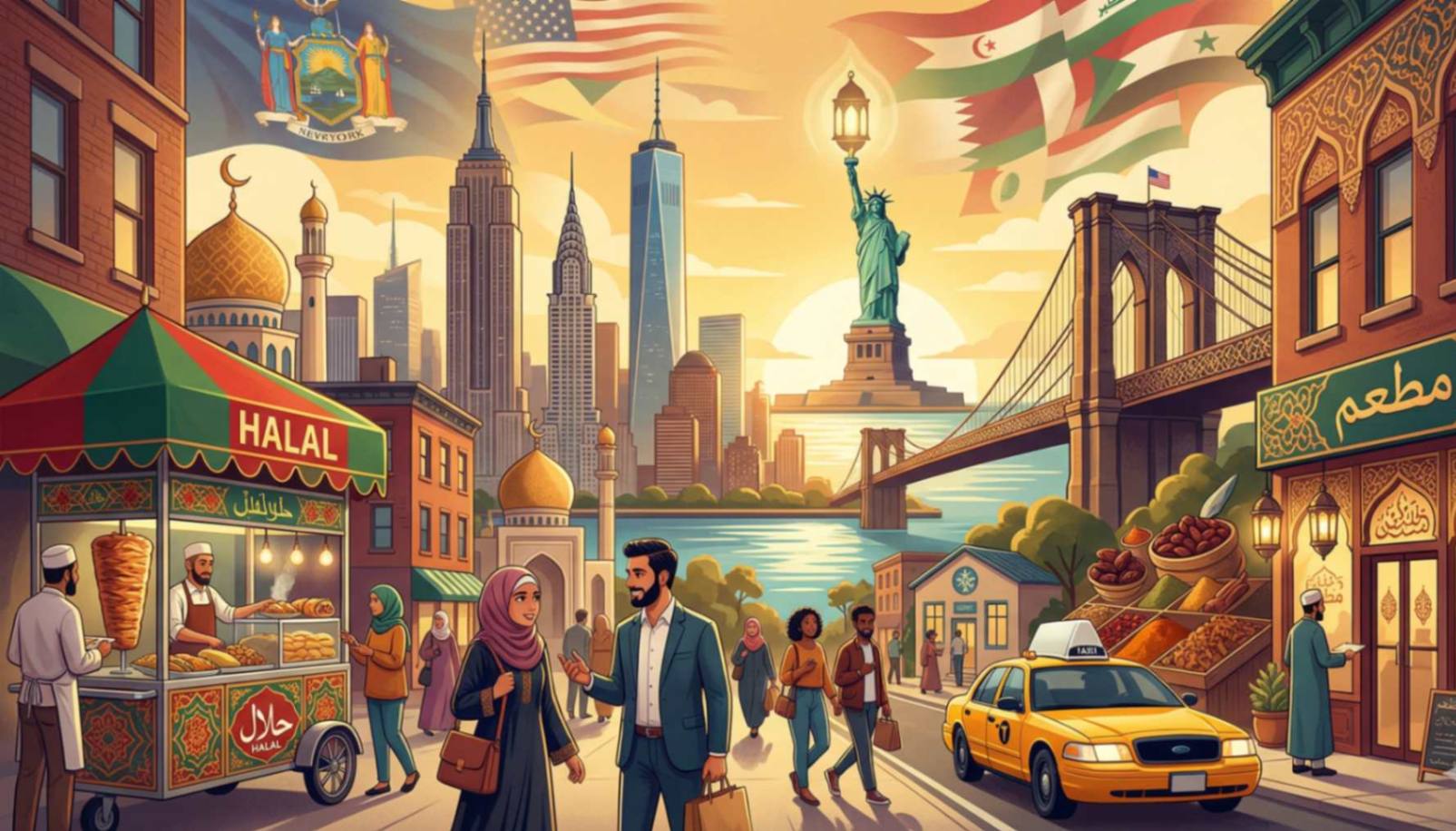
🔍 What You'll Find in This Guide (And Why New York Is Unlike Anywhere Else)
Let me tell you about the first time I walked down Atlantic Avenue in Brooklyn on a Friday afternoon.
I had been in New York for less than a week. I was overwhelmed—by the noise, the speed, the sheer density of humanity. Then I turned onto Atlantic Avenue, and I stopped. The storefronts were in Arabic and English. Sahadi's, the legendary Middle Eastern grocery that has been here for over 75 years, had a line out the door. The smell of fresh pita and za'atar hung in the air. A group of elderly men played backgammon outside a café, arguing in a mix of Arabic and English. And from somewhere down the block, I heard the adhan.
I wasn't in Cairo or Beirut or Damascus. I was in Brooklyn. And I understood, in that moment, that New York's Arab community is not a transplant community finding its feet. It is a rooted, multi-generational community that has been shaping this city for over a century.
I'm Hussein Abdullah, founder of "Arabs in America." Over fifteen years, I've watched Arab families navigate the chaos and opportunity of New York—building businesses in Bay Ridge, sending children to Islamic schools in Brooklyn, commuting from Paterson to Manhattan for six-figure salaries, and creating lives that are authentically Arab and authentically New York.
Here's exactly what you'll get:
- Why New York Is Different: Opportunity without a ceiling—and a cost of living to match.
- History of Arabs in New York: From Little Syria to the Pen League to today's diverse community.
- Where Arabs Live: Bay Ridge, Astoria, Paterson, Clifton, Staten Island, and Manhattan—mapped and explained.
- Mosques and Islamic Centers: The institutions anchoring spiritual life.
- Islamic Schools and Education: Options that balance academics and Islamic identity.
- Halal Food and Arab Markets: The restaurants, groceries, and street carts that feed the community.
- Jobs and the Economy: Where Arabs are building careers—from finance to bodegas to yellow cabs.
- Cost of Living and Housing: The honest, sometimes painful truth about New York rent.
- Social Life and Culture: Festivals, museums, and family life.
- Practical Tips for Newcomers: How to survive and thrive in the city that never sleeps.
- Quick Comparison Table: Arab neighborhoods ranked by cost, mosque access, and lifestyle.
- Hussein's Honest Take: Is New York right for your family?
New York is not the easiest city. It is expensive. It is loud. It can be exhausting. But for the Arab who comes with ambition, a plan, and a willingness to work, it offers something no other American city can match: the genuine possibility of building something extraordinary.
Chapter One: New York—City of Cities, and Why It's Different
New York is not an ordinary state or city; it is a global economic, cultural, and media capital. The city consists of five distinct boroughs, each large enough to be a major city on its own: Manhattan (finance and commerce), Brooklyn (cultural and residential heart), Queens (one of the most ethnically diverse places on earth), the Bronx, and Staten Island.
Why, then, is New York so attractive to Arabs despite its high cost?
The answer is opportunity without a ceiling. New York lets you start from zero and climb. Cultural diversity makes total alienation almost impossible—you are not a stranger; you become a New Yorker the moment you step onto the sidewalk. Arabic-language services—from hospitals with Arabic-speaking doctors to immigration and law offices—make life easier for those who know where to look.
Hussein's Take: New York is not for everyone. It will test your patience, your budget, and your nerves. But if you have ambition and are willing to work harder than you've ever worked, this city will reward you in ways no other American city can. The Arab community here is not a safety net—it's a launchpad.
🔗 For comparison with other states:
- Best State to Live in America for Arabs
- Arabs in Indiana: Complete Guide
- Arabs in Utah: Complete Guide
- Arabs in Michigan: Complete Guide
Chapter Two: History of the Arab Community in New York
To understand the strength of New York's Arab community in 2026, we need to look back at how it was built:
- Early Arab migration: Began in the late nineteenth and early twentieth centuries, largely Levantine Christians from what is today Syria and Lebanon. They settled in Lower Manhattan and worked in trade and textiles.
- The Arab "renaissance" in New York: New York became a hub for émigré writers. Gibran Khalil Gibran, Mikhail Naimy, and Elia Abu Madi founded the Pen League here and published Arabic newspapers read from ocean to gulf, turning New York into a cultural capital of the Arab diaspora.
- Migration after 1948 and the wars of the 1960s: New waves of Palestinian, Egyptian, and broader Levantine migration followed. Arabs moved from crowded Manhattan toward family-oriented communities in Brooklyn.
- Recent migration (through 2026): The community has diversified like never before. Today there are large Iraqi, Yemeni, Syrian, Egyptian, and Maghrebi communities, each adding its flavor to the mosaic of Arabs in New York.
This history matters because it means the institutions you rely on—mosques, schools, community organizations—are not new. They are mature, well-funded, and built to last.
Chapter Three: Arab Neighborhoods in New York—Where Do Arabs Live?
The first question for any newcomer is where to live. Arab neighborhoods in New York are spread in a strategic pattern; each area has its own character.
🥇 Brooklyn—The Largest Arab Concentration
Brooklyn is the historic and demographic core for Arabs in the city.
- Bay Ridge: Known as New York's first "Arab neighborhood." Walking Fifth Avenue here can feel like an Arab city. Restaurants, late-night shisha cafés, halal butchers, and Arab doctors' offices line the streets. The community is highly mixed (Palestinian, Egyptian, Yemeni, Syrian, and more).
- Atlantic Avenue: The historic commercial spine. Sahadi's, the iconic Middle Eastern grocery, has been here for over 75 years and draws customers from across the city.
🥈 Queens (Astoria)—The Youthful, Café-Rich Hub
Historically Greek, but Steinway Street has become a "little Arab street." Egyptian and Maghrebi communities are especially strong; the area is known for cafés open late into the night. Younger, more diverse, and slightly more affordable than Bay Ridge.
🥉 New Jersey—New York's Arab Suburb
You cannot discuss Arabs in New York without northern New Jersey—minutes from Manhattan and the natural residential extension of the metro area.
- Paterson, especially South Paterson: Main Street is sometimes called "little Ramallah" or "little Istanbul." A huge, tight-knit community, often Syrian, Palestinian, and Jordanian. Living here feels warmly familial.
- Clifton: Next to Paterson, with a large, diverse Arab community—a somewhat quieter, upscale option for professional families.
Staten Island
The phrase "Staten Island Arabs" gained real traction by 2026. This relatively quieter borough attracts families seeking larger homes at lower prices than much of Brooklyn, with good schools and more space.
Manhattan
- Historic Little Syria: Washington Street in Lower Manhattan was the first Arab cluster. Today little remains beyond historic markers.
- Upper East Side and Midtown: Wealthy Arab communities, diplomats, and students at elite universities.
Chapter Four: Mosques and Islamic Centers in New York
Keeping religious life in a fast-paced city requires strong infrastructure. For comparison, see our guide to mosques in California.
| Mosque / Center | Location | Significance |
|---|---|---|
| Islamic Cultural Center of New York (ICCNY) | Manhattan (96th St) | First purpose-built mosque in NYC. Serves UN staff, diplomats, and the broader community. |
| Masjid Omar ibn Al-Khattab | Bay Ridge, Brooklyn | Pulse of the Arab community. Friday sermons in Arabic and English. Strong children's programs. |
| Masjid Hazrat Abu Bakr Siddique | Brooklyn | Diverse congregation, intensive social services. |
| Islamic Center of Passaic County (ICPC) | Paterson, NJ | Among the largest and best-organized Islamic centers on the East Coast. Serves thousands who work in NYC. |
| JFK Airport Prayer Space | Terminal 4 | Multi-faith prayer room reflecting respect for Muslim travelers. |
Chapter Five: Islamic Schools and Education in New York
For immigrant families, education is a top priority. For nationwide comparison, see Islamic schools in America.
| School | Location | Notes |
|---|---|---|
| Al-Noor School | Brooklyn | One of the largest and best-known Islamic schools. High college placement rates. |
| Islamic School of Brooklyn | Brooklyn | Nurturing environment, rigorous blended curriculum. |
| Razi School | Queens | Strong STEM focus, long-standing community institution. |
| Al-Ghazaly School | Northern NJ | Favorite for Arab families in New Jersey suburbs. |
| Islamic School of Clifton | Clifton, NJ | Strong academics, costs often more reasonable than inside NYC. |
New York City public schools are highly diverse; in Brooklyn and Queens, many schools offer halal meals and observe Islamic holidays. At the university level, Columbia and NYU host large numbers of Arab students and active student organizations.
Chapter Six: Arab Restaurants and Halal Markets
If you are looking for Arab restaurants in New York or Arab grocery stores, you are in a food lover's paradise.
- Brooklyn (Bay Ridge): Streets packed with restaurants—from Nablusi knafeh and Palestinian and Syrian shawarma to Lebanese grills and Yemeni spots serving mandi and saltah.
- Sahadi's (Atlantic Avenue, Brooklyn): An icon open for more than 75 years. Premium spices, nuts, and Middle Eastern cheeses.
- Queens (Astoria): Egyptian restaurants serving koshari, ful, and oven dishes. A gathering point for young Arabs.
- Manhattan halal carts: The Halal Guys and countless other carts on seemingly every corner. Fine dining exists in Manhattan, but the most authentic "street" flavors often mean a short subway ride to Brooklyn or Queens.
Chapter Seven: Jobs and the Economy for Arabs in New York
Searching for jobs in New York for Arabs opens wide doors. For another major coastal market, see best jobs for Arabs in California.
| Sector | Arab Presence |
|---|---|
| Finance (Wall Street) | Strong Arab professional presence in banking, investment, and fintech. |
| Healthcare | Thousands of Arab doctors, nurses, and allied health professionals in NYC's major hospital systems. |
| Technology | Growing Arab presence in NYC's tech and startup ecosystem. |
| Entrepreneurship and Retail | Arabs own a large share of corner bodegas, quick-service restaurants, and car dealerships. Real estate brokerage also has many successful Arab agents. |
| Transportation (Yellow Cabs and Rideshare) | Historically and today, Arab immigrants—especially from Egypt, Morocco, and Yemen—make up a large share of yellow cab and for-hire drivers. A classic first rung for thousands of families. |
Commuter strategy: Many professionals earn Manhattan salaries but live in New Jersey cities like Paterson and Clifton to ease tax pressure and improve family life, commuting daily on NJ Transit.
Chapter Eight: Cost of Living and Housing—The Biggest Challenge
New York ranks among the world's most expensive cities. This is the hurdle that breaks many newcomers.
| Area | Typical 2-Bedroom Rent (2026) |
|---|---|
| Manhattan | $3,500–$5,000+ |
| Brooklyn (Bay Ridge) | $2,000–$3,000 |
| Queens (Astoria) | $1,800–$2,800 |
| Staten Island | $1,600–$2,500 |
| New Jersey (Paterson/Clifton) | $1,500–$2,400 |
Hussein's Take: Do not start in core Manhattan or the trendiest, priciest parts of Brooklyn. Begin in New Jersey, Staten Island, or Queens. Stabilize financially, then move gradually as income allows. The commuter life is the price of financial sanity in the New York metro area.
🔗 For broader financial planning:
- Best State to Live in America for Arabs
- Work in America for New Immigrants
- Health Insurance in America
Chapter Nine: Social Life and Cultural Activities
- Arab festivals and events: On holidays, Bay Ridge and South Paterson streets turn into open-air celebrations.
- Museums and galleries: The Met houses one of the world's great Islamic art wings. The Brooklyn Museum regularly features contemporary Arab artists.
- Family outings: Central Park, Brooklyn Bridge Park for barbecues, and Coney Island in summer.
- Culture: Broadway shows; Arab musicians on world tours frequently stop in New York.
Chapter Ten: Practical Tips for New Arabs in New York
- Do not arrive without a financial and work plan. New York is unforgiving if you slip financially. Have savings for at least six months of living expenses.
- Choose your neighborhood wisely. For families, proximity to a mosque, Islamic school, and halal groceries matters more than living next to glittering Manhattan.
- Master the subway. The subway is the city's lifeline. Owning a car in Manhattan and much of Brooklyn is expensive because of parking and insurance. The subway saves thousands.
- Join Arab groups. Facebook hosts very active groups such as "Arabs in New York." They are often the fastest way to find roommates, entry-level jobs, or a trusted doctor.
- Prepare for noise and speed. New York is loud and crowded. If you need total quiet and a rural pace, this may not be the place. Here you walk fast and think fast.
Chapter Eleven: Quick Comparison—Arab Neighborhoods in Greater New York
| Area | Cost of Living | Mosque Access | Islamic Schools | Lifestyle |
|---|---|---|---|---|
| Brooklyn (Bay Ridge) | High | Excellent | Strong | Busy, vibrant, very Arab |
| Queens (Astoria) | Moderate-High | Excellent | Good | Youthful, cafés, mixed |
| Staten Island | Moderate | Good | Available | Quiet, family-oriented |
| NJ (Paterson/Clifton) | Moderate | Excellent | Very Strong | Suburban, family-friendly |
| Manhattan | Very High | Limited | Not clustered | Upscale, fast, expensive |
Frequently Asked Questions (FAQ)
Q1: Where do most Arabs live in New York? A: Bay Ridge, Brooklyn is the historic and demographic heart. Astoria, Queens and Paterson, New Jersey are the other two major concentrations.
Q2: Is New York expensive for Arab families? A: Yes—among the most expensive in America. Most families live in Brooklyn, Queens, or New Jersey to manage costs.
Q3: Are there Islamic schools in New York? A: Yes—Al-Noor School and Islamic School of Brooklyn are well-regarded. Al-Ghazaly School in New Jersey is also popular.
Q4: What jobs do Arabs do in New York? A: Finance, healthcare, technology, retail (bodegas and restaurants), real estate, and transportation (yellow cabs and rideshare).
Q5: Is there good halal food in New York? A: Excellent. Bay Ridge, Astoria, and Paterson have dense concentrations of halal restaurants and groceries. Manhattan has halal carts on nearly every corner.
Q6: Can I live in New York without a car? A: Yes—New York has America's best public transit system. Most families in Brooklyn, Queens, and Manhattan do not need a car.
Q7: Where can I find Arabic-speaking doctors in New York? A: Bay Ridge, Brooklyn, and Astoria, Queens, have many Arabic-speaking physicians and medical practices.
Q8: Is New York safe for visibly Muslim families? A: Generally, yes. New York is one of America's most diverse and tolerant cities. Islamophobic incidents occur but are less common than in many other parts of the country.
Conclusion: New York—A City That Rewards the Bold
New York is indeed a city of unlimited opportunity and harsh challenge at once. Over decades of hard work, Arabs in New York have carved their names into the city's stone and built a strong, rooted, lively community that preserves tradition amid modern noise.
A final word from Hussein Abdullah: I've watched Arab families arrive in New York with nothing but ambition and a cousin's couch to sleep on. Ten years later, some of them own businesses on Atlantic Avenue, send their children to Al-Noor School, and spend summer weekends on Coney Island. New York is not gentle. But if you have the grit to survive the first two years, it can give you a life you couldn't build anywhere else. Come with a plan. Come with savings. Come with the willingness to work harder than you ever have. And New York will open its doors.
🔗 Continue Exploring:
- Best State to Live in America for Arabs
- Arabs in Michigan: Complete Guide
- Arabs in Indiana: Complete Guide
- Mosques in California
- Islamic Schools in America
Share your New York story: Do you live in New York or nearby today? Which neighborhood did you choose, and what surprised you most? Leave your experience in the comments below—your tips could guide the next Arab family making the leap to the city that never sleeps.
Author: حسين عبد الله
Hussein Abdullah is a web developer and specialized content writer with more than eight years of experience enriching Arabic digital content. He combines an analytical programming mindset with a deep passion for writing to deliver accurate, reference-quality guides. On Arabian in USA (عرب في أمريكا), he focuses on simplifying complex steps for new immigrants and sharing reliable information on housing, work, and financial setup—so every newcomer has a trustworthy path toward stable life in the United States.


Continue reading
- Top 10 Best States for Muslims in America: Ultimate Guide (Updated 2026)
- Top 7 Best States for Arabs in America: Ultimate Guide (Updated 2026)
- Muslim Population in America 2026: Complete State-by-State Guide, Statistics & Interactive Map
- Work in America for New Immigrants 2026: The Complete Guide from Day One to Your Dream Career [Step-by-Step Plan]
- How to Build Credit Score in America from Zero in 2026: Complete Guide for New Immigrants
- Arabs in Michigan 2026: Complete Guide to Community, Cost of Living, Study, and Work