How to Buy a Car in America and What Are the Cheapest Options for Immigrants? Complete 2026 Guide
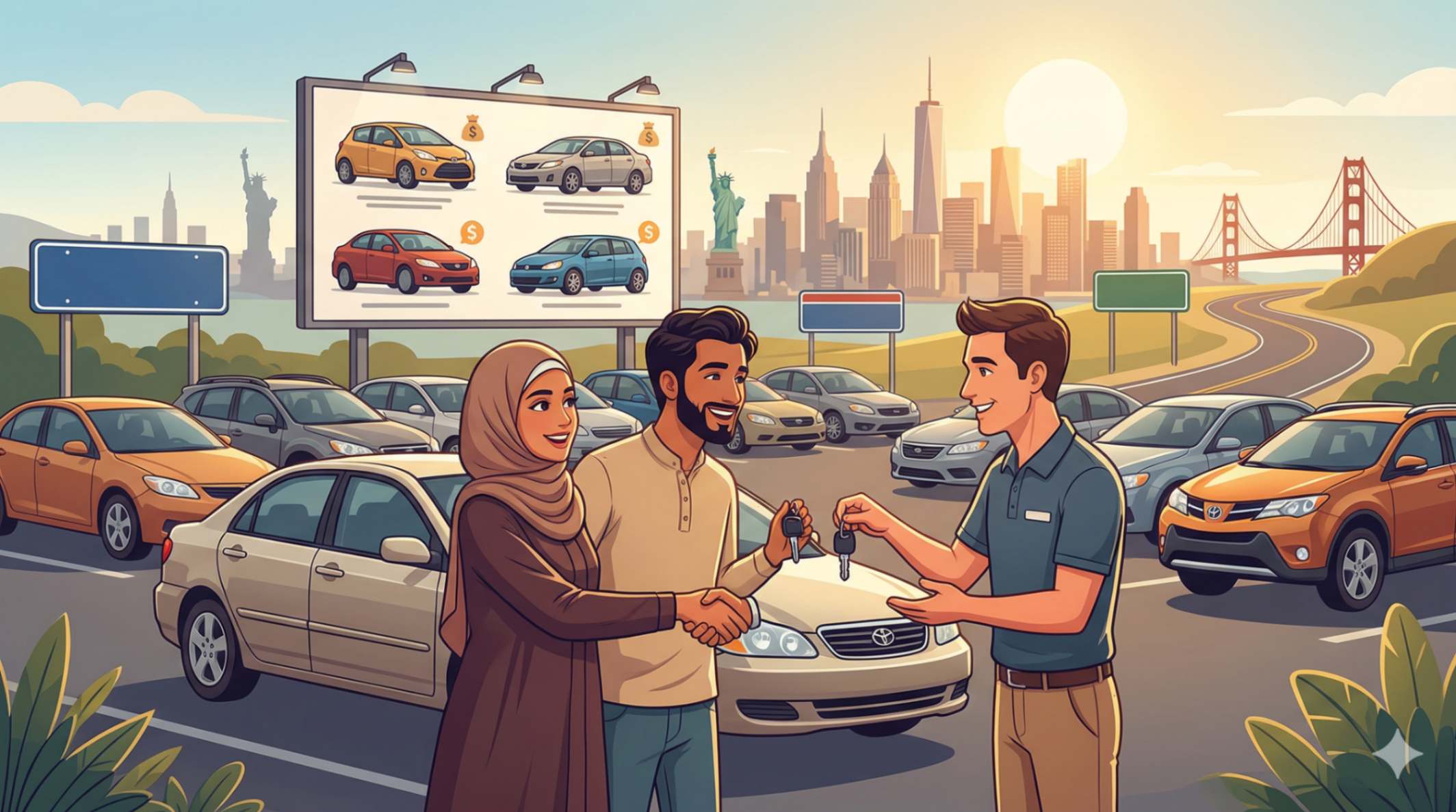
How to Buy a Car in America and What Are the Cheapest Options for Immigrants? Complete 2026 Guide
Picture This Scene...
You arrived in America just three weeks ago. You've settled into a modest room in the suburbs of Dearborn, Michigan, or maybe the sprawling outskirts of Houston, Texas. You landed your first job—perhaps at a warehouse or a bustling restaurant kitchen—and your very first paycheck is about to hit your newly opened bank account. Everything finally seems to be moving in the right direction. But there's one nagging, relentless problem that confronts you every single morning: How in the world are you going to get to work?
You glance at the Uber app on your phone. A quick calculation reveals that the daily round-trip commute will devour nearly a quarter of your weekly wages. You look toward the nearest bus stop and realize it's a punishing 25-minute walk away, and in the brutal Michigan winter or the suffocating Texas summer, that's simply not a sustainable human option. Suddenly, you are hit with the stark, universal realization that every new immigrant comes to understand: In America, a car is not a luxury item. It is a lifeline.
It is your means of arriving at work on time and keeping that job. It is how you haul a week's worth of groceries home. It is the very definition of freedom and mobility. But how does a newly arrived immigrant—someone with a completely blank credit file, perhaps no U.S. driver's license yet, and maybe even uncertain about the difference between a "Toyota Camry" and a "Honda Accord"—navigate the notoriously complex and jargon-filled American car market?
The automotive landscape in 2026 is still navigating the choppy waters of the post-pandemic economy. Prices remain elevated compared to the "before times," and interest rates on loans are stubbornly high. Yet, the silver lining is this: the range of options available to a determined new immigrant is still remarkably broad. It spans everything from buying a reliable used car with $3,000 in cash, all the way to financing a relatively new vehicle to begin the essential task of building an American credit profile from absolute zero. The difference between making a savvy, informed purchase and an emotional, impulsive one can easily translate into thousands of dollars saved on the sticker price and hundreds of dollars saved every single month on insurance, fuel, and repairs.
In this comprehensive and meticulously detailed guide for 2026, we will serve as your personal navigator through the journey of buying a car in America as an immigrant. We will walk you through every step, from defining a realistic budget that accounts for hidden costs, to understanding the full spectrum of purchasing options—whether cash or financing. We will present a curated list of the most reliable, affordable vehicles that won't betray your wallet. We will decode the bewildering jargon—terms like "Carfax," "Clean Title," and "Down Payment"—and we will shine a bright light on the common scams that trap so many newcomers. Most importantly, we will equip you with the confidence to walk onto a dealership lot or meet a private seller armed with knowledge.
And because establishing yourself in America is a holistic endeavor, make sure you have laid the foundation in other critical areas before you sign on the dotted line:
- Working in America for New Immigrants: From Your First Day to Your Dream Job
- How to Open a Bank Account in America as a New Immigrant 2026
- How to Get Your SSN in America in 2026: A Step-by-Step Guide
- How to Build a Credit Score in America from Scratch 2026
- How to Get a Credit Card in America Without Credit History
- How to Get Health Insurance in America 2026
- How to Find Temporary Housing When Arriving in America
- Best Money Transfer Apps from the USA to Your Home Country
🚗 Chapter One: Do You Actually Need a Car in America? (A Strategic Decision)
Before you dive headfirst into the endless scroll of Facebook Marketplace listings, take a deliberate pause and ask yourself honestly: Is a car an absolute necessity right this moment, or is it a convenience that could be deferred? The answer hinges entirely on three variables: Your City, Your Job, and Your Budget.
🏙️ When is a Car an Absolute, Non-Negotiable Necessity?
In the vast majority of American states and cities, the built environment was designed with the automobile at its center. If you reside in:
- The Suburbs: Think of the sprawling suburbs of Detroit (Michigan), Plano (Texas), or Orange County (California). Here, life without a car is practically impossible. The nearest grocery store might be a three-mile drive away, with no sidewalks or pedestrian infrastructure to speak of. Your workplace is likely a 20-30 minute highway commute.
- The South and Midwest: States like Texas, Florida, Ohio, and Arizona are vast, and public transit options are sparse to completely non-existent. Here, a car is your ticket to participating in the economy.
🚌 Alternatives to Car Ownership (When You Can Realistically Delay the Purchase)
- Public Transit: Highly efficient in dense urban cores like New York City (Subway/Buses), Chicago (The 'L' Train), Boston (The 'T'), and San Francisco (BART). If you both live and work within these transit networks, you can realistically postpone a car purchase for months or even a year, saving you thousands. See our guide on Traveling to Boston to understand how robust public transit can be.
- Rideshare Apps (Uber/Lyft): An excellent tool for the first few weeks or for irregular trips. But heed this warning: relying on these apps for a daily commute will cost you between $500 and $800 per month. That figure often rivals or exceeds the monthly payment on a brand-new car! It's a financial trap for daily use.
- Bicycle or Electric Scooter: A healthy and exceptionally economical option if you live within 3-5 miles of your workplace and your city has dedicated, safe bike lanes. However, you must account for the harsh realities of a Michigan winter or Florida's torrential afternoon downpours.
💰 The True Cost of Car Ownership (The Lesson They Don't Teach You)
This is the hard truth that many new immigrants learn the expensive way. The purchase price of the car is merely the admission ticket. According to estimates from the American Automobile Association (AAA) for 2026, the average annual cost to own and operate a new vehicle (assuming 15,000 miles driven per year) now exceeds a staggering $12,000 per year. That translates to roughly $1,000 per month! This total cost of ownership includes:
- Insurance: A particularly high line item for a new immigrant with no U.S. driving record.
- Fuel: Prices vary wildly by state (from $3.00/gallon in Texas to over $5.00/gallon in California).
- Maintenance and Tires: Regular oil changes, tire rotations, new tires, brake pads, and unexpected repairs.
- Registration and Taxes: Annual fees paid to your state's DMV.
- Depreciation: The silent killer. The moment you drive a new car off the lot, it loses approximately 20% of its value. Over five years, a typical car loses over half its original value.
A Real Story from the Field: "Samer," a young Jordanian man who landed in Columbus, Ohio, was full of enthusiasm. As soon as he saved $3,000 from his restaurant job, he bought a used 2008 BMW for $2,800 because it looked "sleek." Samer recalls: "It was the single biggest financial mistake of my life. A month later, the transmission failed completely. The cheapest repair quote I got was $2,500—more than I had paid for the whole car! I ended up selling it for scrap for $400. If I had just asked anyone, they would have told me: 'Buy a Toyota or a Honda.'" The lesson is etched in stone: Never buy an old, high-mileage German luxury car unless you are a certified mechanic yourself.
💳 Chapter Two: Your Car-Buying Options – Ranked from Most to Least Expensive
Multiple paths exist, and the best one for you depends entirely on your available cash reserves and credit profile. Here is the complete breakdown:
💵 Option 1: Cash Purchase from a Private Party – The Immigrant's Champion
This is the single best and most strongly recommended path for roughly 90% of newly arrived immigrants.
- How It Works: You buy the car directly from an individual owner—no middleman, no dealership. You pay the full agreed-upon amount in cash or with a secure Cashier's Check, and you walk away with the Certificate of Title, properly signed over by the seller.
- Where to Find These Cars?
- Facebook Marketplace: This is now the undisputed king. You can filter by price, model, year, and distance from your zip code.
- Craigslist: The classic platform, though it's increasingly cluttered with dealer ads and occasional scams.
- OfferUp: A very popular mobile app for local peer-to-peer sales.
- Advantages:
- Lowest Possible Price: You will save anywhere from 15% to 25% compared to buying the exact same car in the same condition from a dealership.
- No Credit Check Required: No one asks for your Social Security Number or credit score.
- Better Negotiation Power: You can haggle more freely on the final price.
- Cheaper Insurance: You have the option to purchase only "Liability Only" coverage, which is dramatically cheaper than full coverage.
- Disadvantages & Risks:
- No Warranty (Sold "As-Is"): If the engine seizes up ten minutes after you hand over the cash, it is your problem entirely.
- Potential for Fraud: You could inadvertently buy a stolen vehicle or one with concealed mechanical defects.
- The Golden Rule: Never, ever buy a car from a private seller without first having it inspected by an independent, trusted mechanic.
🏢 Option 2: Buying from a Used Car Dealership
This is the middle-ground option for those seeking a bit more convenience and perceived safety.
- Advantages:
- Paperwork Handled: The dealership manages the title transfer and registration process with the DMV.
- Limited Warranty Potential: Some dealerships offer a short-term warranty (e.g., 30 days or 1,000 miles).
- Financing Options: Even with poor or non-existent credit, dealerships have relationships with banks and specialty lenders.
- Disadvantages:
- Higher Selling Price: You are paying for the dealership's profit margin plus often-inflated "Documentation Fees" (Doc Fees) that can range from $500 to $1,000.
- Sales Pressure: Salespeople are expertly trained to upsell you on add-ons you don't need.
- Franchise Dealer (CPO - Certified Pre-Owned): These dealerships sell used cars of the same brand they sell new (e.g., a Toyota dealer selling a "Toyota Certified Used" vehicle). The car has undergone a rigorous factory inspection and comes with an extended manufacturer-backed warranty. The most expensive, but the highest quality assurance.
- Independent Used Car Lot: These lots sell a variety of makes and models. Prices are lower than CPO vehicles, but the quality and history of the cars can vary dramatically.
✨ Option 3: Buying a Brand New Car
This path is for those with a robust budget or those who have managed to secure exceptionally low-interest financing.
- Advantages: That intoxicating new car smell! You are the first owner. Full factory warranty coverage (3-5 years). The latest safety technology and best-in-class fuel economy. Zero fear of hidden mechanical nightmares.
- Disadvantages: Depreciation. The car loses 10% to 20% of its value the very instant you drive it off the lot. After three years, it will have lost roughly 40-50% of its value.
- A 2026 Note: Due to substantial federal tax incentives (up to $7,500), purchasing a new Electric Vehicle (EV) or Plug-in Hybrid can sometimes be an excellent long-term financial move, especially in states like California that offer additional rebates. Check our guide on Life in California for more on EV incentives.
📄 Option 4: Leasing
You are not buying the car; you are "renting" it for a defined term (typically 36 months).
- How It Works: You put down a small amount (or nothing) as a "Drive-Off" fee and then make fixed monthly payments. At the end of the term, you return the car to the dealership.
- Advantages: You drive a new car every three years. The monthly payment is considerably lower than a purchase loan for the same vehicle. Maintenance is often covered.
- Disadvantages (Deal-Breakers for Most New Immigrants):
- You Own Nothing at the End.
- Mileage Limits: The contract imposes a strict annual mileage limit (usually 10,000 or 12,000 miles). Exceeding this limit triggers punishing penalties (often 20 to 25 cents per excess mile!).
- Excess Wear and Tear Fees: Any deep scratch, dent, or permanent stain on the upholstery will result in a charge when you return the vehicle.
- The Verdict: Generally not recommended for a new immigrant unless you are 100% certain of your annual driving habits and can strictly stay within the mileage cap.
🏦 Chapter Three: Financing – How to Buy a Car When You Have Zero Credit History
The absence of a U.S. credit score is the single biggest barrier to buying a car in America for immigrants. But it is not an insurmountable wall. Here is your financing roadmap:
1️⃣ Paying in Cash (Cash is Still King)
If you have managed to accumulate savings—even $5,000—this is your golden ticket out of the financing maze. No debt. No interest payments. No monthly loan servicer. Buy a reliable used Japanese sedan with that cash, drive it for two to three years while you build your credit and save up for a better car later.
2️⃣ "Buy Here Pay Here" (BHPH) Dealerships
These are small, independent used car lots that offer In-House Financing—meaning they are the bank. Their signs scream: "No Credit? No Problem!"
- How It Works: You select a car from their inventory, put down a sizable down payment (often 30-40%), and agree to make payments weekly or bi-weekly directly to the dealer.
- Advantages: Zero credit score requirement. A guaranteed way to get into a car and, sometimes, build a payment history.
- Fatal Flaws:
- Predatory Interest Rates: APRs typically range from 18% to 29%. You will end up paying two or three times the actual value of the car over the life of the loan.
- Low-Quality Inventory: The cars are often older, high-mileage, and of questionable mechanical integrity.
- Starter Interrupt Devices (GPS Kill Switch): Many BHPH dealers install a device that prevents the car from starting if you are even one day late on a payment.
- The Verdict: Use only as an absolute last resort in a genuine emergency. Plan to pay off or refinance this loan as quickly as humanly possible.
3️⃣ Credit Unions – The Immigrant's Best Financial Friend
These are non-profit financial cooperatives owned by their members (e.g., Navy Federal, PenFed, or small local credit unions). They are your secret weapon.
- Why Are They Superior?
- They are significantly more flexible and personal than massive national banks like Chase or Bank of America.
- They routinely accept an ITIN (Individual Taxpayer Identification Number) in lieu of an SSN for opening accounts and applying for loans.
- Their interest rates are substantially lower than those offered by dealerships and BHPH lots.
- How to Leverage Them: The day you arrive, open a checking and savings account at a local Credit Union. Begin depositing your paychecks there consistently. After 3 to 6 months of demonstrating steady income and responsible account management, your chances of securing a reasonable auto loan become excellent.
4️⃣ Traditional Bank Financing (Chase, Bank of America, Wells Fargo)
Extremely difficult for a new immigrant. These institutions rely heavily on automated underwriting algorithms that demand a verifiable FICO credit score and at least 6-12 months of U.S. credit history. Do not waste your time here in your first year.
🚘 Chapter Four: The Cheapest and Best Cars for New Immigrants (2026 Model Guide)
When searching for a car, make this your unwavering mantra: "Reliability Over Flashiness." You need a vehicle that starts faithfully every single morning and whose only trips to the mechanic are for routine oil changes. These are the battle-tested champions:
| Vehicle Type | Recommended Models | Price Range (Used, Good Condition) | Why This Is the Smart Immigrant's Choice |
|---|---|---|---|
| 🚗 Economy Sedan | Toyota Corolla, Honda Civic | $6,000 - $14,000 | The Kings of Reliability. Parts are ubiquitous and cheap. Stellar fuel economy. They hold their resale value exceptionally well. |
| 👨👩👧👦 Family Sedan | Toyota Camry, Honda Accord | $8,000 - $16,000 | Spacious and comfortable for families. Their engines routinely last 300,000+ miles. Perfect for road trips and commuting. |
| 💰 Budget New Car | Nissan Versa, Mitsubishi Mirage | $17,000 - $20,000 (New!) | If you are absolutely determined to have a new car with a full warranty, these are the two most affordable models in the entire U.S. market for 2026. |
| 🔌 Hybrid | Toyota Prius, Hyundai Ioniq | $9,000 - $18,000 (Used) | The golden choice for Uber/Lyft drivers. Massive savings on gasoline. Their hybrid batteries are proven to be durable for the long haul. |
| 🚙 Compact SUV | Toyota RAV4, Honda CR-V | $12,000 - $22,000 | If you live in a snowy state (Michigan, Illinois, Massachusetts) and want All-Wheel Drive (AWD) for winter confidence. |
| 💪 The American Alternative | Ford Fusion, Chevrolet Malibu | $5,000 - $10,000 | Their used prices are significantly lower than comparable Japanese models. If you find one with a solid maintenance history, it can be a real bargain. |
🔍 Additional Model-Specific Warnings and Tips:
- Beware the Nissan CVT: Nissan Sentra and Altima models from roughly 2013-2018 are notorious for catastrophic failures of their Continuously Variable Transmission (CVT). Avoid them entirely unless you have verifiable proof the transmission has already been replaced.
- Old German Luxury Cars (BMW, Mercedes, Audi): They are temptingly cheap on the used market for a reason. The cost of parts and specialized labor for repairs is astronomical. Do not buy one unless you own a repair shop. Read our Life in California guide to see how luxury car maintenance can shatter a budget.
- Used Electric Vehicles (EVs): Models like the Nissan Leaf or Chevy Bolt are now entering the used market at very attractive prices (under $10,000). They are an outstanding option if you have a dedicated garage or driveway to charge them overnight. The fuel savings are immense. However, you must have the health of the high-voltage traction battery professionally assessed before purchase.
🔍 Chapter Five: A Step-by-Step Guide to Buying a Used Car from a Private Seller
This is the path most of you will take. Follow these steps religiously to avoid disaster:
- Intelligent Searching on Facebook Marketplace:
- Set the filter strictly to
Private Sellers Only. - Use targeted search terms like:
Toyota Corolla clean titleorHonda Civic one owner.
- Set the filter strictly to
- Initial Contact with the Seller:
- Ask the critical screening questions:
- "Why are you selling the car?"
- "Is the title clean? Is it in your name?"
- "Has it been in any accidents?"
- "Could you please share the VIN number?"
- If they refuse to provide the VIN, end the conversation immediately and walk away.
- Ask the critical screening questions:
- The Vehicle History Report (Carfax or AutoCheck):
- Take the VIN and purchase a report from Carfax.com or AutoCheck.com. The cost is around $40. This is non-negotiable.
- Scrutinize the report for: Number of previous owners, accident history, service records, and any indication of Odometer Rollback.
- Critical Warning: Never, under any circumstances, buy a car with a "Salvage" or "Rebuilt" Title unless you are a mechanic who fully understands the specific risks involved.
- The Inspection and Test Drive:
- Arrange to meet the seller in a safe, public location (a busy supermarket parking lot is ideal).
- The Test Drive: Listen intently for any strange engine noises, brake squeals, or suspension clunks. Test the air conditioning. Drive on a slightly rough road surface to evaluate the suspension.
- The Pre-Purchase Inspection (PPI): This is the most valuable $150 you will ever spend. Take the car to an independent mechanic (not a mechanic recommended by the seller). Search Google for
Pre-purchase inspection near me. The mechanic will provide a detailed written report on the vehicle's condition.
- Negotiation:
- Use the PPI report as your primary leverage. "The mechanic noted that the brake pads are at 20% life and will need replacement soon. That's about a $300 job. Could we adjust the price to reflect that?"
- Be polite and realistic. Use Kelley Blue Book (KBB.com) to determine the fair market "Private Party Value" for the car.
- Safe Location: Conduct the final exchange inside the lobby of a bank (where security cameras are present). Withdraw a Cashier's Check made out to the seller directly from the teller.
- Documents:
- Title: Ensure the seller signs the back of the Title document in the exact spot designated for "Seller's Signature." Verify that the printed name on the Title matches the seller's government-issued ID.
- Bill of Sale: Create a simple document that includes: The date, full names of both parties, the vehicle's VIN, the sale price, and both signatures. (Templates are available online).
- Take the signed Title and keys, and go immediately to your nearest DMV to register the vehicle in your name and pay the applicable Sales Tax.
🏢 Chapter Six: The Steps for Buying from a Dealership
If you decide to brave the dealership, you need a different game plan:
- Research the Car First: Use CarGurus.com. This website is invaluable because it analyzes listings and tags them as a "Great Deal," "Fair Deal," or "Overpriced." Focus your search exclusively on cars rated "Great Deal."
- Secure Pre-Approval for Financing: Before you set foot on the lot, walk into a Credit Union and get pre-approved for an auto loan. This gives you immense negotiating leverage.
- The Test Drive: Stay laser-focused on the vehicle's mechanics and condition. Do not let the salesperson distract you with small talk about the weather or the sound system.
- The Finance Office (The "Box"): This is the room where profits are maximized. The Finance Manager will try to sell you a menu of expensive add-ons:
- Extended Warranty: Often grossly overpriced and unnecessary on reliable Japanese brands.
- Gap Insurance: Only essential if your down payment is very small (less than 10-15%).
- Paint Protection / Fabric Protection: Politely decline.
- Pro Tip: Master the use of two simple words: "No, thank you." Repeat as needed.
- Read the Entire Contract Before Signing. Ensure the "Out the Door Price" matches exactly what you agreed to verbally, with no surprise fees added in the fine print.
📄 Chapter Seven: Car Insurance for New Immigrants (Why It's Expensive and How to Lower It)
Auto insurance in the United States is mandatory. Driving without it is a criminal offense that can lead to license suspension, vehicle impoundment, and in some states, jail time. But why are the quotes so shockingly high for a new immigrant?
- You are a "New Driver" in Their Eyes: Even with 20 years of driving experience in Cairo or Casablanca, their system doesn't recognize it. You are statistically categorized as "High Risk."
- Lack of Credit History: Insurers heavily weight credit-based insurance scores to determine premiums.
📊 Types of Coverage Explained:
| Type of Coverage | What It Pays For | Is It Mandatory? |
|---|---|---|
| Liability | Damages and injuries you cause to other people and their property. | Yes, in nearly every state. |
| Collision | Damage to your own vehicle resulting from a collision with another car or object. | Yes, if you have a car loan or lease. |
| Comprehensive | Damage to your own vehicle from non-collision events (theft, vandalism, flood, fire, falling tree branch). | Yes, if you have a car loan or lease. |
💡 Golden Strategies to Slash Your Insurance Premiums:
- Buy an Older Car with Cash: If you own a $5,000 car outright, you can elect to purchase Liability Only coverage. This will reduce your premium by 50-60% compared to Full Coverage.
- Use Comparison Websites: Utilize aggregators like The Zebra or Gabii to compare quotes from 5-6 different insurance companies in a matter of minutes.
- Ask About the "Paid-in-Full" Discount: If you can afford to pay the entire annual premium upfront, you may receive a 10-15% discount.
- Provide Translated Driving Records: Some companies (notably Progressive) may grant a "Driving Experience Discount" if you provide a certified English translation of your driving record or license from your home country proving you have a long, clean history.
- Take a Defensive Driving Course: An inexpensive online course (around $25) can earn you a discount on your premium for up to three years.
⚠️ Chapter Eight: A Field Guide to Avoiding Car-Buying Scams
A new immigrant is a prime target for scammers. Memorize these rules to avoid becoming a victim:
- The "Military Deployment" Shipping Scam: A seller claims to be deployed overseas and promises to ship the car to you via eBay Motors after you pay. This is a 100% fraudulent script. Never send money to anyone you have not met face-to-face.
- Title Washing: A car that sustained severe flood damage or a major collision in one state is transported to a state with looser titling regulations to obtain a fraudulent "Clean Title." Red flags include: A persistent musty smell inside the cabin, rust in unusual places (under the dashboard, inside seat rails), and brittle, corroded wiring. A high-quality Carfax report can sometimes reveal this history.
- Odometer Rollback: Illegally tampering with the digital odometer to display a lower mileage. Compare the displayed mileage to the wear and tear on the brake pedal, driver's seat bolsters, and steering wheel. Does the wear match the mileage?
- Pressure for a "Cash Deposit": Never hand over a cash deposit to "hold" a car before you have seen it in person and had it inspected.
❓ Chapter Nine: Frequently Asked Questions About Buying a Car for Immigrants (FAQ)
Q: Can I buy a car without a Social Security Number (SSN)? A: Yes. You can buy a car with cash without any problem. For financing, some Credit Unions and specialized dealerships will accept an ITIN (Individual Taxpayer Identification Number) as a substitute.
Q: How much does title transfer and registration cost at the DMV? A: It varies by state but generally consists of two parts:
- Sales Tax: Paid once upon registration, ranging from 0% (in states like Oregon) up to nearly 10% (in some California municipalities).
- Annual Registration Fee: Typically between $50 and $200 per year.
Q: Is it better to buy a Hybrid or a regular gasoline car? A: If you anticipate driving more than 15,000 miles per year (especially for rideshare work), a Hybrid (like a Prius) is absolutely worth the premium. The fuel savings will offset the higher purchase price within 2-3 years. For low-mileage drivers, a conventional gasoline engine is more cost-effective.
Q: I bought a used car from a private seller and discovered a major engine problem two days later. Can I return it? A: Unfortunately, no. Private party sales in the U.S. are universally considered "As-Is" transactions. You have no legal recourse for a refund or repair unless you can prove intentional fraud or concealment. This is why the Pre-Purchase Inspection is non-negotiable.
Q: What is the 20/4/10 rule for car buying? A: It is a golden rule of personal finance to avoid becoming "car poor":
- 20%: Put at least 20% of the purchase price as a down payment.
- 4 Years: Finance the vehicle for a maximum of 4 years (48 months). Stretching a loan to 6 or 7 years traps you in debt and costs you a fortune in interest.
- 10%: Ensure your total monthly vehicle expenses (Loan Payment + Insurance + Fuel) do not exceed 10% of your net monthly income.
Q: How can I know if a used car's asking price is fair? A: Go to Kelley Blue Book (KBB.com) . Enter the car's specific details (year, make, model, mileage, options, condition). Look at the "Private Party Value." This is the realistic target price you should aim for.
Q: Is it normal for a private seller to ask for a deposit? A: A dealership might ask for a small, refundable deposit ($100-$200) on a credit card to hold a car for 24 hours. This is acceptable. Never give cash to a private seller as a deposit.
💡 Chapter Ten: Golden Nuggets of Wisdom for New Immigrants
- Start Humble: Your first car in America should be a "work boot," not a "dress shoe." Buy something reliable and cheap. Drive it for a year to truly understand your real needs (Do you actually need AWD? More cargo space?).
- Join a Credit Union Today: Stop reading this and walk into a local Credit Union to open an account. This single, free action will save you thousands of dollars on future loans.
- Find an Arab Mechanic in Your City: Search local Arabic Facebook groups for recommendations. Clear communication with a trusted mechanic who speaks your language can save you immense headaches and money. See our guides on Arabs in Michigan or Arabs in Texas to tap into strong community networks.
- Never Neglect Maintenance: Changing the oil every 5,000 miles is the single most effective thing you can do to keep your engine alive for years. Ignoring maintenance is a fast track to destroying your investment.
🌟 Conclusion
The journey of buying a car in America as an immigrant is far more than a simple financial transaction. It is a rite of passage into independent American life. It is your first major step toward true freedom and self-reliance. The process, with its bewildering jargon and endless paperwork, can feel intimidating at first. But remember this: millions of immigrants before you have successfully navigated these very same waters.
Do not rush. Research meticulously. Compare prices obsessively. Get the inspection. Ask every question that comes to mind. And always remember that the smartest, safest, and most financially prudent path for a new immigrant is almost always this: A used Toyota or Honda, paid for in cash, bought from a private owner, only after a thorough independent mechanical inspection. This simple formula will provide you with years of reliable, affordable transportation and will protect you from the crushing weight of high-interest debt.
The moment you grip the steering wheel of your first car, the doors of America swing wide open. The distances shrink, and the opportunities multiply.
And now, it's your turn... What was your experience buying your first car in America? Was it a smooth victory or a hard-earned lesson? What is the one piece of golden advice you would whisper to a new immigrant about to embark on this journey? Share your story in the comments below. Your hard-won wisdom could be the beacon that lights the path for someone else!
For more information on consumer rights and auto buyer protection, you can visit the official website of the Federal Trade Commission (FTC): www.consumer.ftc.gov.

Author: حسين عبد الله
Hussein Abdullah is a web developer and specialized content writer with more than eight years of experience enriching Arabic digital content. He combines an analytical programming mindset with a deep passion for writing to deliver accurate, reference-quality guides. On Arabian in USA (عرب في أمريكا), he focuses on simplifying complex steps for new immigrants and sharing reliable information on housing, work, and financial setup—so every newcomer has a trustworthy path toward stable life in the United States.


Continue reading
- How to Rent an Apartment Without a Credit Score in California? Comprehensive Guide for Immigrants 2026
- How to Build Credit Score in America from Zero in 2026: Complete Guide for New Immigrants
- Muslim Population in America 2026: Complete State-by-State Guide, Statistics & Interactive Map
- Top 10 Best States for Muslims in America: Ultimate Guide (Updated 2026)
- Top 7 Best States for Arabs in America: Ultimate Guide (Updated 2026)
- How to Rent an Apartment Without a Credit Score in Texas? Comprehensive Guide for Immigrants 2026