Arabs in Washington State 2026: The Complete Guide to Community Life, Best Cities, and Opportunities
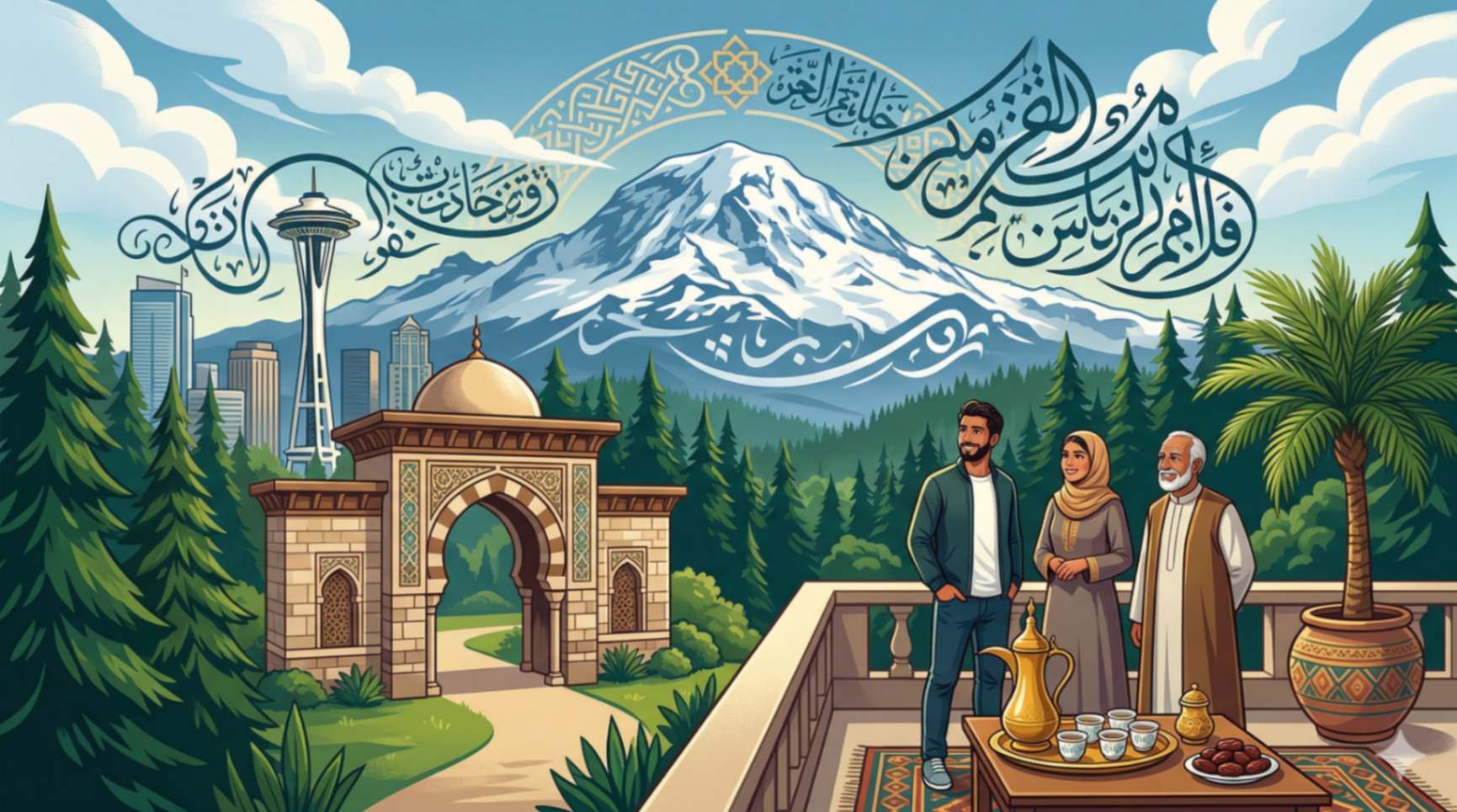
Arabs in Washington State 2026: The Complete Guide to Community Life, Best Cities, and Opportunities
Let me share a scene that has stayed with me for years. In the summer of 2019, I attended a community iftar at the Islamic Center of Seattle on Jackson Street. The mosque was overflowing — not just the main prayer hall, but the basement, the sidewalk outside, the courtyard. Families had brought food from a dozen different countries: Palestinian musakhan, Syrian yalanji, Egyptian koshari, Iraqi dolma, Somali sambusas, Pakistani biryani. The imam delivered a khutbah in Arabic, with an English summary. After maghrib, complete strangers were eating from the same plates, and by the end of the evening, they were no longer strangers. A Palestinian software engineer from Redmond was exchanging phone numbers with an Iraqi doctor from Tacoma. A Syrian mother from Bellevue was planning a weekend playdate with a Jordanian mother from Seattle. I remember thinking: this is not a small, scattered community. This is a community that is building itself in real time — and it is happening in a state that most Arabs on the East Coast and in the Midwest still do not fully register as a major Arab destination.
Washington State in 2026 is precisely that: a major Arab destination hiding in plain sight. The numbers are not as large as Michigan or California. But the trajectory, the economic foundation, the institutional infrastructure, and the quality of life are combining to make Washington one of the most attractive long-term options for Arab families in America — particularly for those in technology, healthcare, and engineering.
In this complete 2026 guide, I will walk you through everything you need to know about the Arab community in Washington State: where people live, which cities make sense for different family profiles, where the mosques and Islamic schools are located, what jobs drive the economy, and what it actually costs to build a stable life here.
For broader state comparisons, see Best State for Arabs in America and Best State for Muslims in America. For other regional options, explore Living in Michigan, Living in Ohio, and Living in Texas. For financial setup upon arrival, use How to Open a Bank Account as a New Immigrant and Build Credit Score from Scratch.
🔍 What You Will Find in This Guide
- 📊 A realistic estimate of Washington's Arab population in 2026 — how many, where they cluster, and what backgrounds they represent
- 🏙️ A city-by-city breakdown — Seattle, Bellevue, Redmond, Tacoma, and Spokane, with neighborhood guidance for families
- 🕌 A mosque and Islamic school directory — the major institutions and the educational options for children
- 💼 The Washington job engine — why tech, aerospace, and healthcare dominate Arab employment, and what salaries actually look like
- 💰 The cost of living equation — how the absence of state income tax interacts with high housing costs, and what a family budget should anticipate
- 🌧️ The climate and culture reality — what newcomers need to know about the rain, the social norms, and the rhythm of life in the Pacific Northwest
- 📋 Practical relocation advice — the steps that make the difference between a smooth transition and a difficult first year
Chapter One: Why Arabs Choose Washington State
Washington is not the first state that comes to mind when most Arab families list potential American destinations. Michigan has Dearborn. California has Anaheim and the Bay Area. Texas has Houston. But Washington has been quietly accumulating a set of advantages that, for a particular kind of Arab family — professionally educated, seeking high incomes, comfortable with a smaller but rapidly growing community, and willing to trade sun for forests and mountains — may actually outperform the traditional Arab hubs.
1. A job market that pays at the top of the American economy. Amazon alone employs over 80,000 people in the Seattle area. Microsoft employs over 50,000 in Redmond. Google, Meta, Apple, and Salesforce all maintain large engineering offices. Boeing anchors a massive aerospace supply chain. The University of Washington and its affiliated medical system employ tens of thousands more. For Arab software engineers, data scientists, aerospace engineers, physicians, and researchers, Washington offers salaries that are among the highest in the United States — often $120,000 to $200,000 or more for experienced professionals.
2. No state personal income tax. This is the headline financial advantage that Washington shares with Texas, Florida, and a handful of other states. Every dollar of your salary that would go to state income tax in California (up to 13.3%), New York (up to 10.9%), or Oregon (up to 9.9%) remains in your pocket in Washington. For a family earning $150,000, this represents an additional $10,000 to $15,000 per year compared to California — money that can fund a down payment, a college fund, or annual visits to family overseas.
3. A natural environment that redefines daily life. The Puget Sound region offers a combination of water, mountains, forests, and mild temperatures that is genuinely rare in the United States. For Arab families accustomed to Mediterranean or mountain landscapes, the visual and recreational fit can be surprisingly strong. Weekend hiking, kayaking, and skiing are accessible within an hour of most urban areas.
4. A growing, organizing Arab-Muslim community. As recently as 2010, Arabs in Washington were scattered and institutionally thin. By 2026, the Greater Seattle area hosts multiple large mosques with full programming, several Islamic schools, halal grocery stores that would be competitive in Dearborn, and an annual Arab festival that draws thousands. The community is not as large as Houston's or as dense as Dearborn's, but it has crossed a critical threshold: it is now large enough to be self-sustaining and diverse enough to serve families from every Arab background.
5. Strong public school options in the key suburbs. The Bellevue, Lake Washington (Redmond), and Issaquah school districts consistently rank among the best in the nation. For Arab families who prioritize public education, these districts offer a legitimate alternative to private schooling — an option that is simply not available in many parts of California or the urban Northeast.
Chapter Two: How Many Arabs Live in Washington State in 2026?
Counting Arab populations in the United States is always an exercise in triangulation. The Census does not ask about religion, and the "White" racial category absorbs many Arab respondents. Community-based estimates, drawing on mosque registration data, Arabic-language school enrollments, Arab-American organization membership, and migration pattern data from the Migration Policy Institute, place the Arab population of Washington State in 2026 at approximately 50,000 to 70,000 people.
The community is heavily concentrated in the Puget Sound region — the urban corridor stretching from Tacoma in the south through Seattle and across Lake Washington to Bellevue and Redmond on the Eastside. Over 80% of Washington's Arab population lives within a 45-minute drive of downtown Seattle. The remaining population is distributed in smaller clusters around Spokane in Eastern Washington, the Vancouver area near the Oregon border, and university towns like Pullman and Bellingham.
Ethnic composition: The Washington Arab community includes significant representation from Palestine, Syria, Egypt, Iraq, Lebanon, Jordan, and North Africa. The Palestinian community is particularly well-established, with multigenerational families and active cultural organizations. Syrian and Iraqi communities have grown substantially since 2011 through both refugee resettlement and professional migration. Egyptian and North African professionals are heavily represented in the technology and medical sectors.
Chapter Three: Where Arabs Live in Washington — City-by-City Breakdown
Seattle — The Urban Core and Community Anchor
Estimated Arab population: 15,000 to 20,000
Seattle is the economic engine and the cultural anchor of Arab life in Washington. The Islamic Center of Seattle on Jackson Street, established decades ago, remains the spiritual heart of the community. The surrounding Central District and Rainier Valley neighborhoods have historically housed many Arab and Muslim families, alongside the broader immigrant communities that give South Seattle its distinctly international character.
Neighborhoods relevant for Arab families:
- Rainier Valley / Columbia City: One of Seattle's most diverse corridors. Halal groceries, Middle Eastern restaurants, and proximity to mosques. More affordable than North Seattle.
- Northgate / Lake City: Growing Arab presence, good access to I-5 for commuting, and relative affordability compared to the central core.
- West Seattle: Smaller but established community. Quieter, more suburban feel within city limits. Ferry access to downtown.
Employment anchors: Amazon (South Lake Union and Denny Triangle), University of Washington and UW Medicine, Fred Hutchinson Cancer Center, and the Port of Seattle.
Housing costs: A two-bedroom apartment in Seattle rents for approximately $2,200 to $3,000 per month in 2026, with newer luxury buildings commanding more. Home purchase prices for a single-family home in a decent school zone typically range from $700,000 to $1,000,000 and above.
Best for: Young professionals, couples without children, families comfortable with urban living, and anyone who wants to be at the center of the community's institutional life.
Bellevue — The Premier Eastside Suburb
Estimated Arab population: 5,000 to 8,000
Bellevue, across Lake Washington from Seattle, has become the premier destination for Arab professional families. The Bellevue Islamic Center serves as a community anchor. The Bellevue School District is one of the highest-rated in the nation. The city is clean, safe, and increasingly diverse — its public schools now enroll students from over 100 language backgrounds.
Employment anchors: Microsoft (nearby Redmond), T-Mobile (headquartered in Bellevue), Amazon (expanding Bellevue presence), and a growing concentration of technology and professional services firms.
Housing costs: A two-bedroom apartment rents for approximately $2,400 to $3,200 per month. Single-family homes in desirable school zones typically range from $1.2 million to $2 million and above. Bellevue is expensive, even by Washington standards.
Best for: Professional families with household incomes above $180,000 who prioritize top-tier public schools, safety, and a polished suburban environment with a growing Muslim community presence.
Redmond — The Microsoft Ecosystem
Estimated Arab population: 3,000 to 5,000
Redmond is known globally as Microsoft's headquarters city. It has consequently attracted a significant concentration of Arab software engineers, program managers, and technical professionals — many recruited directly from the Middle East, North Africa, and Europe. The Redmond Islamic Center serves this community, and the Lake Washington School District is excellent.
Employment anchors: Microsoft (over 50,000 employees on the Redmond campus), Nintendo of America, and a rapidly growing constellation of tech startups and satellite offices.
Housing costs: A two-bedroom apartment rents for approximately $2,500 to $3,300 per month. Single-family homes in Redmond typically range from $900,000 to $1.5 million.
Best for: Arab technology professionals and their families; those who want to live within a short commute of Microsoft or the broader Eastside tech corridor.
Tacoma — The Affordable Family Alternative
Estimated Arab population: 5,000 to 7,000
Tacoma, about 35 miles south of Seattle, has become an increasingly popular destination for Arab families priced out of the Seattle-Bellevue core. The Islamic Center of Tacoma serves a diverse congregation. Housing costs are dramatically lower than in Seattle or the Eastside. The city has a working-class heritage that is gradually being supplemented by a growing professional and creative class.
Employment anchors: MultiCare and CHI Franciscan health systems, the Port of Tacoma (major logistics and shipping hub), Joint Base Lewis-McChord (military and civilian employment), and a growing number of Seattle commuters who work remotely several days per week.
Housing costs: A two-bedroom apartment rents for approximately $1,600 to $2,200 per month. Single-family homes in decent neighborhoods typically range from $450,000 to $650,000 — less than half the cost of comparable homes in Bellevue or Redmond.
Best for: Families who want homeownership on a moderate professional salary; those who value community affordability and are willing to commute to Seattle or work remotely; families seeking more space and a slower pace.
Spokane — The Eastern Washington Hub
Estimated Arab population: 2,000 to 3,000
Spokane, on the eastern side of the Cascade Mountains, offers an entirely different climate and cost profile from the Puget Sound region. The Islamic Center of Spokane serves the local Muslim community, which includes Arabs, South Asians, and a notable Bosnian presence. The economy is anchored by healthcare, education, and manufacturing.
Housing costs: A two-bedroom apartment rents for approximately $1,200 to $1,700 per month. Single-family homes typically range from $350,000 to $500,000 — among the most affordable in the state.
Best for: Families prioritizing maximum housing affordability and a smaller-city lifestyle; those with remote work arrangements or local employment in healthcare or education.
Chapter Four: Mosques and Islamic Centers in Washington (2026)
The institutional infrastructure of Washington's Muslim community has matured significantly in the past decade. The major centers are:
- Islamic Center of Seattle: 1715 South Jackson Street, Seattle, WA 98144. The oldest and most historically significant mosque in the state. Offers daily prayers, Jumu'ah, Sunday School, youth programs, and interfaith outreach. The congregation is diverse — Arab, South Asian, East African, and African American.
- Bellevue Islamic Center: 15201 Northeast 20th Street, Bellevue, WA 98007. Serves the growing Eastside Muslim professional community. Strong family programming and weekend Islamic school.
- Redmond Islamic Center: 18050 Northeast 76th Street, Redmond, WA 98052. Heavily attended by Muslim tech professionals and their families. Convenient for Microsoft employees.
- Islamic Center of Tacoma: 3004 South 44th Street, Tacoma, WA 98409. The anchor mosque for the South Sound region. Diverse congregation serving Tacoma, Lakewood, and University Place.
- Islamic Center of Spokane: 2620 East Mission Avenue, Spokane, WA 99202. The primary Islamic institution for Eastern Washington.
Additional community resources: The Muslim Association of Puget Sound (MAPS) operates programs across multiple locations. The University of Washington's Muslim Student Association is active and serves hundreds of students.
Chapter Five: Islamic Education in Washington
For families with children, educational options are a primary consideration. Washington offers both full-time Islamic schooling and robust weekend and after-school programs.
Full-time Islamic schools:
- Seattle Islamic School (K-8): Located in the Seattle area, offering an integrated academic and Islamic curriculum.
- Bellevue Islamic School: Serves Eastside families with full-time elementary and middle-school education.
- Tacoma Islamic Academy: A growing option for South Sound families.
Weekend and supplementary programs:
- Seattle Quran Academy: After-school and weekend Quran memorization and Arabic instruction.
- Mosque-based weekend schools at the Islamic Center of Seattle, Bellevue Islamic Center, Redmond Islamic Center, and Islamic Center of Tacoma serve hundreds of children across the Puget Sound region.
For national comparison, see Islamic Schools in America: The Complete 2026 Guide.
Chapter Six: Jobs and Economic Opportunity in Washington
Washington's economy is one of the most dynamic in the United States, driven by a combination of global technology giants, a massive aerospace sector, world-class healthcare and research institutions, and a thriving logistics and trade industry tied to the Port of Seattle and Port of Tacoma.
Technology: Amazon, Microsoft, Google, Meta, Apple, and Salesforce all maintain major engineering and product offices in the Puget Sound region. Experienced software engineers, data scientists, cybersecurity specialists, and product managers can earn $130,000 to $220,000 or more, depending on role, experience, and company. The technology sector is also the primary driver of immigration from the Arab world — many Arab engineers are recruited directly from the Middle East, North Africa, and Europe through H-1B and L-1 visa programs.
Aerospace and manufacturing: Boeing remains the largest private employer in the state, with its commercial airplane division headquartered in Renton and Everett. The aerospace supply chain supports thousands of additional engineering and manufacturing jobs. For Arab mechanical engineers, aerospace engineers, and supply-chain professionals, Boeing is a cornerstone employer.
Healthcare: The University of Washington Medical Center, Swedish Health Services, Providence Health, MultiCare (Tacoma), and Kaiser Permanente collectively employ tens of thousands. Arab physicians, nurses, pharmacists, and allied health professionals are well-represented across these systems.
Trade, logistics, and small business: The ports of Seattle and Tacoma are among the largest container ports in North America. Arab-owned businesses — restaurants, halal groceries, import-export firms, medical practices, and real estate agencies — are increasingly visible.
For job search strategy, see Work in America for New Immigrants.
Chapter Seven: Cost of Living — The Honest Equation
Washington's cost of living presents a paradox that every Arab family must understand clearly before relocating.
The major advantage: no state income tax. Washington is one of a small number of U.S. states with zero state personal income tax. This saves a family earning $150,000 between $10,000 and $15,000 annually compared to living in California, and roughly $7,000 to $10,000 compared to Oregon or New York. Over a decade, this tax savings alone can exceed $100,000 — a substantial down payment on a home.
The major challenge: high housing costs in the core metros. Seattle, Bellevue, and Redmond are expensive. A two-bedroom apartment rents for $2,200 to $3,300 depending on city and neighborhood. Homeownership in top school districts routinely requires $800,000 to $1.5 million and above. These prices are still lower than the Bay Area or New York City, but they are higher than Houston, Dallas, Chicago, or most Midwestern and Southern markets.
The practical strategy for families: Many Arab families adopt a two-step approach. They rent in Seattle or the Eastside for their first one to two years, building credit, learning neighborhoods, and maximizing savings from the absence of state income tax. They then purchase a home in Tacoma, South King County, or Snohomish County (Lynnwood, Everett, Mill Creek), where prices are substantially lower and the commute is manageable — especially in an era of hybrid and remote work.
Directional housing costs by city (2026):
| City | 2-Bedroom Rent | Median Home Price | Annual Property Tax (Est.) |
|---|---|---|---|
| Seattle | $2,200-$3,000 | $750k-$1M+ | ~$6,000-$9,000 |
| Bellevue | $2,400-$3,200 | $1.2M-$2M+ | ~$10,000-$16,000 |
| Redmond | $2,500-$3,300 | $900k-$1.5M | ~$7,500-$12,000 |
| Tacoma | $1,600-$2,200 | $450k-$650k | ~$4,000-$5,500 |
| Spokane | $1,200-$1,700 | $350k-$500k | ~$3,000-$4,200 |
For a complete line-item budget, pair this guide with Cost of Living in Washington State when published.
Chapter Eight: Social Life, Halal Food, and Community Rhythm
Washington's Arab community has developed a distinct social and cultural rhythm. It is not as vast as Houston's, but it is increasingly well-organized.
Halal food infrastructure: The Rainier Valley corridor in Seattle and the area around the Islamic Center of Seattle have the highest concentration of halal butchers, Arab groceries, and Middle Eastern restaurants. Bellevue and Redmond have growing halal options, often integrated into broader international grocery stores. Tacoma's halal infrastructure is smaller but functional.
Community events: The annual Arab Festival in Seattle draws thousands. Mosque-organized Eid celebrations, Ramadan iftars, and youth programs provide the annual social calendar. The University of Washington's MSA hosts regular events that bridge student and community life.
The climate reality: Western Washington is famous for rain. The truth is more nuanced. Summers (July through September) are typically dry, sunny, and spectacular — 75 to 85 degrees Fahrenheit, low humidity, long daylight hours. Winters (November through March) are gray, damp, and persistently drizzly — rarely freezing, rarely heavy rain, but often overcast for weeks at a time. The darkness at this northern latitude is real: in December, the sun sets before 4:30 PM. Arab families from Mediterranean and Middle Eastern climates often find the first winter psychologically challenging and the summers magnificent. Light therapy lamps, vitamin D supplementation, and a deliberate effort to stay socially connected are practical winter survival strategies.
Chapter Nine: Five Practical Tips for Arab Newcomers to Washington
1. Prepare mentally and practically for the winter gray. It is not the cold that challenges newcomers — it is the persistent overcast skies from November through March. Buy a light therapy lamp. Plan a mid-winter trip somewhere sunny if your budget allows. Do not underestimate the psychological impact of the darkness if you are arriving from a sunnier climate.
2. Build community through the mosque from your first week. The Islamic Center of Seattle, Bellevue Islamic Center, and Redmond Islamic Center are active, welcoming, and full of families who were once newcomers themselves. Attend Jumu'ah. Introduce yourself to five people. Ask about WhatsApp groups, community events, and recommendations for halal grocers, doctors, and schools.
3. Budget housing costs honestly before you move. Seattle and Eastside rents are high. Do not assume a six-figure salary automatically means a comfortable lifestyle — $120,000 for a family of four in Bellevue is middle-class, not wealthy. Use the absence of state income tax as a savings accelerator, not a lifestyle inflator. Direct your tax savings into a down-payment fund.
4. Consider Tacoma or South King County for homeownership. If you can work remotely two or three days per week, the cost savings of living in Tacoma or Federal Way and commuting to Seattle or Bellevue on office days can be transformative for your family budget.
5. Use public transit in Seattle; budget for a car elsewhere. Seattle's Link light rail and bus system are functional for commuting to downtown and the University District. The Eastside and the suburbs require at least one car, and often two. Budget accordingly.
Frequently Asked Questions
How many Arabs live in Washington State in 2026? Community estimates place the population at approximately 50,000 to 70,000, concentrated overwhelmingly in the Puget Sound region.
Which city is best for Arab families in Washington? Bellevue and Redmond are the top choices for professional families who can afford Eastside housing costs and want top-tier public schools and a growing Muslim community. Tacoma is the best choice for families prioritizing homeownership affordability and willing to commute or work remotely. Seattle is best for young professionals and those who want to be at the center of community institutional life.
Are there mosques and Islamic schools in Washington? Yes. The Greater Seattle area has multiple large, active mosques — the Islamic Center of Seattle, Bellevue Islamic Center, Redmond Islamic Center, and Islamic Center of Tacoma — plus several full-time Islamic schools and extensive weekend programs.
Is Washington expensive for Arab families? Housing is expensive in Seattle, Bellevue, and Redmond, though still cheaper than the Bay Area. The absence of state income tax provides significant savings that partially offset housing costs. Tacoma and Spokane offer much greater affordability.
What jobs do Arabs typically work in Washington? Technology (software engineering, data science, product management) and healthcare (physicians, nurses, pharmacists) dominate, followed by aerospace, small business ownership, and professional services.
Is there a halal food infrastructure? Yes, particularly in the Rainier Valley area of Seattle and near the major mosques. The selection is not as vast as in Dearborn or Houston, but it is functional and improving.
How is the weather in Washington? Summers are spectacular — dry, sunny, and mild. Winters are gray, drizzly, and persistently overcast, with short daylight hours. The winter darkness is the most significant climate adjustment for families from sunny climates.
Conclusion
Washington State in 2026 offers Arab families something rare in the American landscape: a genuine fusion of elite economic opportunity and high quality of life. The technology and healthcare sectors provide salaries that can comfortably support a family. The absence of state income tax preserves more of those salaries for savings, education, and homeownership. The natural environment — water, mountains, forests, and clean air — provides a daily quality of life that is difficult to replicate elsewhere.
The tradeoffs are real. Housing in the core metros is expensive. The winter gray requires psychological adjustment. The community, while growing rapidly, is not as large or as institutionally dense as Michigan or Southern California.
But for the Arab family that prioritizes professional opportunity, excellent public education in the best suburbs, a functioning and growing Islamic infrastructure, and a state that does not tax their income, Washington deserves a serious, informed place on the shortlist — and for many families, it will prove to be the right long-term home.
Your turn: Are you living in Washington, or considering a move? Which city are you in or targeting, and what has your experience been with the mosques, schools, and community? Share your perspective in the comments below — your story could help another Arab family make the most important decision of their lives.
🔗 Explore More Guides for Your American Journey
- Best State for Arabs in America — How Washington compares with Michigan, California, Texas, and others
- Best State for Muslims in America — Islamic infrastructure across all 50 states
- Living in Michigan: Complete Arab & Immigrant Guide — The largest Arab-American community explored
- Living in Ohio: Complete Arab & Immigrant Guide — The affordable Midwest alternative
- Living in Texas: Complete Daily Life Guide for Arabs — Compare with another no-income-tax powerhouse
- Work in America for New Immigrants — Job search strategy, resume preparation, and salary negotiation
- How to Open a Bank Account as a New Immigrant — First financial step upon landing
- Build Credit Score from Scratch in the USA — Essential for renting, car loans, and future homeownership
Author: حسين عبد الله
Hussein Abdullah is a web developer and specialized content writer with more than eight years of experience enriching Arabic digital content. He combines an analytical programming mindset with a deep passion for writing to deliver accurate, reference-quality guides. On Arabian in USA (عرب في أمريكا), he focuses on simplifying complex steps for new immigrants and sharing reliable information on housing, work, and financial setup—so every newcomer has a trustworthy path toward stable life in the United States.


Continue reading
- Top 10 Best States for Muslims in America: Ultimate Guide (Updated 2026)
- Top 7 Best States for Arabs in America: Ultimate Guide (Updated 2026)
- Muslim Population in America 2026: Complete State-by-State Guide, Statistics & Interactive Map
- Work in America for New Immigrants 2026: The Complete Guide from Day One to Your Dream Career [Step-by-Step Plan]
- Living in Ohio 2026: The Complete Guide for Arabs and Immigrants — What the American Dream Actually Costs Here
- Arabs in Texas 2026: The Ultimate Guide to the Community, Best Cities, Jobs & Life