The Complete Guide to Arab American Communities in 2026: Centers, Social Media & Events
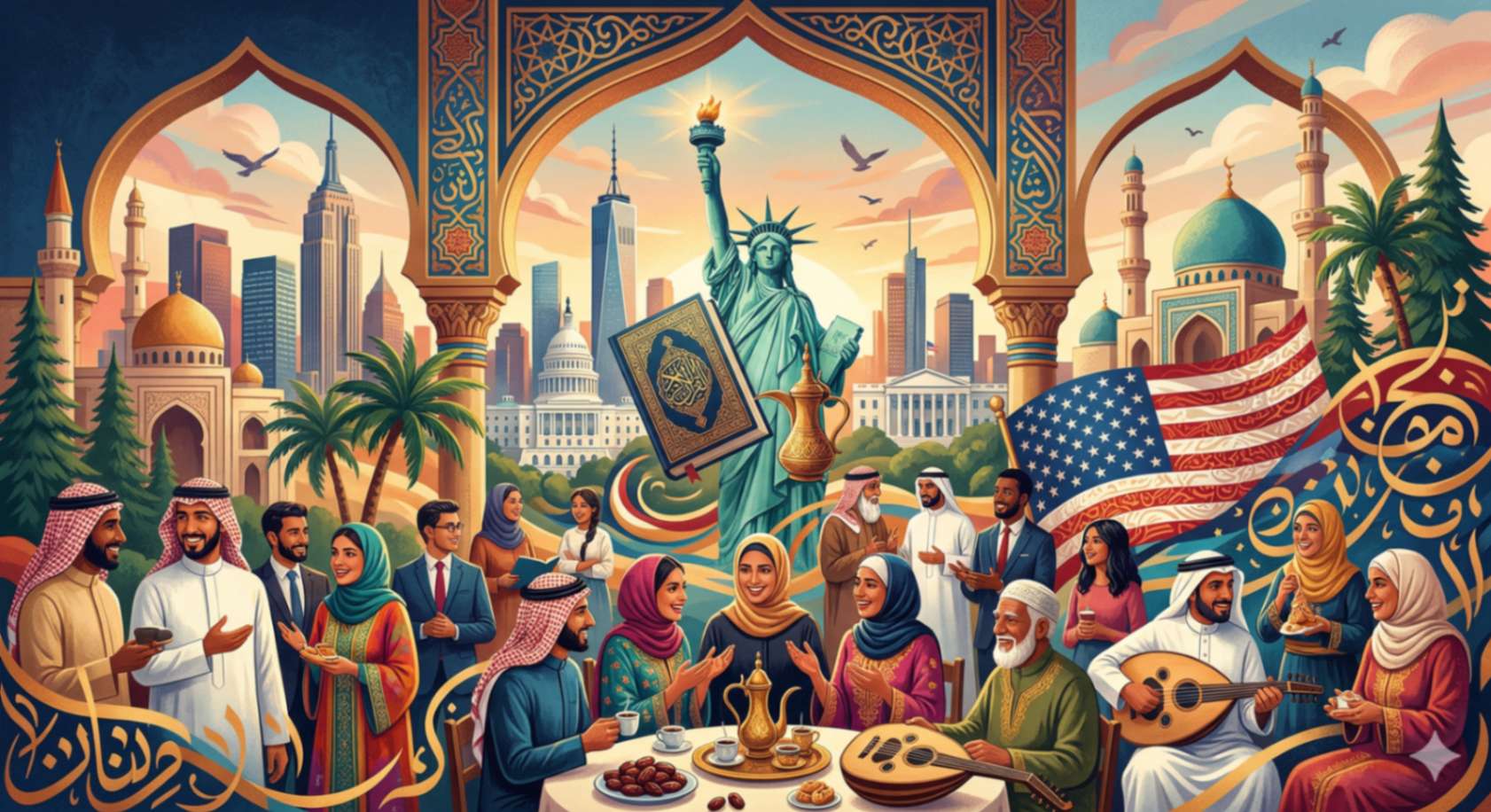
The Complete Guide to Arab American Communities in 2026: Centers, Social Media & Events
A Letter from the Heart
Picture this: You arrived in America a few days ago. Your suitcases are still stacked in the corner of a temporary room. You miss your mother's voice, the smell of Arabic coffee, and the laugh of a friend who understands your dialect without explanation. The question keeps circling your mind: "Where do I find my people?"
Let me tell you something: You are not alone.
America is home to millions of Arabs who walked this path before you. Every single one of them felt this same loneliness. And every single one of them eventually found their community.
Take Ahmed, for example. An Egyptian engineer who landed in Houston in 2019 with nothing but a suitcase and $2,000. He spent his first two weeks eating alone, praying alone, feeling invisible. Then someone at the local mosque told him about an "Egyptians in Houston" Facebook group. Within days, he had 15 people offering him furniture, job leads, and invitations to dinner. "I cried the first time someone made me koshari," he told me. "It wasn't just the food. It was knowing someone cared."
This guide is my gift to you. I won't just give you dry numbers and statistics. I'll share real stories of people like you. I'll show you exactly where to find a helping hand, a familiar face, and maybe even a new best friend.
Let's begin.
Arabian in USA also recommends: Best state for Arabs in America · Muslim population in America by state · Arabs in Michigan · Best cities in California for Arabs · Cost of living in Texas · Immigration from Egypt to America · Immigration from Morocco to America · Immigration from Algeria to America.
For official demographic data, refer to the Arab American Institute's 2026 demographic report and the Pew Research Center's Muslim American studies.
First: Overview of Arab Communities in America (Numbers and Facts)
The demographic map of Arabs in the United States is diverse and heavily urban, concentrated in major metros that offer jobs and education.
Real Story: Layla, a Palestinian-American community organizer in Chicago, told me: "When my parents came here in the 1980s, there was no Facebook, no WhatsApp, no guide like this. They found the community by literally walking into mosques and asking, 'Are there any Arabs here?' Today, my 18-year-old nephew found his first job through a WhatsApp group within hours of landing."
-
Total Arabs in America: 2026 estimates place the community between 3.5 and 4 million (first-generation immigrants plus U.S.-born generations). Source: Arab American Institute
-
Five largest Arab communities by scale and influence:
- Egyptians: 300,000–350,000
- Lebanese: 250,000–300,000
- Palestinians: 200,000–250,000
- Syrians: 150,000–200,000
- Iraqis: 150,000–200,000
-
Largest clusters by state and city:
- Michigan: Dearborn (often called the capital of Arab America and home to one of the largest Arab concentrations in North America), Detroit, and Dearborn Heights.
- California: Los Angeles (massive hub), San Diego (large Iraqi and Syrian communities), and the San Francisco Bay Area.
- New York: Brooklyn (Bay Ridge), Queens (Astoria), and Staten Island.
- New Jersey: Paterson (known for distinctly Arab commercial streets) and Clifton.
- Texas: Houston and Dallas (fast-growing communities tied to a strong economy). For a deeper look at Texas costs, read our cost of living in Texas guide.
- Illinois: Chicago and suburbs such as Bridgeview.
- Florida: Orlando, Tampa, and Miami.
Second: The Egyptian American Community
The Egyptian community is among the fastest-growing Arab groups in the U.S., with strong representation in medicine, academia, and business.
Real Story: "I remember my first Ramadan away from Cairo," says Dr. Marwan T., a cardiologist in Cleveland. "I was depressed. Then someone told me about the Egyptian American Medical Association (AEMA). I went to their annual conference, and within an hour, I had met five doctors who offered to mentor me. Now I'm the one welcoming new Egyptian doctors every year."
- Estimated size: 300,000–350,000.
- Main hubs:
- New York: Brooklyn (Bay Ridge), Queens (Astoria), Staten Island.
- New Jersey: Jersey City, Paterson, Clifton.
- California: Los Angeles and San Diego.
- Texas: Houston and Dallas.
- Illinois: Chicago.
- Cultural centers and formal organizations:
- Coptic Orthodox Church in America: Coptic churches are major spiritual and social gathering points for Egyptian Copts—www.copticchurch.net
- Egyptian American Society (EAS): Cultural society focused on heritage—www.egyptianamericansociety.org
- American Egyptian Medical Association (AEMA): Umbrella for Egyptian physicians—www.aemaonline.org
- Active Facebook groups (search and join):
- "Egyptians in America" (general)
- "Egyptians in New York" / Egyptians in NY & NJ circles
- "Egyptians in California"
- "Egyptians in Houston" / Texas groups
- "Egyptians in Chicago"
- WhatsApp groups: Usually spin off from Facebook and are split by county (admins approve membership).
- Signature annual events:
- Egyptian festival in America (often NY/NJ, around September)
- Sham el-Nessim / spring picnics in major NY, NJ, and California parks
- AEMA annual conference (rotates cities; draws hundreds of doctors)
- Religious gathering points: Mosques in Egyptian-heavy neighborhoods (e.g., Masjid Mus'ab ibn Umayr in Brooklyn) often deliver khutbahs in Egyptian Arabic or Modern Standard Arabic—excellent for meeting people after Jumu'ah.
- External resource: Egyptian American Friendship Association
Third: The Palestinian American Community
A historic, highly organized community with major roles in business, civic life, and advocacy.
Real Story: "I grew up in Bridgeview, Illinois—what locals call 'Little Palestine,'" says Rania, a second-generation Palestinian-American. "Every summer, the Palestinian Festival draws thousands. The smell of musakhan fills the streets. Kids run around with Palestinian flags painted on their cheeks. My grandfather, who came here in 1967, used to say, 'We left Palestine, but Palestine never left us.' This community is proof."
- Estimated size: 200,000–250,000.
- Main hubs:
- Illinois: Chicago, especially Bridgeview ("Little Palestine").
- Michigan: Dearborn and Dearborn Heights.
- California: Los Angeles, San Francisco, San Diego.
- New Jersey: Paterson and Clifton.
- Texas: Houston and Dallas.
- Cultural centers and organizations:
- American-Arab Anti-Discrimination Committee (ADC): Major civil-rights organization—www.adc.org
- Palestinian American Community Center (PACC): Paterson, NJ—very active—www.paccusa.org
- Palestinian American Cultural Center: Chicago
- American Federation of Ramallah Palestine (AFRP): One of the oldest federations—www.afrp.org
- Active Facebook groups:
- "Palestinians in USA"
- "Palestinians in Chicago"
- "Palestinians in Michigan"
- NY/NJ and California Palestinian networks
- Signature annual events:
- Palestinian Festival in Chicago: Large summer event (July/August) with dabke, food, and heritage
- Land Day (March 30) and Nakba commemoration (May 15) through panels, exhibits, and permitted peaceful marches in multiple cities
- Religious hubs: The Islamic Center of America in Dearborn and the Mosque Foundation in Bridgeview anchor education and social programming.
- External resource: Institute for Palestine Studies USA
Fourth: The Lebanese American Community
Among the earliest Arab communities to migrate to the Americas; Lebanese Americans are known for deep integration and success in restaurants, business, and medicine.
Real Story: "My great-grandfather came from a small village near Tripoli in 1912," shares Tony, a third-generation Lebanese-American in Dearborn. "He opened a grocery store. That store became a gathering place for every Lebanese family within 20 miles. Today, my son runs a restaurant on the same street. The food, the music, the language—it's all still here."
- Estimated size: 250,000–300,000 (multiple generations).
- Main hubs:
- Michigan: Dearborn, Dearborn Heights, Sterling Heights
- California: Los Angeles and San Diego
- New York: Brooklyn
- Ohio: Toledo and Cleveland
- Massachusetts: Boston metro
- Cultural centers and organizations:
- Lebanese American Heritage Club (LAHC): Key Dearborn institution—www.lahc.org
- Lebanese Heritage Festival in Dearborn (June)
- Annual Lebanese folklore festival in Los Angeles
- St. Maroun commemorations (February) for Maronite congregations
Fifth: The Syrian American Community
The community grew sharply in vitality after 2011, with prominent doctors, engineers, and small-business owners.
Real Story: "We arrived in 2015 as refugees," says Nour, a Syrian mother of three now living in San Diego. "I didn't speak a word of English. My husband couldn't find work. Then a volunteer from the Syrian American Medical Society (SAMS) knocked on our door. She helped me enroll in English classes, found my husband a job at a pharmacy, and even babysat my kids during my first job interview. Two years later, I became a certified nurse assistant. That volunteer is now my closest friend."
- Estimated size: 150,000–200,000.
- Main hubs:
- Michigan: Dearborn and Dearborn Heights
- California: Los Angeles and San Diego
- New Jersey: Paterson and Clifton (large Levantine cluster)
- Texas: Houston and Dallas (medical and engineering jobs)
- Pennsylvania and Ohio: Older and newer clusters
- Organizations:
- Syrian American Council (SAC)—www.syrianamericancouncil.org
- Syrian American Medical Society (SAMS)—www.sams-usa.net
- Syrian Community Network (SCN)—resettlement support—www.syriancommunitynetwork.org
- Facebook groups: "Syrians in USA," Michigan, California, NY/NJ, Texas/Houston.
- Annual highlights: SAMS national conference; Dearborn/Paterson fundraisers and cultural nights; Syrian Independence Day (April 17) community events.
- New arrivals: Strong coordination with resettlement agencies (e.g., IRC, Catholic Charities) for housing and language support.
- External resource: Syrian American Council - Chapters Directory
Sixth: The Iraqi American Community
Long history of migration with multiple waves over the last three decades; strong in academia and contracting.
Real Story: "I came to El Cajon (San Diego) in 2008," recalls Samir, an Iraqi-American business owner. "The first person I met at the mosque owned a convenience store. He gave me a job on the spot. Six months later, he helped me open my own store. That's how Iraqis do it here. We don't just survive; we lift each other up."
- Estimated size: 150,000–200,000.
- Main hubs:
- Michigan: Detroit metro (Sterling Heights, Dearborn)—often described as the capital of Iraqi and Chaldean America
- California: San Diego (especially El Cajon) and Los Angeles
- Texas: Houston and Dallas
- Illinois: Chicago's northern suburbs
- Tennessee: Nashville (Kurdish and Iraqi hub)
- Organizations:
- Iraqi American Association (IAA)—www.iraqiamericanassociation.org
- Chaldean American Chamber of Commerce—www.chaldeanchamber.com
- Iraqi and American Reconciliation Project (IARP)—www.reconciliationproject.org
- Facebook groups: "Iraqis in USA," Michigan, San Diego, Chicago, Nashville.
- Annual highlights: Iraqi culture festival in San Diego; Akitu / Assyrian-Babylonian New Year (April 1); Chaldean business and cultural events in Detroit.
- Religious diversity: Shia and Sunni Muslims; Chaldean, Assyrian, and Sabean communities—each with major centers that double as social hubs.
- External resource: Chaldean American Chamber of Commerce - Events
Seventh: The Jordanian American Community
Highly professional and academic, with strong representation in tech, medicine, and engineering.
Real Story: "I moved to Chicago for a tech job in 2020," says Lina, a Jordanian software engineer. "I was terrified of being alone. Within a week, I found the 'Jordanians in Chicago' Facebook group. Someone posted about a meetup at a hookah lounge. I went. I met 20 Jordanians in one night. One of them helped me negotiate my salary. Another became my roommate. Jordanians take care of their own."
- Estimated size: 80,000–100,000.
- Main hubs: Chicago metro; Dearborn area; Los Angeles and San Diego; Brooklyn and Paterson; Houston and Austin.
- Organizations:
- Jordanian American Association (JAA)—www.jordanianamerican.org
- Royal Jordanian American Association (multi-state)
- Facebook groups: "Jordanians in USA / Nashama," Chicago, Michigan, California.
- Annual highlights: Independence Day (May 25) events hosted by embassies and associations; large Ramadan iftars and "Nashama" family gatherings.
- External resource: Jordanian American Association - Chicago Chapter
Eighth: The Moroccan American Community
Among the most active in cultural festivals and showcasing authentic Moroccan heritage.
Real Story: "My first Moroccan festival in New York changed my life," shares Fatima, a Moroccan-American artist. "I walked in feeling like a stranger. Within an hour, I had eaten food that tasted exactly like my grandmother's, heard music that made me cry, and met a family who lived three blocks from me in Casablanca. We're still friends today."
- Estimated size: 80,000–100,000.
- Main hubs: Queens (Astoria) and Brooklyn; DMV (Virginia/Maryland); Los Angeles and San Diego; Houston and Dallas; Orlando and Miami.
- Organizations:
- Moroccan American Association—www.moroccanamericanassociation.org
- Moroccan American Network (MAN)
- American Moroccan Association of Chicago
- Facebook groups: "Moroccans in USA," New York, California, DMV, Houston.
- Annual highlights: Moroccan culture festival in New York (often May); Throne Day (July 30) events; Moroccan film festival programs in the U.S.
- External resource: Moroccan American Network - Events
Ninth: The Algerian American Community
Rising fast, with a high share of PhDs, researchers, and engineers.
Real Story: "I thought I was the only Algerian in Texas," laughs Karim, a chemical engineer in Houston. "Then I found the 'Algerians in Houston' group. Turns out, there are hundreds of us! We meet every month for couscous Fridays. One guy even started a business importing Algerian olive oil. You never know who you'll meet."
- Estimated size: 50,000–70,000.
- Main hubs: Brooklyn and Queens; DMV; Los Angeles and the Bay Area; Houston (energy sector); Chicago.
- Organizations: Algerian American Association of Greater Washington; Algerian American Foundation (AAF); Algerian American Association of New England.
- Facebook groups: "Algerians in USA," New York, DMV, Texas/Houston.
- Annual highlights: Independence Day (July 5) in parks and public squares; academic and cultural programming in New York and DC.
- External resource: Algerian American Foundation
Tenth: The Tunisian American Community
Concentrated in tech, AI, startups, and university circles.
Real Story: "I'm a PhD student at MIT," says Youssef, a Tunisian researcher in Boston. "When I arrived, I felt completely out of place. Then I found the Tunisian American Young Professionals (TAYP) group. They connected me with a mentor who helped me navigate my program. Now I help other Tunisian students who arrive after me."
- Estimated size: 30,000–40,000.
- Main hubs: Brooklyn and Queens; Silicon Valley, Los Angeles, San Diego; DC/Virginia; Houston.
- Organizations:
- Tunisian American Association (TAA)—www.taa-usa.org
- Tunisian American Young Professionals (TAYP)
- Facebook groups: "Tunisians in USA," New York, California/Bay Area.
- Annual highlights: Revolution commemoration (January 14); TAYP mixers for entrepreneurs and investors.
- External resource: Tunisian American Association - Events
Eleventh: The Libyan American Community
Smaller but tight-knit, with many physicians, scholarship students, and families.
Real Story: "There are only about 30 Libyan families in my city," says Aisha, a Libyan-American pharmacist in Denver. "But we act like one big family. When my father got sick, every single family showed up at the hospital. We brought food, watched the kids, and prayed together. That's the Libyan way."
- Estimated size: 20,000–30,000.
- Main hubs: Dearborn area; Los Angeles; Houston; Chicago; Denver metro.
Twelfth: The Yemeni American Community
One of the oldest and strongest Arab communities in retail groceries, bodegas, and real estate.
Real Story: "My father opened a grocery store in Brooklyn in 1985," recalls Abdullah, a second-generation Yemeni-American. "He didn't speak English well. But the Yemeni community rallied around him. They lent him money, stocked his shelves, and sent customers his way. That store is still there, run by my brother now. Yemenis don't let Yemenis fail."
- Estimated size: 30,000–40,000 (still growing).
- Main hubs:
- Michigan: Dearborn (especially the Dexter corridor), Dearborn Heights, Hamtramck
- New York: Brooklyn (historic hub), Queens, Bronx
- California: Central Valley, Los Angeles, San Diego
- Organizations: Yemeni American Association; Yemeni American Community Center (YACC) (translation and housing help)
- Facebook groups: "Yemenis in USA," Michigan, New York.
- Annual highlights: Fundraising for Yemen relief; school and mosque community events in Dearborn and New York.
Thirteenth: The Sudanese American Community
Highly educated, calm, and family-oriented.
Real Story: "I came to the DMV area for my medical residency," says Dr. Hisham, a Sudanese-American physician. "I didn't know a soul. A senior Sudanese doctor found my name in the residency directory. He called me, invited me to his home, and introduced me to 20 other Sudanese families. That's how we do it. One call, and you're family."
- Estimated size: 30,000–40,000.
- Main hubs: DMV (largest cluster); Chicago; Dallas and Houston; Dearborn; newer Iowa/Nebraska resettlement towns.
- Organizations: Sudanese American Association; Sudanese Medical Association in America (very influential)
- Facebook groups: "Sudanese in USA," DMV, Texas.
- Annual highlights: Sudanese physicians' conference; poetry nights, picnics in Virginia and Texas parks.
Fourteenth: The Saudi Community in America (Students and Scholars)
Mostly scholarship students, researchers, families, and physicians in training.
Real Story: "I was a scholarship student at UCLA," recalls Mohammed, a Saudi graduate who now works in tech. "The Saudi Student Association (SSA) was my lifeline. They helped me find housing, opened a bank account, and even taught me how to drive. Without them, I would have been lost."
- Estimated size: 40,000–50,000.
- Hubs: Major universities in Washington, D.C., California (LA, San Diego), Texas (Dallas, Houston), New York, and Massachusetts (Boston).
- Institutions:
- Saudi Arabian Cultural Mission (SACM)—www.sacm.org
- Saudi Student Associations (SSA) on nearly every large campus
- Saudi American Medical Association (SAMA)
- Facebook groups: "Saudi Students in USA," general scholarship networks, city chapters.
- Annual highlights: National Day (September 23) events; career fairs and graduation galas sponsored by the mission.
Fifteenth: Gulf Communities (UAE, Kuwait, Qatar, Oman, Bahrain)
Shared student and diplomatic profile—often temporary stays for top U.S. universities or medical care.
Emiratis
- Size: 15,000–20,000 (mostly students)
- Hubs: Washington, D.C., California, Boston, New York
- Associations: Emirati student clubs
- Events: National Day (December 2)
Kuwaitis
- Size: 10,000–15,000
- Hubs: California, Texas, D.C., Boston campuses
- Institutions: Kuwait Cultural Office; NUKS USA (annual mega conference)
- Events: National & Liberation days (February 25–26)
Qatar, Oman, Bahrain
- Size: Roughly 3,000–8,000 each (students and diplomats)
- Hubs: D.C., New York, Pennsylvania and California universities
- Connection: Official student associations run national-day programming (Qatar December 18, Oman November 18, Bahrain December 16)
Sixteenth: The Somali American Community
Fast-growing, tightly knit, with rising political representation and civic engagement.
Real Story: "Minneapolis is called 'Little Mogadishu' for a reason," says Halima, a Somali-American community organizer. "You can hear Somali in the streets, eat sambusas at every corner, and pray in mosques packed with hundreds. When I first arrived, I was terrified. But the Somali community wrapped around me like a blanket. Now I help others do the same."
- Estimated size: 50,000–70,000 (Americans of Somali heritage).
- Main hubs:
- Minnesota: Minneapolis–Saint Paul is the undisputed capital (including congressional firsts)
- Ohio: Columbus
- California: San Diego
- Washington, D.C.
- Organizations: Somali American Community Center; Somali American Association
- Facebook groups: "Somali Americans," Minnesota community pages
- Annual highlight: Somali Week festival in Minneapolis (often June)—largest heritage gathering in the diaspora
- External resource: Somali American Community Center - Minneapolis
Seventeenth: Six Professional Steps to Connect with Arab Communities (Newcomer Playbook)
If you just landed and feel lost, follow this sequence:
Step 1: Use Facebook search deliberately Type "[your country] in [city/state]." Examples: "Egyptians in Dallas," "Moroccans in New York." These groups are job boards, housing leads, and Q&A in one feed. Don't be shy—introduce yourself. I've seen countless newcomers find jobs within days just by posting in these groups.
Step 2: Find Arab mosques and churches Houses of worship in America are often community centers, not just prayer spaces. Visit on Friday or Sunday, introduce yourself after service, and you can build a network in a single day. (For housing and services comparisons, read our guide: Best state for Arabs in America.)
Step 3: Attend annual festivals and national-day celebrations Arab food festivals and embassy or community national days are gold for face-to-face networking. Bring business cards. Smile. Talk to strangers. You never know who you'll meet.
Step 4: Walk into community centers Many nonprofits run free English classes, legal clinics, and newcomer housing help—volunteers expect you. They've helped thousands before you. They know exactly what you're going through.
Step 5: Invest in LinkedIn professionally Search "Syrian software engineer in California" style keywords and send polite asks for advice—diaspora professionals often love helping. (Go deeper with our guide to in-demand jobs in California.)
Step 6: Volunteer Offer time at an Arab nonprofit or Islamic charity—leaders will notice and doors open. This is how many immigrants build their first American references and friendships.
Eighteenth: Pan-Arab Umbrella Resources
When you want "the whole Arab world" in one place:
- Cross-community organizations:
- Arab American Institute (AAI)—political voice—www.aaiusa.org
- ADC—civil rights—www.adc.org
- National Arab American Medical Association (NAAMA)—www.naama.com
- Major multi-national festivals:
- Dearborn Arab International Festival (summer)—massive street gathering that draws over 100,000 visitors annually. Source: Dearborn Arab Festival
- New York Arab Festival (June)
- Chicago Arab Festival
Conclusion: You Are Not Alone in America
This guide makes one point unmistakable: moving to the United States no longer means cutting all ties or living in crushing isolation. Arab American communities are bridges, support networks, and living neighborhoods that honor roots while engaging intelligently with American pluralism.
Remember Ahmed from the beginning of this guide? The Egyptian engineer who landed in Houston with nothing? Today, he runs his own engineering firm. He employs 15 people, many of them immigrants like he once was. He told me recently: "The community didn't just help me survive. It helped me thrive."
By joining groups, showing up at cultural centers, and visiting houses of worship, you can skip years of trial and error. You will find people who point you to safe housing, strong schools for your kids, and realistic job tips—and someone who laughs with you in your own dialect over a plate that tastes like home.
You are not alone. Your people are here. They're waiting for you. Go find them.
We hope this 2026 guide to Arab American communities gives you the map to your extended family across the continent. Use the links, join the groups, ask for help: an Arab is a brother or sister to an Arab, wherever they settle.
Help us grow the guide: Know a society we missed in your city—or run a student club you want featured? Share your state, community, links, and tips in the comments. Together we keep this reference alive for every Arab who arrives tomorrow.
For ongoing updates on Arab American demographics and events, bookmark the Arab American Institute's news page and the ADC's action center.
Author: حسين عبد الله
Hussein Abdullah is a web developer and specialized content writer with more than eight years of experience enriching Arabic digital content. He combines an analytical programming mindset with a deep passion for writing to deliver accurate, reference-quality guides. On Arabian in USA (عرب في أمريكا), he focuses on simplifying complex steps for new immigrants and sharing reliable information on housing, work, and financial setup—so every newcomer has a trustworthy path toward stable life in the United States.


Continue reading
- Muslim Population in America 2026: Complete State-by-State Guide, Statistics & Interactive Map
- Work in America for New Immigrants 2026: The Complete Guide from Day One to Your Dream Career [Step-by-Step Plan]
- Top 10 Best States for Muslims in America: Ultimate Guide (Updated 2026)
- Top 7 Best States for Arabs in America: Ultimate Guide (Updated 2026)
- Michigan Tax Laws 2026: Ultimate Guide to Filing Tax Returns for New Immigrants
- Opening a Bank Account in California for Immigrants 2026: The Complete Guide and Practical Steps